The post In Touch with Ruby Rare: Gender Non-conformity appeared first on Rewriting The Rules.
]]>In this episode, Ruby is exploring how their own gender feels to them, speaking to her sibling and partner as well as other gender non-confirming and non-binary people about their experiences. She also hears from Meg-John Barker about what gender even is, the ways that we all go on a journey with gender throughout our lives, and the impacts these conversations are having.
Further resources
The post In Touch with Ruby Rare: Gender Non-conformity appeared first on Rewriting The Rules.
]]>The post Letting go of gender reveal parties appeared first on Rewriting The Rules.
]]>Gender reveal parties have been called problematic because they’ve started wildfires, but why are they problematic when it comes to how we think about gender
Wildfires aside, the main problem is that gender reveal parties reinforce several ideas about gender which are pretty bad for kids, and for society in general. Three main ones are:
- That gender is the most important thing we can know about a person,
- That we can know what gender somebody is going to be by knowing what their genitals are like, and
- That gender is binary (they’re either a boy or they’re a girl).
These ideas are bad for all kids.
These ideas bad for any kids who don’t end up conforming to sex and gender norms, like intersex, trans, and non-binary kids, because they mean that those kids will have a far greater battle to be recognised in their sex/genders than they would have done if we didn’t make such a big thing of sex/gender at the start of their life.
These ideas are also bad for all kids because they set them up to believe that the division between girls and boys, women and men, is a really important one, and that they need to conform to rigid ideas of what it means to be a girly girl or a ‘big brave boy’, a feminine woman or a masculine man.
They take place before the child is born, so do they actually affect the child?
We know that from birth onwards, and perhaps even before birth, the gender attitudes of the people around a child have a huge impact on the kid. The famous ‘Baby X’ studies found that adults who were given the same baby to look after behaved very differently towards them depending on whether they were dressed in pink or blue. Babies dressed in pink were treated more gently, given dolls to play with, and assumed to be ‘upset’ if they cried. Babies dressed in blue were treated more roughly, given trucks, and assumed to be ‘angry’ if they cried.
Scientists like Cordelia Fine and Sari Van Anders have found that such different treatment has a big impact on our physiology, including the ways our brains wire up, and our levels of circulating hormones. We’re literally shaping kids’ bodies and brains when we treat them differently according to their gender.
The BBC documentary No More Boys and Girls showed that, by primary school, kids raised like this all believed that boys were better than girls and that girls should aspire to be ‘pretty’ rather than having career goals. Boys found it difficult to ask for support when they were struggling, and couldn’t come up for words for emotions other than anger. We can see the toll that all of this takes in later life when we consider gender pay inequalities, toxic low self esteem and body dissatisfaction in women, and the high rates of suicide and aggression in men, for example.
It all starts with the idea that the gender of a kid is the most important thing about them.
Why do you believe that gender reveal parties no longer have a place in 2020? Did they ever have a place?
I don’t believe they ever had a place. Looking back in time, and around the world today, we find that this idea that people can be divided into two ‘opposite’ genders is actually a pretty new, western thing. Many places and times have celebrated gender diversity as something sacred, have had more than two gender categories, and have regarded gender as only one feature of a person among many, not something to determine their whole lifecourses.
Another reason to leave gender reveal parties in 2020 is the increasing awareness, in our culture, of intersex, trans and non-binary people. Between one and two percent of babies are born with some variation of sex characteristics. In the past, such babies often received surgical interventions to make their genitals conform to norms of what we think male or female genitals should look like. Such surgeries can be risky, can deaden sexual sensation in later life, and can lead to later struggles if the decision is made in a different direction from the way that person ends up experiencing their gender. The need to ‘reveal’ the gender of a baby is part of a cultural pressure which makes parents more likely to believe that they should ask for such surgical interventions, rather than waiting until the child themselves is able to make that choice consensually – unless there’s actually a good medical reason for surgery.
Also, now that we know that over a third of adults experience their gender as to some extent the other gender, neither gender, or both gender, and that many people identify as trans and non-binary, we should be wary of anything that puts people in a box regarding gender that it’s hard to move out of later.
What would a better approach be?
Some parents are now raising all kids gender-free until they’re old enough to make a decision about what gender they experience themselves as being – if any. Even if we don’t go that far, we can clue ourselves up about the strong impact of rigid gender stereotypes on all kids, and work to challenge these in our own childrearing.
For example, on the No More Boys and Girls documentary they tried providing all kids with gender diverse toys and clothes and allowing them to make their own choices, they deliberately exposed kids to people who worked in non-stereotypical occupations like a male ballet dancer and a female mechanic, and they did activities that showed the kids how equal boys and girls were on physical strength and all kinds of activities at that age.
It’s important that schools and families move in this direction, towards raising human beings who have all the choices available to them, rather than restricting their future possibilities, and later mental health, with rigid gender stereotypes.
Trans author and educator S. Bear Bergman also suggests that, while things remain so tough for gender diverse people, we could consider having gender reveal parties for people when they come out as trans or non-binary. What might it be like – for everyone – if we saw gender creativity as something to celebrate, rather than something to commiserate? What if we regarded trans, intersex, and non-binary people as a gift – as artist Travis Alabanza puts it – who have something vital to teach everybody about the beautiful, unique, complexity of all of our genders.
Find out more
There’s more on these topics in my books Gender: A Graphic Guide, How to Understand Your Gender, and Life Isn’t Binary. There’s also a free zine for exploring gender here.
If you enjoyed this, please consider supporting my Patreon here.
The post Letting go of gender reveal parties appeared first on Rewriting The Rules.
]]>The post Trans sex appeared first on Rewriting The Rules.
]]>This post is mostly aimed at trans people – and those who have sex with us – who want to think more about sex. Using both ‘trans’ and ‘sex’ in the broadest possible ways of course. For more of a basic overview about the topics of trans and sex for everyone, check out this post I wrote last year. Hopefully there’ll be something useful here for everyone – whatever your relationship to gender and sexuality – though.
This post is based around four questions which are useful for us all to reflect on. For each question I’ll give you the opportunity to make some notes of your own answers before reading other people’s responses, and my thoughts. The post ends with some further resources which can help you to tune into your erotic desires, and to communicate them to others.
Question 1: How do I feel when I’m most alive?
I borrowed this question from awesome mental-health activist Sascha Altman DuBrul. I think it’s a perfect starting point for thinking about sex, just as much as it is mental health.
Generally when we think about sex – perhaps particularly as trans people – we make so many assumptions about what we should be doing, and how we should do it, that we lose track of what we’re doing it for. That is because of all the cultural baggage about what sex is, how it is gendered, and how bodies should work.
So let’s put all that aside for a moment and think about the feeling we might look for from sex – and from aspects of life beyond sex.
Consider the times in your life that you’ve felt most alive. These may not necessarily be sexual times. How did you feel at those times? For Sascha and myself, for example, we came up with answers like ‘I notice I feel keen to make eye contact with people’ and ‘I feel comfortable in my body’…
How do I feel when I’m most alive?
Here are some of the answers that came up in the trans sex workshop I ran, in response to this question:
- Expansive, taking up space.
- Bouncy, moving.
- Competent.
- A surge of energy.
- Creative, motivated.
- Relaxed.
- Trusting.
- Connected to everyone.
- Free.
- Spontaneous, like I want to laugh out loud.
- Like I’m uncovering the truth.
What would it be like for this feeling to be the starting point for thinking about what we want to do erotically? How might we invite this feeling into our sex lives, and everywhere else for that matter?
The problem with much sex advice is that it’s not about inviting that kind of feeling at all. It’s much more about how to do what wider culture defines as ‘sex’ in the most ‘normal’ way, and how to achieve a specific goal such as erection, penetration or orgasm. As Juno Roche points out, this approach can leave trans people feeling deficient, because it’s based on a cisgender ideal of what sex is, and how bodies should operate. Also this approach doesn’t actually work so well for many cis people either.
Starting with pursuing the kinds of sex – and other activities – which make us feel most alive is way more helpful. It helps us to tune into whether we even want sex at all. For many folks on the ace spectrum, other activities bring this feeling way more than sex does. You don’t have to have sex at all, unless it does bring that feeling for you or you want to do it for other reasons.
This question also helps us to tune into what kinds of sex we enjoy, instead of feeling we have to do certain things. It puts solo sex on a level with sex with other people, rather than thinking that sex with other people is somehow better.
It also helps sex to be more consensual, because we get familiar with checking in with what we – and anybody else – actually wants, instead of doing what we think we – or they – should do.
As Black feminist Audre Lorde – and many who have followed her – have pointed out, this question of how we feel when we’re most alive could be a useful starting point for much more in life than just sex. If we took it seriously, we’d be inviting life in general to be pleasure-giving and consensual for all, and challenging the ways in which it isn’t.
Question 2: What blocks me (in general / as a trans person) from being open with myself about my desires, and from tuning into what turns me on or gives me pleasure?
Sascha Altman DuBrul says that two things are vital when it comes to mental health: Cultivating the capacity to communicate well with ourselves, and with others. The same is very much true for sex, but this is an area where many people struggle hugely.
In the next two questions we’ll explore what blocks us from being open with ourselves about our desires, attractions, turn-ons and turn-offs, and what blocks us from being open with other people about these same things.
Let’s start with what makes it difficult to be open with ourselves…
What blocks me (in general / as a trans person) from being open with myself about my desires, and from tuning into what turns me on or gives me pleasure?
Here are some of the answers that came up in the trans sex workshop I ran, in response to this question:
- Body dysphoria.
- Peer pressure from others outside or inside the trans community.
- Internalised transphobia.
- Shame.
- Overthinking things.
- Wanting to be politically correct.
- Pain from physical conditions.
- Disability.
- Confusion.
- The way these things can change over time.
- Being monogamous.
- Other people’s perception of gender.
- Lack of feeling.
- Worrying about a partners’ pleasure.
For trans people in particular it can be hard to grapple with cultural ideals about what bodies ‘should’ look like and respond like, given that these are cisgender ideals. We can feel pressure to be ‘normal’, and fear that we might not be. On the flip side there can be a sense of pressure to be ‘trans enough’ or ‘queer enough’ which can make us feel bad if we do want ‘normal’ sex, or if we have discomfort with our trans body. It’s fine to enjoy what you enjoy, to have the body you have, and to feel how you feel about it. Whoever you are, you are trans enough.
It can be hard for us to accept dysphoria and to allow that we might want to avoid touching certain parts of our bodies, keep certain clothes on, etc. It can also be difficult – if we don’t feel dysphoria – to allow ourselves to enjoy parts of our body which don’t fit cultural assumptions about our current gender. It’s fine to be anywhere on the spectrum from dysphoric to euphoric about any parts of your body, and for that to change over time, or not. It’s fine to use your anatomy sexually in culturally expected ways, or in culturally unexpected ways, for your gender.
In order to access medical services, many trans people have had to distance themselves from the idea that their transness is in any way erotic for them. This can make it hard to really tune into what we enjoy, especially if it does involve eroticising our gender in some way. It’s important to remember that many – if not most – cis people find it a turn-on to be desirably feminine and/or masculine, and to ‘perform’ their masculinity or femininity during sex. It’s fine to be turned on by your transness, or femininity, or masculinity, or non-binary-ness. And it’s also fine not to be.
We can feel pressure to be sexual in ways that map onto our current gender rather than our birth-assigned sex, in order to affirm our transness. It’s fine for everyone – trans or cis – to enjoy things sexually which match the stereotypes of how their gender is sexual, and which don’t. For example, whether you are a woman, a man, or a non-binary person, it is fine to be active or dominant, or passive or submissive, sexually – or both, or neither, or different things at different times.
Question 3: What blocks me (in general / as a trans person) from communicating my desires, turn-ons, and pleasures with others?
This isn’t just an issue for trans people. Research on cis people has found that even those who have been having sex together for years know under two thirds of what each other enjoys sexually, and under a quarter of what they dislike. People are also unlikely to communicate openly about their turn-ons and turn-offs with people they are dating or hooking up with because there’s so much stigma and fear about being ‘dysfunctional’ or ‘abnormal’ when it comes to sex.
However, there are reasons why communicating honestly about our desires and attractions can be particularly risky for trans people. Let’s reflect on these here…
What blocks me (in general / as a trans person) from communicating my desires, turn-ons, and pleasures with others?
Here are some of the answers that came up in the trans sex workshop I ran, in response to this question:
- Fear of rejection.
- Worrying about losing a partner.
- A sense of scarcity which means you feel that you have to stay with a person if you’ve found someone who wants you, even if the sex/relationship isn’t good.
- The struggle of finding people who aren’t either transphobic or fetishising of trans people.
- Avoiding conflict.
- Fear of upsetting people.
- Not wanting to interrupt the flow of sex.
- Lack of confidence.
- Internalised transphobia.
- Other people not holding space for our needs, just going after what they want.
- The impact of hormones.
- Not having the vocabulary or language to communicate with.
The current cultural moral panic about trans people makes this such a troubled area. As the documentary, Disclosure, pointed out, trans people are demonised in relation to their sexuality. Trans women – in particular – are frequently depicted in the media as sexual predators, despite the fact that they are statistically far more likely to be the victim of sexual assault, and other violence, than they are the perpetrator. It’s important to be very kind with yourself about the challenges of navigating your sexuality during this moral panic. It can help a lot to develop communities of support, if possible, and trusting relationships in which to be sexual.
Most trans people carry experiences of trauma which also tend to impact our sexual experience. If we have been painfully rejected, or assaulted, in the past, we may be very fearful of being open with partners in the present about our sexual needs and boundaries. Therapy with a trans affirmative therapist, and/or queer peer support, can help us to learn how to tune into our needs and wants, limits and boundaries, and to communicate these with others if we find this hard.
There can be big power imbalances in play with cisgender partners, which can also make it hard to communicate openly about sex, and about other vulnerable topics in our relationships. It’s important to talk about these power imbalances as part of a consent conversation. Of course other aspects of our experience comes into play here too, so it’s useful to consider how our transness or cisness intersects, for example, with our race, class, disability, age, HIV status, survivorship, immigration status, etc.
Communicating about sex can also be vulnerable when we’re with trans partners given that both/all people are likely to carry trauma, and we might want to be particularly careful to affirm others, and be fearful of hurting them more. Partners – whether one-off or long term – should want the sex we’re having to feel as safe and free as possible. The resources at the end offer some suggestions for how to start having these kinds of conversations if you find it tough.
Hopefully these answers help you to see that you’re not alone in finding this tough. Juno Roche’s book, Queer Sex, is a great resource outlining various ways in which trans people have found safe-enough and free-enough relationships and situations in which to enjoy their sexuality.
Question 4: Why is sex with trans people so awesome?
It’s sad that when we think about trans sex, the things that most readily comes to mind are these blocks that we face to having good sex. It’s certainly important to be mindful of how tough things are at the moment, and to affirm that the struggles we experience are very real and understandable, and not our fault. However, it’s also possible to flip this and to ask what might be particularly great about trans sex, which everyone could learn from.
Most people who are not trans are actually having unsatisfactory, mediocre, or even unwanted or non-consensual sex. That’s certainly the sense you get from the annual NATSAL survey which finds that at least half of those surveyed see themselves as having one or more sexual problems. This is because most people are trying to conform to a very limited idea of what sex is, what bodies should do, and how the different genders should be sexual, and failing at that.
So perhaps trans people might have something valuable to offer everyone when it comes to sex, given that we have stepped outside – to some extent – the rules and norms about bodies, sex, and gender. That’s certainly a key theme in Juno’s book, and it relates to Travis Alabanza’s idea that trans people should be seen as a gift for the rest of the world, instead of a problem. So let’s consider it…
Why is sex with trans people so awesome?
Here are some of the answers that came up in the trans sex workshop I ran, in response to this question:
- We think and talk a lot about gender, bodies, and sex.
- Communication skills.
- Expertise around consent.
- We are storehouses of knowledge around bodies, hormones, the impact of medical stuff, etc. (which actually impact all people, not just trans people).
- We’ve had to discover or redefine gender roles.
- We have less assumptions and expectations so can see the full, unique person in front of us.
- Opening up creativity and freedom.
- Humour and playfulness (which takes away ‘performance anxiety’).
- Acceptance of awkwardness and things not working as anticipated.
- We’re more up for the process of sex rather than aiming at a particular goal.
- Generosity.
When sex and relationships educator, Justin Hancock, and I wrote our book about sex – Enjoy Sex (How, When and IF You Want To) – we deliberately didn’t have any separate material about how to have sex with trans people, or as a trans person. This was because we figured that the way we’d want people to have trans sex is actually the way we’d want all people to have any sex. For example:
- Don’t make any assumptions about the body and desires in front of you, whether that is your own body and desires in solo sex, or somebody else’s in partnered sex. All our bodies and desires work differently, and change over time.
- Approach everyone – including yourself – with curiosity, openness, and ongoing consent check-ins.
- Don’t focus on genitals and orgasms. This body may experience different forms of pleasure, in different parts of the mind/body. Leave the genital sex/orgasm script behind and consider all the different things that could count as sex (mentally and/or physically) and explore which of these you might want to try.
- Drop the gendered script as well. There’s no reason you have to have particular sexual desires and behaviours just because you’re a woman, man, or non-binary person. Everyone has a complex, changing, relationship with their gender, body, and desires.
Resources
If you want more on all of this, check out my book with Justin. We also have a zine – Make Your Own Sex Manual – which takes you through a number of activities to figure out what you do – and don’t – want, and how to communicate that with others. It can be a great idea to create your own living document about your sexuality which you can share with others to explore what you might do together. If you want to explore your sexual fantasies more, we also have a zine on that.
Another recommendation is the Gender Stories podcast by our friend Alex Iantaffi which focuses more on trans issues. Alex and I wrote How To Understand Your Gender together, and are now working on How to Understand Your Sexuality. Also check out the So Many Wings podcast by Sascha Altman DuBrul (mentioned above), and his collaborator, genderqueer writer and artist, Jacks McNamara.
For more on consent, check out Justin’s latest book, Love Uncommon’s resources on how to develop self-consent, and my Consent Checklist zine.
Gender GP also has an excellent series on trans sex education. And Scottish Trans and Waverley Care have recently brought out an awesome report on trans sexual health.
If you’d like to support my writing then feel free to drop me a dollar or two on my Patreon.
The post Trans sex appeared first on Rewriting The Rules.
]]>The post Words Matter: Non-Binary Gender appeared first on Rewriting The Rules.
]]>What is the definition of non-binary (gender)?
Non-binary gender means identifying as a gender other than man or woman. It includes people who experience their gender as somewhere between male and female, people who don’t feel that they have a gender, people who are both masculine and feminine, and people who have a gender beyond the binary of man or woman.
Why do we need this term?
We need a concept for non-binary gender because so many people experience their gender in ways outside the man/woman binary. One recent study found that over a third of people experience themselves as – to some extent – ‘the other gender, neither gender, or both genders’.
Around the world there are many cultures who don’t have the binary man/woman gender system, including places where there are three or five genders, and where gender is tied to other aspects of a person such as sexuality or spirituality, so it doesn’t make sense to ask somebody’s gender separate to that. To be culturally inclusive we need to include non-binary genders, which is why many countries now include a third gender option on passports.
Why are we getting more and more interested in the term now?
In countries that do have a binary man/woman gender system, more and more people are identifying as non-binary. The internet has helped people to form communities around non-binary gender and to begin to fight for rights and recognition.
At the same time, people have recognised that the binary gender system isn’t working well for anybody. Many men and women suffer because of rigid ideas of what it means to be a ‘real man’ or ‘real woman’. For example, high suicide rates in men have been linked to cultural norms that men shouldn’t display emotion or seek support. High rates of depression in women have been linked to norms that women’s lives should be based around pleasing others. The binary gender system isn’t working well for anybody.
What are the difficulties of lives of non-binary people in today’s society? Is the situation improving?
In cultures that still have binary gender systems there is a big problem with invisibility. Non-binary people are misgendered many times a day, by people calling them ‘Sir’ or ‘Madam’, for example, or referring to them with ‘he’ or ‘she’ pronouns. They may also struggle to find a bathroom to use which isn’t gendered, and to be treated as a non-binary person in their workplace or educational institution, or by health professionals.
We know that being treated by the world in ways that conflict with your way of experiencing yourself takes a big toll on mental health. Many non-binary people also experience transphobic discrimination, bullying, and even violence.
What do we need to change? How can we achieve the change?
We need a cultural shift, in binary gender countries, to recognise non-binary genders as legitimate. That means changing policies to include non-binary gender legally, ensuring the availability of gender-neutral bathrooms and changing areas, and giving the option of ‘they’ pronouns and the title ‘Mx’ or their equivalent.
An important step in achieving this change is cultural awareness, which is slowly happening through non-binary actors playing non-binary characters on TV shows like Billions and Grey’s Anatomy, and non-binary creators like CN Lester, Jeffrey Marsh, Sam Smith, and Travis Alabanza producing awesome media content.
What are the challenges in order that non-binary should be widely accepted?
It is challenging to get many people – in binary gender cultures – to acknowledge the existence of non-binary gender. This is despite the fact that, even in such cultures, the idea of two ‘opposite’ genders is actually a relative recent thing. Previously women were seen as an inferior version of men. Also, historically there have always been people who didn’t fit into the binary gender system.
According to the GIDS website, “There are many ways in which people identify or present in a non-binary manner, and perhaps we all do in some respects.” Could you elaborate on this, using some examples?
Most people experience and express themselves in some ways that don’t conform to the gender they’re generally seen as being. Most men have some stereotypically feminine characteristics (such as sensitivity, nurturing behaviours, or caring about appearance), and most women have some stereotypically masculine characteristics (such as competitiveness, toughness, or being focused on their career). Many women wear ‘masculine’ clothes, and perform ‘masculine’ roles, although there is generally more stigma about men doing the ‘feminine’ equivalent.
While only a few percent of people – so far – identify as non-binary in binary cultures, far more experience and express themselves in somewhat non-binary ways. Of course it is fine for them to do so and identify as a man, as a woman, and/or as a non-binary person.
Will there be any benefits for society and all people if non-binary is widely accepted? What are they?
Huge benefits because it will open up the possibility for everyone to loosen their grip on rigid gender binaries. Boys in binary cultures grow up finding it hard to express or name emotions other than anger. This means they are far more likely to act out their distress in aggressive ways when they’re older, potentially hurting others and themselves, and being convicted of crimes. Girls in binary cultures grow up very focused on appearance and relationships, and believing boys are ‘better’ than them. This means they can find it hard to tune into their own needs and boundaries, and express these, which takes a major toll on their mental and physical health.
There may be people who cannot easily understand or accept the concept of non-binary as they are socially conditioned to see all people either men or women. Is there any effective way to make non-binary more accessible for those people?
Luckily we have many wonderful non-binary creators who write about being non-binary, put out non-binary theatre and art, and portray non-binary people on TV and in movies. Follow some of them on social media, and check out their content.
Also it is a great idea to reflect on your own experience of gender, to recognise how it isn’t completely binary. Check out my books to help with this: How to Understand Your Gender, and Gender: A Graphic Guide.
It’s helpful to remind those who struggle with the concept of non-binary that the way we understand gender is always changing. Even the cultural roles of men and women will have changed a great deal in their lifetime, and certainly in the last century or two, and that is a great thing.
However, there will sadly be some people who are impossible to convince. If you’re non-binary yourself, you may want to get support from trans and non-binary organisations, or groups online, as it can be very hard if friends and family dismiss your identity.
The post Words Matter: Non-Binary Gender appeared first on Rewriting The Rules.
]]>The post Trans and sex appeared first on Rewriting The Rules.
]]>You have written three books relating to non-binary and trans issues – Gender: A Graphic Guide, Life Isn’t Binary and How to Understand Your Gender. Could you give us an idea on how you got into writing about sex, relationships and gender?
Sex, relationships and gender have always felt important to me personally and politically. I grew up really buying the cultural norm that a romantic relationship was where I would find love, happiness, and belonging, and the related ideas that – as a woman – that would be with a man, and would involve having only certain kinds of sex.
Over the course of my life I’ve come to see all these interrelated cultural norms as damaging for those who are excluded from them, and also for those who are included in them.
The norm the romantic love is all important keeps many people in damaging relationships, makes others feel like a failure for not managing such relationships, and takes our attention from other forms of love that it is vital to cultivate (self-love, friendship love, solidarity with our fellow humans, and love of the planet, to name a few).
The norm that we should have particularly forms of (hetero) sex in our relationships exclude most people including ace people, LGBT+ people, kinky people, and non-monogamous people. It often leads to people severing their sexual desires and fantasies from the sex they have with other people. And it means that people feel a failure when they can’t sustain erotic attraction through a long-term relationship – even though this is extremely common.
When it comes to gender, the man/woman binary hurts all of those whose experiences don’t completely fit the binary, over a third of people according to one study. Also, the cultural ideals of masculinity and femininity – and their mutual attraction – are bad for most men and women too. For example, norms of men being providers, not seeking help, and not showing emotions relate to men’s mental health problems, as do norms of women prioritising other people, and focusing on appearance and desirability.
What does it mean for a person to be trans?
Being trans means that you no longer experience yourself as the gender that people assumed you were when you were born: when the doctor said ‘it’s a boy/girl’, for example. Anybody who has such an experience is ‘trans enough’!
Being trans doesn’t have to be associated with going through particular ‘transitions’ like changing name and pronouns, having surgical interventions, or taking hormones. However, many trans people do find some or all of those things to be affirming of their gender and/or alleviating of ‘dysphoria’, or painful feelings about their body/identity. It’s important to remember though, that many cis people go through transitions with names, hormones, surgeries, etc. over their lifetimes too.
How about gender nonconforming, genderqueer, and non-binary people?
Mostly these words are used pretty interchangeably for all folks whose experience falls outside of the current cultural gender binary, in other words anybody who doesn’t experience themselves as male or female.
It’s important to remember, however, that many cultures around the world don’t have binary models of gender, and that the binary model of ‘two opposite genders’ is pretty new in western cultures also. In places and times where there have been diverse gender options, or where gender hasn’t been such an important category of human experience, very different possibilities have been available.
How do people realise they’re trans, gender nonconforming, genderqueer, or non-binary?
Experiences vary. Many people have a sense of their assumed gender not fitting from a very young age, but for others it’s a deepening understanding over time, or even quite a sudden realisation in later life. As well as not being binary, gender is fluid: which means that most peoples’ experiences and expressions of gender change over time. Think about how you might express your gender as a kid, teen, adult, and older person, and how others might respond to you, for example.
For many people, having some kind of cultural language and media representation is vital in recognising their transness, as the recent documentary Disclosure highlighted. The increasing visibility of non-binary people has helped many people to recognise that spaces between or beyond man and woman are a better fit for them.
Generally people’s mental health improves a lot if they are able to find a gender expression and identity which feels congruent to them, especially if that is mirrored and supported by those around them.
If I want to know someone’s gender identity, but I don’t want to be offensive. Is there a polite way to ask?
The important question is really why you want to know. If it’s just your curiosity then best not to ask! If there’s some reason why it is definitely relevant then it’s worth asking yourself whether you ask this of all people, or just this person. Remember that you can’t tell by looking at somebody what gender they identify with or what pronouns they use.
It’s great practise if everyone can start giving their pronouns when they introduce themselves, or on email signatures etc. This makes it easier for all of us to do that. Saying ‘I’m Nancy and I use she/her pronouns, how would you like me to refer to you?’ is a good opener with anybody where you might need to refer to them beyond a short encounter.
Someone I’m talking to just misgendered another person while referring to them. How do I correct them, and how should they respond?
Best practise here is to be matter of fact and kind. We all mess up on this occasionally. ‘Oh actually Ki uses they pronouns,’ would be a great way to put it, and then a response like, ‘I’m sorry, so Ki was telling me that they have a great recipe for brownies…’ Just apologise and move on.
Many people experience shame and fear about ‘getting it wrong’ in areas of oppression they aren’t personally familiar with. If that’s the case for you then I’d suggest putting some time into this area. Engaging with media and social media by trans people can help the terminology to come more naturally, as well as helping you get a sense of key issues, and the diversity of trans experience.
Sitting kindly with your uncomfortable feelings rather than avoiding them or reacting defensively is a great approach. Practise using unfamiliar pronouns, for example by talking aloud about people who use them, or using gender neutral pronouns to refer to animals. Check out trans organisations like Trans Media Watch, All About Trans, or Gendered Intelligence to find out what kinds of support you might usefully give in this area.
Why does society give people who don’t follow gender norms such a hard time?
There are probably many reasons for this, but one of the big ones – in my view – is that people know, deep down, the injustice and violence which flow from a structurally transphobic and patriarchal society. Facing up to that truth – and all the damage that has been done – is so painful that it is easy for many to engage in a form of cultural gaslighting in this area. This involves minimisation, denial, victim blame, and defensiveness.
In the area of gender, we see this in the ways in which the behaviours of women survivors of sexual assault and harrassment are scrutinised, as if somehow they might be responsible for what happened to them. Also the impact of such experiences on them is downplayed, while the impact of being named as a perpetrator is seen as potentially ‘ruining someone’s life/career’. We also see this cultural gaslighting in the way trans people are represented as perpetrators of violence when they are actually way overrepresented as victims of violence (particularly trans women of colour).
In this time of #MeToo, #BlackLivesMatter, and the trans moral panic it’s vital to draw the links between these movements, for example, how the criminal justice system is violent towards survivors, trans people, and black people. It’s important to engage in collective struggle, and to reveal the cultural gaslighting which follows whenever we draw attention to structural oppression of any kinds.
Do you have any advice for communication around sex with a trans partner?
Yes! The advice for good sex with a trans partner is actually identical to the advice for good sex with anybody. The problem here is that most sex advice is so poor that it suggests things that only work well for a very narrow group of cisgender people who have certain kinds of bodies and enjoy very specific kinds of sex.
As Justin Hancock and I say in our book and podcast, good sex involves assuming nothing about the person – and body – in front of us. We need to be present to that particular person and body, learning what they need in order to be comfortable and consenting, what lights them up, what kind of touch they do and don’t enjoy, what kinds of experiences they do and don’t want during sex, what these experiences mean to them.
In a way sex with a trans person – like sex with a disabled person – could be seen as an opportunity to get way better at sex with all people, because we should never assume how somebody’s genitals work – for example – or that their body will be comfortable in a certain position, or enjoy certain kinds of stimulation. All sex should be an ongoing conversation between people – verbally and/or non-verbally.
In addition to our work, Juno Roche’s book Queer Sex is great on highlighting the diversity of forms of sex trans people – just like cis people – can have (and not have).
How can sex educators be more inclusive with their language with regards to trans people?
Again making no assumptions and talking about what’s relevant. It’s generally good practice to avoid making sweeping statements about ‘women’ and ‘men’ anyway. If you’re advising people on how to engage with parts of the body then talking about ‘people with penises’ or ‘people with vulvas’, for example, is better language than gendering those bodies.
However, I would go a stage further to question whether much of the advice about how to stimulate penises or vulvas is that helpful. It centres the genitals in ways that don’t work for many people (whose main eroticism is located in other parts of their minds and brains, and/or who aren’t into genital stimulation); it suggests an anatomical binary rather than the spectrum that there actually is around genital structures; and it suggests that similar things work for all penises, or all vulvas, when actually there’s massive diversity in how people with these anatomies like to be touched.
How does taking hormones affect sexuality?
There definitely can be impacts, but ‘biopsychosocial’ is a useful word here. It’s hard, for example, to determine how much of an increase in sex drive after taking testosterone is due to the direct impact of the hormone, or expectations about what that impact will be, or feeling liberated to finally be on a transmasculine journey, or feeling more comfortable in your body, or being read more accurately in the wider world and not experiencing so much everyday misgendering.
Many people take hormones – or have experiences that alter their hormones – at some point in their lives, including adolescence, birth control, menopause, HRT, some cancer treatments, engaging in some sports, etc. As sexuality – like gender – is fluid – some people experience big shifts in their sex drive, the kinds of people they find attractive, or their desires and fantasies. Others experience few changes. And all of that is okay.
With the government proposing even harsher, transphobic policies around bathrooms etc. and the coverage that JK Rowling’s transphobic comments are receiving in the media, how can we best support the trans community right now?
I’ve been writing about the current trans moral panic since 2017 and it truly has been horrendous for trans people. It is infuriating and exhausting to get to a point, now, where it seems that the whole consultation – and the frenzy it whipped up – was pointless, because the GRA will not be changed, and in fact other trans rights may also be rolled back.
JK Rowling’s comments hit some of the most vulnerable members of our community with the highest levels of mental health struggles – young people. It is particularly painful given how many young trans and queer people grew up seeing some kind of mirror of their experiences in the Harry Potter books and films: the idea of those who are different being special rather than unacceptable, and the strong stance in the series that those who are ‘half-blood’ should not be discriminated against, speaking to the experience of those who have moved away from cultural ideals of purity – like conforming to a fixed gender binary.
What people can do is to keep putting pressure on the government directly, and their MP, to follow the recommendations of the GRA consultation, and to stand against any rolling back of trans rights. They can also put pressure on the British media which has an appalling track record of demonising trans people. They can understand that trans people are being used as a handy scapegoat to take attention away from governmental mishandling of the C-19 pandemic, and to create divisions within feminism, LGBT+ movements, and the left, which take us away from the kind of collective solidarity which is so needed around interlocking axes of structural oppression.
Could you recommend some good resources for trans people, or people thinking about their gender identity?
Yes! For young people we have Gendered Intelligence and Mermaids
Hopefully my book with Alex Iantaffi How To Understand Your Gender is a good starter for anybody and everybody. And Gender: A Graphic Guide is a comic book introduction to how gender works.
There are so many amazing trans authors in the UK currently writing on these issues. Some I particularly love right now include:
- Amrou Al-Kadhi
- Ben Vincent
- CN Lester
- Eris Young
- Juliet Jacques
- Juno Roche
- Kuchenga
- Ruth Pearce
- Sabah Choudrey
- Travis Alabanza
- Yvy deLuca
The post Trans and sex appeared first on Rewriting The Rules.
]]>The post Straight people going to gay events and venues appeared first on Rewriting The Rules.
]]>How can straight, cis people be respectful in LGBTQ+ spaces?
This is a topic that comes up a lot around Pride season. Some of the bigger prides becomes so inundated with straight, cis people who want to enjoy the parade and festivities that it stops feeling like a proud – or safe enough – space for the LGBTQ+ people it was designed for. This also often elevates the prices making them increasingly inaccessible for more marginalised LGBTQ+ people.
Similarly LGBTQ+ friendly areas like Brighton, London Soho, or Canal Street in Manchester have become go-to places for stag-dos, hen-dos, and other straight, cis celebrations, perhaps seen as appropriate places for people to experience one final ‘walk on the wild side’ before tying the knot.
Why are queer events and spaces important?
It’s worth remembering the roots of queer venues and celebrations like Pride. Back in the late 1960s in the US gay, queer, and trans folks had to fight not to be ejected from venues like the Compton Cafeteria in San Francisco, or raided by the police in pubs like the Stonewall Inn in New York. The first Pride marches had their foundations in the riots that took place to protect these queer spaces, often led by those who were also working class, sex workers, and/or people of colour.
It’s easy to imagine that things are far better now than then, but rates of homophobic, biphobic, and transphobic hate crimes and discrimination have all gone up markedly since the Brexit vote, and we’re in the midst of a huge moral panic against trans people, as well as ongoing battles around how sex, gender and sexuality are taught in schools. Globally there’s still the need for a trans day of remembrance every year to mourn the frightening numbers of trans people – mostly trans women of colour – who are murdered annually. Related to all of this, mental health and suicide rates among – particularly young – LGBTQ+ people remains a big concern.
In many places LGBTQ+ people still don’t feel safe enough to express themselves – or their relationships – openly. Even where they do the backdrop is of heteronormativity: the assumption that people are straight and cis unless they ‘come out’ otherwise, and that being LGBTQ+ means being different from the norm in ways that we need to explain and justify in some way, with pressure to prove that we’re ‘normal’ in every other respect. Many LGBTQ+ people have strained or non-existent relationships with previous friends and family, so building their own friendships, support networks, and social spaces is important.
LGBTQ+ people often become used to having to come out repeatedly, to being asked intrusive questions about their bodies and sex lives, and to being treated as an object for people (the weird one in the office, or the gay best friend, for example). They have to be part of everyday workplace and family conversations which assume that everybody wants – for example – to find a partner, get married, and have (and gender) kids, and that those things require celebrating in ways that transitioning, finding a community, or coming out, do not. It’s understandable that they might want some spaces where they don’t have to worry about that stuff or self-monitor constantly: where they can assume that everyone will ‘get it’, relax, and breathe easy.
Think about your motivations
So if you are straight and cis and thinking of attending an LGBTQ+ space or event, think about your motivations. Generally speaking it’s probably a bad idea if you’re looking for the following:
- To share your opinions about LGBTQ+ people or get into arguments or debates
- To see something strange, exotic, or titillating
- To flirt or get off with somebody LGBTQ+ because you’re curious or want to have a story to tell – this involves treating people as objects for your pleasure, not full human beings
- To have a laugh by doing something a bit crazy and out-there
- To exploit or appropriate the coolness of LGBTQ+ culture in some way
These are better reasons:
- You want to support your LGBTQ+ friends who are keen for you to go along
- It’s an event or space that’s particularly looking for allies to support it – and the people going
- You’re genuinely questioning whether you might be LGBTQ+ yourself
- It’s an educative space and you want to learn something
What not to do
- Go with your straight, cis partner and get off together very publicly in the space – remember that everyday spaces are safe for you to do that in a way they aren’t for the rest of the people there
- Go with your straight, cis mates and take up a lot of room in the venue with your bodies or your noise – many people will feel less safe if you’re doing that
- Go to places with a maximum capacity which are already pretty full – better to let LGBTQ+ people be the people who get to use the space
- Ask intrusive questions of anybody there or touch anybody without consent
- Get super drunk or high so others have to look after you
What to do
- Check beforehand whether you will be welcome there – with staff or others attending
- Be friendly and treat people as full human beings, not just their sexuality or gender
- Do your homework if it’s an unfamiliar community for you – there are plenty of vids out there about things LGBTQ+ people are sick of hearing, or what not to ask them, as well as easy 101 introductions to language
- Be kind, consensual and unobtrusive – it’s not your space and you’re privileged to be welcomed here
And LGBTQ+ people need to remember…
Not everybody who appears to be straight and cis in an LGBTQ+ space actually will be. There are plenty of people who, for whatever reason, are not safe to be out as LGBTQ+, or don’t identify with that terminology, but are still attracted to the same gender or more than one gender, or living in a different gender to the one they were assigned at birth. There are also lots of people who don’t look like the common image of an LGBTQ+ person (which is so often white, young, slim, non-disabled, and middle class). There are many who aren’t into the LGBTQ+ ‘scene’ but are still LGBTQ+. This is often an issue particularly for bi people. Remember that just because somebody is with a different gender partner, or hooking up in that way, doesn’t mean they are straight. And even if they are straight, they may not be cis. They may be there because they are trans. Also femme women can feel very invisible in LGBTQ+ spaces.
Many people may access LGBTQ+ spaces because they’re questioning their gender and/or sexuality and that’s a really good reason. Insisting that they make definite decisions, identify or express themselves in certain ways is not okay. Also remember the + on LGBTQ+. There are good reasons to consider including asexual, intersex, kinky, and/or non-monogamous people, as well as sex workers, under the broad umbrella of people who are excluded from heteronormativity and discriminated against by virtue of their gender and/or sexuality. There are legitimate conversations to be had about who should and shouldn’t be included, and in what contexts – for example, not all intersex folk want to be added to the LGBTQ+ acronym and it’s very important to respect that – but generally it’s worth being as careful when making assumptions about somebody who doesn’t appear LGBTQ+ as we’d want people to be when coming into contact with somebody who does.
The post Straight people going to gay events and venues appeared first on Rewriting The Rules.
]]>The post What Gender Affirmative Therapy is and is not appeared first on Rewriting The Rules.
]]>One topic which comes round frequently in this moral panic is the help and support given to people – particularly young people – who are gender diverse, or exploring their gender. Claims are often made that people are pressured to go down particular roots, for example that anybody who questions their gender is pressured to come out at trans, or that everyone is quickly pushed down a particular pathway of medical treatment and surgeries.
I was recently asked to put together a factsheet about what Gender Affirmative Therapy – or Gender Affirmative Practice in general – actually looks like: to put the record straight about what therapists, activists, and other practitioners in this area are actually doing – and inviting others to do. Here it is. You can download the pdf, or read the whole thing below that.
Gender Affirmative Therapy
What is Gender Affirmative Therapy (GAT)?
Gender affirmative therapy (GAT) is any form of counselling or psychotherapy which seeks to help people to come to a consensual, comfortable, and self-accepting place with their gender. It is founded on the position that no gender identity, expression, or experience is any more valid, ‘natural’ or ‘normal’ than any other. In this way GAT sits in opposition to any form of conversion therapy which attempts to change a person’s gender identity or suppress their experience or expression of their gender.
Why is GAT important?
We all have a relationship to gender and these are often related to our experiences of mental health difficulties, for example:
- Attempts to conform to rigid masculine gender roles – including demonstrating strength and suppressing emotion – are linked to the high suicide rates, and to addictions and violent behaviour which also impact the mental health of others
- Attempts to conform to rigid feminine gender roles – including being defined by attractiveness and relationships with others – are linked to high rates of body image problems, depression, and anxiety
- Cultural transphobia and assumptions that people should remain in the gender they were assigned at birth are linked to high rates of suicide attempts, self-harm, and mental health struggles among trans people via common experiences of bullying, discrimination, and family rejection
- Assumptions that gender is binary, and the cultural invisibility of non-binary genders, are linked to the high rates of mental health struggles among non-binary people (those who do not experience themselves as male or female)
For these reasons it is vital that therapists and counsellors are gender-aware and gender-affirmative: able to help their clients to understand the range of options they have in relation to gender and to support them in navigating these
What are the underpinning assumptions of GAT?
GAT is based on the position that gender is diverse and that no gender identity or expression is inherently superior or more ‘natural’, ‘normal’ or valid than any other. This includes the following assumptions:
- It is no more preferable to be cisgender (remaining in the gender you were assigned at birth) than it is to be trans (shifting from the gender you were assigned at birth), or vice versa. Both trans and cisgender are big umbrella terms encompassing a diverse range of experiences, expressions, and identities
- It is no more preferable to identify as a woman, as a man, or as a non-binary person, or to express femininity, masculinity, or any form of androgyny or non-binary gender
- Most people identify, express, and experience their genders in different ways over time as they find more comfortable and consensual relationships to their gender. This can involve: changing dress and appearance; shifting titles, names, pronouns and other identifiers; taking external hormones; undergoing surgical procedures, etc. It’s important to remember that such changes are commonplace among cisgender and trans people alike (e.g. women and non-binary people may take oestrogens and progesterones because they are menopausal, trans, seeking birth control, intersex, or experiencing endometriosis; people may have mastectomy/breast reduction because they are trans or non-binary, because they are a man with gynecomastia or pseudogynecomastia, because they are a woman who doesn’t wish to be sexualized or otherwise stereotyped on the basis of their breast size, or because they are a person who is at risk of breast cancer or migraines related to breast size)
- No particular gender journey is preferable to any other. For example, it is no more preferable: to express gender in culturally normative or non-normative ways, to undergo social or physical changes or not to
What happens in GAT?
The emphasis in GAT is on supporting the client towards a gender experience, expression, and identity that feels comfortable and consensual to them.
- We live in a culture which privileges being cisgender over trans, being binary over non-binary, being a man over being any other gender, and being masculine over expressing gender in other ways. Therefore GAT may well involve unpacking cultural norms around gender and how they have impacted the client
- Our culture also regards some gender identities, expressions, and journeys as more acceptable or ‘normal’ than others, so GAT may involve normalising and legitimising the various options available to the client
- Gender intersects in vital ways with other aspects of experience (e.g. race, class, sexuality, age, generation, mental health, disability) so GAT does not focus exclusively on gender but rather explores it in the context of the client’s background and wider world
- Given that there is still a great deal of stigma and discrimination around any gender non-normative expression there may well be exploration of how clients can navigate the wider world in ways that are safe-enough, and the balance between this and expressing their gender in ways that feel comfortable and consensual to them
What doesn’t happen in GAT?
There are many myths about what happens in GAT, largely due to the current moral panic about trans. The following things would never happen in GAT:
- Suggesting that a person must be trans simply because they have a gender non-normative experience or expression, many cisgender people also have these
- Suggesting that a person must be cisgender because they do not seem trans and/or non-binary enough to ‘count’
- Encouraging a person to take puberty blockers or hormones, or discouraging them from doing so if that feels like the best path for them
- Encouraging a person to have surgical interventions, or discouraging them from doing so if that feels like the best path for them
- Rushing anybody into any form of gender identity, expression, or experience
- Encouraging any decision before a person is fully informed about what it would involve and what impact it would have on them physically, psychologically, and socially. Informed consent is vital
Further Resources
You can find the research this factsheet is drawn on in:
- Barker, M-J. (2017). British Association of Counselling & Psychotherapy Good Practice in Action Fact Sheet 095: Gender, Sexual, and Relationship Diversity (GSRD).
- Government Equalities Office (2018). National LGBT Survey: Research Report.
Other useful resources include:
- The Memorandum of Understanding on Conversion Therapy in the UK, Version 2
- Stonewall trans report
- Trans panic
- Iantaffi, A. and Barker, M-J. (2017). How to Understand Your Gender. London: Jessica Kingsley.
- Pink Therapy
The post What Gender Affirmative Therapy is and is not appeared first on Rewriting The Rules.
]]>The post Non-binary gender and LGBT history appeared first on Rewriting The Rules.
]]>
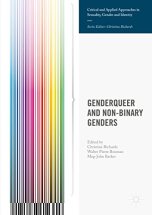
The deep history of the non-binary movement is also a topic covered in this book that Christina Richards, Walter Bouman and I edited, Genderqueer and Non-Binary Genders. We really hope that this book will become a go-to volume for therapists, doctors, gender clinicians, and others working with non-binary folks. Feel free to recommend it to your counsellor, GP, or other relevant professional.
If you’d like to read more about non-binary gender in the context of LGBT history, check out this interview that I did with Steve Topple.
We need to talk about non-binary gender. It could be a game-changer for society
Our society faces many challenges: climate change, the threat of nuclear war, and population growth – to name just three. But does the answer begin with the recognition of an issue that has a history stretching back thousands of years? Something which those in power may prefer wasn’t acknowledged?
A journey through space and time
Non-binary gender (sometimes referred to as ‘genderqueer’) is a term for people who don’t identify as male or female. As the Terrence Higgins Trust explains:
Gender is often referred to as a ‘binary’, meaning two – male and female. The term ‘non-binary’ refers to people who don’t believe that there are just two genders and who exist outside of the gender binary. Non-binary people class themselves as neither exclusively male nor female. They’re under the trans umbrella but may not consider themselves trans.
With February being LGBTQ+ history month, non-binary gender is being featured in the OUTing the Past festival. At its hub at the London School of Economics on Thursday 15 February, a presentation called Non-Binary Gender Across Time and Space is being given, providing the brief – often hidden – history of the UK non-binary movement. And its host Dr Meg-John Barker has spoken to The Canary about how non-binary gender has risen from societal invisibility to begin to become a movement; and what this could mean for our future, as a species. Read more…
The post Non-binary gender and LGBT history appeared first on Rewriting The Rules.
]]>The post 2017 Review: The Transgender Moral Panic appeared first on Rewriting The Rules.
]]>Three years ago 2014 was hailed ‘the transgender tipping point’. The American Psychiatric Association had just changed their category of ‘Gender Identity Disorder’ to ‘Gender Dysphoria’ removing much of the stigma of mental illness which had been attached to being trans. Trans actors finally played trans characters in popular shows like Transparent and Orange is the New Black, moving away from old tragic/evil stereotypes. Laverne Cox made the cover of Time Magazine and Janet Mock’s memoir Redefining Realness became a New York Times bestseller. The first trans pride march in Europe took place. Two major non-binary websites appeared, recognising the many trans people who don’t experience themselves as men or women. The Facebook ‘gender revolution’ offered over fifty possible gender identity categories, as well as a gender neutral ‘they’ pronoun option. Trans was becoming more visible and better understood.
If 2014 was the year of the transgender tipping point, then 2017 was surely the year of the transgender moral panic. Earlier this year each month brought a new story: we had two BBC documentaries, Trump’s attempted ban on trans people in the military, moves towards gender neutral school uniforms, bathroom bills in the US, Piers Morgan’s repeated dismissal of non-binary gender, and many more. Trans communities had only just dealt with the impact of one report when the next one hit.
However the last few months of the year made the rest of 2017 feel relatively spacious. There were trans-related headlines virtually every day, and even several days when one paper published two or three separate articles on the topic. The reports also became increasingly negative.
One reason for this media onslaught is the coming revision of the Gender Recognition Act. Currently trans people who want to be legally recognised in their gender have to pay to submit paperwork – including a medical diagnosis – to a committee who make that decision. The proposed changes – in line with several other countries – would allow people to self-determine their gender, de-medicalising the process, and hopefully making it possible for non-binary people as well as for men and women.
As a trans person myself I’ve noticed the impact of this tsunami of negative press on my own mental health, so I’m deeply concerned about the toll it’s taken on younger trans folk who already have alarmingly high levels of distress and suicidal thoughts. This moral panic will likely bolster existing high levels of trans-related bullying, which eight out of ten of young trans people experience, with one in ten receiving death threats. I also fear a background of heightened cultural transphobia as article after article across broadsheets and tabloids alike give the sense that there are sensible reasons to be concerned about trans people.
Is this a moral panic?
There are many reasons to label this current wave of trans-negative media a moral panic: a process where social concern is aroused over an issue by mass media and others. These include:
- The scattergun nature of the content. There’s no one coherent narrative here which could be sensibly discussed, but rather multiple concerns which become unhelpfully intertwined, such as the treatment of trans and gender-questioning kids, trans people as perpetrators – rather than victims – of violence, the changing nature of gendered language, access to rape and domestic violence services, and whether boys should be allowed to wear clothing currently associated with girls. When you trace back the history of the stories, several turn out to be years old rather than current ‘news’, or based on wilful misinterpretation of what somebody has said.
- The contradictory nature of the concerns. Trans people are currently being blamed both for dismantling the current gender system and for reinforcing it. Trans-related media calls for both the relaxing and tightening of gender roles for children. Trans women’s status as women is questioned due to their biology in some pieces and their socialisation in others.
- The misinformation within the reporting. One of the most concerning features of the media onslaught is the staggering lack of fact-checking that’s going on. For example, many pundits – who should know better – expressed anxiety around young people being given hormones and surgeries when even a cursory online search would inform them this never happens on the NHS. The most adolescents are given are blockers to pause puberty until they reach the age of consent, and even this is relatively rare and only done after full consideration by a multidisciplinary team. Similarly the ludicrously unsubstantiated claim that a large proportion of convicted sex offenders are trans was gleefully reported with zero critical evaluation, as are amplified statistics about people regretting surgeries.
- The similarity of the current panic to past panics. Several people have pointed out how similar this wave of reporting is to the media treatment of gay men back in the 1980s during the AIDS epidemic and the introduction of Section 28 – which banned teaching about sexual diversity in schools. Gay men then, like trans people now, were branded as paedophiles, and any mention of homosexuality was regarded as having the potential to turn children gay, just as there is now a concern that young people will be ‘turned trans’ by ‘social contagion’ if they learn about gender diversity.
- The lack of positive news stories or inclusion of trans experts. There are so many positive trans-related stories we could be hearing about, and so many wise, knowledgeable, and engaging trans experts we could be hearing from, so why this huge skew to the negative and the focus on celebrities with no expertise or experience around trans issues?
Why the moral panic?
I suspect, as with anything, there are multiple complex reasons behind this moral panic. Certainly the current uncomfortable alliance between some men’s rights activists, some feminists, some religious spokespeople, and various left and right wing campaigners and journalists, suggests a plethora of motivations which could usefully be explored. For now I’ll focus on one reason which may underlie much of what’s going on.
This reason occurred to me when comparing reporting around trans and intersex issues. We hear a huge amount about the former and relatively little about the latter, despite the similar numbers of people in each group. If a major concern about trans is really that children might be subject to non-consensual irreversible surgeries, then why are the same commentators not making serious noise about the continued medical treatment of intersex children? Many intersex people are operated on as babies in ways that are medically unnecessary and frequently lead to adverse effects such as the impairment of sexual sensation in later life, not to mention the potential impact of such early trauma which is often kept a secret from the person concerned.
One reason that springs to my mind for the silence around intersex surgeries, and the deafening roar around trans surgeries, is that the concern is not about physical interventions, nor is it about irreversibility, nor is it about capacity to consent. It’s about normativity. Genital surgeries take intersex babies closer to our current gender norm of two and only two genders which remain fixed throughout life, whereas surgeries on trans people potentially take them away from it.
One key outcome of the moral panic is that it helpfully distracts our attention from this current gender system which we’re all implicated in, and which is bad for everybody whether trans or cisgender, whether intersex or not, and whether woman, man, or non-binary.
We don’t need to look far for evidence of this: it’s been all around us all year as well. The BBC documentary No More Boys and Girls demonstrated the distressing impact of rigid binary gender roles on kids. Viewers saw how seven-year-old girls virtually all aspired to grow up to be nothing but ‘pretty’. Boys lacked the capacity to express – or even find words for – emotions other than anger. All the kids agreed that boys were obviously ‘better’ than girls. When I tweeted about this show, many respondents accused it of ‘social engineering’ or ‘child abuse’ in endeavouring to shift such gender stereotypes. But how are those phrases any less applicable to the current situation of rigidly enforced gender roles?
Earlier this year Robert Webb’s memoir How Not to be a Boy helpfully drew attention to the troubling impact of norms of masculinity on the wellbeing of boys and men, a group with a frighteningly high suicide rate. The current gender system can also be implicated in continued pay inequalities between men and women. The acceptance of toxic gender roles and a ‘boys will be boys’ mentality are a huge part of the cultural normalising of sexual harassment and violence which the recent #metoo campaign so helpfully highlighted.
Shifting the conversation
The conversation I believe we need to be having about gender is one which encourages everyone – young people included – to critically engage with current cultural stereotypes and media representations. This involves opening up our understanding of gender diversity rather than closing it down.
I’m in agreement with those who argue against the replacement of one rigid gender system with another which is equally rigid: for example one in which we assume that any kid who doesn’t conform to gender stereotypes must be a trans man or woman and must therefore follow one of only two very specific pathways of hormones and surgeries. However it cannot be emphasised enough that this is not what any gender-affirmative practitioners, activists, or educators I’m aware of are trying to do. Rather we’re endeavouring to open up understandings so that everybody can find more comfortable, consensual ways to be in relation to gender.
We want girls and boys to be free to express their genders however best fits them, without bullying or coercion, and for that to be able change over time – as it inevitably does for all of us. We want the third or so of people who experience themselves as to some extent between or beyond the gender binary to be able to identify and express that in whatever way feels right. And we want those people – trans and cisgender – for whom some form of social or physical gender-related change will vastly improve their physical and/or mental health to be able to follow whichever pathway suits them in well-informed, well-supported, and consensual ways.
Let’s make 2018 a year when, instead of attacking trans and non-binary people, we listen to what they have to teach us: about the way gender works in our culture; about the diversity of possible identities, expressions and experiences; and about how shifting rigid social scripts and policies can improve things for everybody. Let’s make it a year when we return to celebrating trans voices – as we began to do in 2014 – instead of dismissing them: I’ve listed just some of the amazing people, groups, and projects we could be celebrating and learning from in below.
All the ideas in this article are explored, in more depth, in my book with Alex Iantaffi: How to Understand Your Gender (a book aimed at everybody). If you’re a practitioner of any kind, you might find my Gender, Sexual and Relationship Diversity BACP resource helpful as an overview of how gender works, and how to work with gender (and other) diverse people: GSRD resource
Find out more…
For guidance and support about covering trans in the media, check out:
Jessica Kingsley have been publishing a range of helpful and important books on gender diversity, and continue to do so. Check these out here.
There have been many other excellent publications, performances, and events on this topic in the last year or so. Here are just a few of my favourites.
- Trans Like Me – CN Lester
- Before (I) You Step Outside. (Love) (Me) – Travis Alabanza
- Trans Britain – Christine Burns edited collection
- Brown, trans, queer, Muslim and proud – Sabah Choudrey
- Trans: A Memoir – Juliet Jacques
- Man Alive – Thomas Page McBee
- Transpose (ongoing event)
- Trans Pride
- My Genderation films
- I am They film – Fox Fisher and Owl
For more information check out these websites:
- Gendered Intelligence
- Gender construction kit
- Tranz wiki
- Beyond the Binary
- Non-Binary Inclusion Project
If you want to improve things for trans people in your workplace, then this is an excellent book:
The post 2017 Review: The Transgender Moral Panic appeared first on Rewriting The Rules.
]]>The post How to understand your gender appeared first on Rewriting The Rules.
]]>
Like most of my books, this one starts from the idea that cultural pressures around gender are a huge part of the struggles we have in this area. It unpacks how gender is viewed in the world around us, and encourages readers to think about their own genders within this through a series of activities and reflections. The book draws on Alex and my own experiences of gender as well as the anonymised experiences of people we’ve worked with over the years, to give examples of the very diverse ways there are of experiencing, identifying, and expressing gender.
People often imagine that gender is only relevant to women, and/or perhaps trans people. However recent writing on the impact of toxic masculinity on men, and rigid gender norms on cisgender people, have highlighted that it’s a vital topic for everyone to explore. For that reason, How to Understand Your Gender isn’t aimed at people of any particular gender – or agender – identity or experience. Instead it aims to provide a route-map for anybody who’s thinking about their own gender, or struggling to navigate the constantly shifting terrain of gender that’s out there at the moment.
Gender hardly ever seems to be out of the news at the moment. Just in the past month, for example, The BBC show No More Boys and Girls showed how highly gendered schools and families are, and the impact of this on children as young as seven who believe that ‘boys are better’, that girls should be pretty and can’t be successful, and that boys shouldn’t show any emotions except anger. Robert Webb publicised his book How Not To Be a Boy about the damaging impact that dominant ideals of masculinity had on him. John Lewis announced that it wouldn’t label children’s clothes ‘for boys’ and ‘for girls’ any more which resulted in a huge backlash. A couple were interviewed in the media because they had threatened to sue their child’s school for allowing a child who was assigned male at birth to wear dresses. Talk show host James O’Brien responded in spectacular fashion to both these news stories. L’Oreal’s first trans model Munroe Bergdorff was fired for pointing out white privilege and structural racism. And Piers Morgan continued his ongoing campaign against non-binary and gender fluidity in conversation with Julian Clary.
How to Understand Your Gender takes an intersectional approach to explore how our genders are interwoven with race, culture, class, age, generation, disability and many other aspects of our identity and experience. In this way hopefully it will provide some helpful signposts for thinking through these kinds of news stories, as well as being useful for considering how the issues they raise resonate through our own lives.
Find out more:
You can buy the book via Amazon, Waterstones, or Jessica Kingsley’s own website.
You can hear a podcast with me and Alex talking about the book over on megjohnandjustin.com.
If you’re in London you can come and here me talk about the book, and gender, on Wednesday 4th October at Conway Hall. Details here.
The post How to understand your gender appeared first on Rewriting The Rules.
]]>