The post All about amatonormativity: the privileging of romantic love appeared first on Rewriting The Rules.
]]>What is amatonormativity?
Amatonormativity is a long word which philosopher Elizabeth Brake came up with. It means that, in our culture, it’s seen as normal for people to want romantic love, and to prioritise that kind of love over other kinds. Other kinds of love include things like the love we have in friendships, family relationships, work and play relationships, and relationships with ourselves and with companion animals, our communities, the world around us, and our spiritual beliefs. ‘Amato’ means romantic love and ‘normativity’ means what’s seen as culturally normal.
Amatonormativity is linked to several other kinds of ‘normativity’: heteronormativity (where it’s seen as normal to want relationships with someone of the ‘opposite gender’), cisnormativity (where it’s seen as normal to be one of only two genders – male and female – and to stay in that gender all your life), mononormativity (where it’s seen as normal to only love one person and to want a monogamous relationship with them), and sexual normativity (where it’s seen as normal to want to have sex, generally only with the person you’re in a romantic relationship with).
To make it simpler we could say that the overall ‘norm’ is to be in one gender yourself, to fall in love with someone of the ‘opposite’ gender (perhaps after dating a bit), and to form a monogamous relationship with them where you have sex and get more and more committed over time (the relationship escalator): getting married, having a family, and trying to stay together for life.
What are the different ways it affects everyone in society?
Amatonormativity affects everyone: the people who don’t fit into it and the people who do.
The people who don’t fit into amatonormativity include people who are single or solo, people who are aromantic so don’t experience romantic love, people who prioritise other kinds of relationships in their lives, and people who prioritise many relationships rather than just one – like polyamorous people and relationship anarchists. Other people who don’t fit into amatonormativity are people from cultures where marriage and other committed relationships aren’t based on romantic love, which is actually people in many cultures around the world.
Some people don’t fit amatonormativity because they’ve realised it doesn’t work for them. It’s hard for them because the world around them assumes they will want romantic love and may discriminate against them or make them feel weird or isolated for being ‘different’.
The people who do fit amatonormativity often have a hard time too. Because there’s so much cultural pressure – and pressure from friends and family and peers – to want romantic love and to focus on it obsessively, people often miss out on other great things in life like friendships and projects and community.
Also the huge pressure on a romantic partner to be ‘everything’ to you and ‘complete’ you and be your soul mate who meets all your needs means that most romantic love relationships often don’t work out long term. It’s just too much pressure to be someone’s best friend, and their lover, and the person they live with and have kids with, and their cheerleader, and the person who looks after them when they’re sick or struggling.
People can end up staying in really unhappy relationships because they’re scared to be alone in an amatonormative world, and they can end up breaking up with one person after another and getting really hurt by that because they’re so busy searching for someone perfect.
Is there anyone it particularly affects?
Amatonormativity particularly affects those of us who are trying to do relationships differently because we’ve realised some of the problems with basing relationships on romantic love. While we might try to prioritise the other relationships in our lives, we may still find that our friends prioritise their romantic relationships and drift off as soon as they have a partner, or spend more time on dating than on friendships. Or they might find it weird to talk with us about how we might make commitments in our friendships.
Amatonormativity also affects people with trauma in their backgrounds – which is many of us. Romantic love can be quite risky when we have childhood trauma because it’s very easy to jump into relationships quickly and to try to get the kind of love there which we were missing – or lost – as a kid. Again that’s a lot of pressure to put on one relationship, and we can often end up getting hurt because painful patterns come up in intense romantic relationships and we can become very dependent on them.
Some neurodiverse people can struggle with amatonormativity because romantic love type relationships don’t give us the space we might need, enough solo time, or can just be too intense for us.
Finally, some people would say that amatonormativity – with its focus on one romantic relationship – isn’t so good for disabled people, or people with physical and mental health conditions, or even for parents, where being an isolated unit of just two people can be a lot of pressure. Perhaps community-based models and extended family structures where there are networks of people looking out for each other can work better when we need care and support.
Focusing on young people specifically, what expectations does it set and how might it harm them?
For young people amatonormativity can mean that a lot of your focus goes on love relationships, particularly for girls who are still taught in stories and movies and magazines that love is their big adventure in life. When that message is all around you it can seem to make sense to spend a lot of your time longing for love, talking about the people you fancy, dating or hooking up. That can feel like the most fun and pleasurable thing in life. But what would it be like if we lived in a world where mates were seen as just as important as dates, where we were taught how to enjoy our relationship with ourselves rather than being so hard on ourselves all the time, or where we were expected to get just as excited about the things we’re passionate about as we do about the people we’re into?
If you’re a young person who doesn’t fit into amatonormativity there can be so much pressure to do so. You can end up being bullied for being weird and different if you don’t talk about who you fancy or get off with people, and you can end up feeling like an outsider or like there’s something wrong with you if romantic love isn’t something you’re interested in, or if it doesn’t seem to happen for you.
That’s why the idea of amatonormativity is really helpful. It reminds us that prioritising romantic love isn’t really the normal, natural, right thing to do. It’s just one thing we can do, and it might not even be a very good idea for all the reasons we’ve talked about.
Online communities can be a lot of help for finding other people who do things differently, and it can be good to see a counsellor if anyone is giving you a hard time. Website like BishUK and Scarleteen both have great advice for young people about relationship diversity.
Do you think there are structural things that favour couples, or privileges that come with being in a romantic relationship/marriage that are related to amatonormativity?
One of the reasons it’s so hard to be outside amatonormativity, or to resist it if it doesn’t work for us, is because the whole of society is set up like it’s the One True Way to be. People who get married are given lots of legal and financial and health support that people who are in other kinds of relationships don’t get. It’s often much easier to get a house together if you are a romantic couple than if you’re in another kind of relationship with one or more other people. People who have kids together are often not recognised as valid parents unless they’re romantic partners.
Outside of these practical problems, cultural messages are So Strong that we should want romantic love and settle down with a romantic partner. It’s literally the ‘happy ever after’ of most fairy tales, movies, and novels. It’s also the focus of loads of magazines, soap operas, and reality TV shows like Love Island or Love is Blind. This means most people just accept amatonormativity and everyone from our mates to our families are probably assuming we’ll want romantic love and are pressuring us to date, especially around events like proms and weddings, or at times like Valentine’s Day and holiday seasons.
‘Couple privilege’ is a phrase for the many ways in which it’s easier to be in our society as a couple than it is as somebody single or in another kind of relationship. Couples never have to explain why they want to be together or stay together, whereas people who are single are always asked to explain themselves, as are people who leave romantic relationships, or who decide to prioritise other kinds of relationships.
Do you think society is changing in terms of amatonormativity?
I hope so. In 2012 my book Rewriting the Rules came out, which suggested that we could question the love rules that prioritise romantic love over other kinds of love. Eight years on we now have a word for this: amatonormativity, and people are having these kinds of conversations more widely. There are also more and more words and communities for people who want to do things differently like solo poly people, self-partnered people, relationship anarchists, aromantic people, etc. Popular TV shows like Modern Love have started to portray lots of different kinds of love rather than just romantic love.
However, at the same time, the mainstream media seems increasingly obsessed with people at a young age finding The One and getting married to them. Look at all the massively popular reality TV shows where winning is based on falling in love and making that commitment.
It’s a bit like what’s happening with sex and gender. At the same time that we have asexual communities questioning why there is so much pressure to be sexual, we also have more and more cultural obsession with having ‘great sex’ and ‘experts’ insisting that it’s vital to have sex. At the same time that we have non-binary people questioning why people are divided into men and women, there’s also a lot of cultural pressure to be a manly man and or a girly girl and ‘experts’ insisting that gender is binary.
What can we do to be less amatonormative or how do we get rid of amatonormativity?
It is So Hard to step outside of culture so go gently with yourself. If you see the problems with amatonormativity then it’s a great idea to be part of communities of other people who feel similarly in order to get support. Finding online and offline communities of other people who want to do relationships the way you do is a great plan. You might also read some of the books and zines out there which question amatonormativity and offer alternatives. I hope my book Rewriting the Rules is a pretty good place to start, and me and Justin Hancock (from Bish UK) have a podcast where we talk about these things A Lot.
For me one of the answers to how to do things differently has been to slow down all relationships. These days I tell everyone that I want to be friends first. In fact I aim to have a friendship for at least a year before I consider adding anything to it (whether that is sex or romantic love or working together or living together). New Relationship Energy or ‘falling in love’ is a major feature of amatonormativity and I think it’s a great idea to slow that right down, because it generally isn’t a great basis to build a whole relationship on.
Do you also happen to know if any cultures across the world are not amatonormative?
Actually all cultures around the world do love differently. More cultures are some form of non-monogamous than are monogamous, and many cultures base marriage or committed relationships on some kind of family and/or financial arrangement, or on choosing a good fit, rather than on romantic love (although that can develop over time in such relationships). If we don’t want to impose one view on the rest of the world – as we have in the past – we need to get on board with relationship diversity.
Patreon link: If you liked this, feel free to support my Patreon, it will certainly help this self-employed person to maintain some income during these uncertain times.
Plural tag: This post was primarily written by Fox.
The post All about amatonormativity: the privileging of romantic love appeared first on Rewriting The Rules.
]]>The post Hot love: Being and having appeared first on Rewriting The Rules.
]]>The wider cultural sense of it seems to be that it’s one of the best experiences we can possibly have. Perhaps the best experience. The thing to do with it is to build a whole relationship upon it: clearly the person we have such feelings for must be our true love or The One and this means they’re also the person who should become our best friend and the person we have sex with, live with, commit to more than anybody else, and build a life and family with. It’s also important to keep the hot love alive in that relationship over time: the passionate, in-love, erotic and romantic feelings. Struggling to do this is seen as some kind of failure. Even some communities that question the cultural norms of romantic love – like polyamous and sex positive communities – seem to accept that the thing to do with hot love is obviously to go for that relationship.
I’ve written a fair bit in Rewriting the Rules and elsewhere about the issues with putting that much pressure on any one relationship. I’ve also explored Esther Perel’s theory that we can’t get warm love and hot love in the same place over time, so that idea of keeping hot love alive sets us up to fail (but ensures that the sex and relationship therapy and advice industries do rather well!) I’ve also written before about New Relationship Energy and what that might open up and close down, which is a similar idea to hot love.
But what of hot love? Where does it come from and what might we do with it?
Having and being love
I recently read an excellent book by Erich Fromm called To Have or to Be? which is helpful on many things, not least on what we need to do in order to avoid the destruction of humanity (the fact he was writing all this back in the 1970s though makes for some painful reading).
Basically Fromm talks about how we can do pretty much everything in ‘having’ mode or ‘being’ mode. Having mode is when we’re trying to get something for ourselves, and being mode is when we’re present and open to the experience. Of course the capitalist culture which we’re embedded in is all about having mode – trying to get more and more of what we want, and none of what we don’t want. Fromm’s sense of what we need to do is to move – individually and culturally – towards being mode, and he offers a combined Marxist, Buddhist, and Psychodynamic path for how we might do that.
What has that got to do with hot love? I think when we experience hot love it’s often a combination of a having kind of love and a being kind of love: like two interwoven threads through the hot love experience.
Having love
We all have our childhood – and later – wounds, attachment issues, traumas, patterns – whatever you want to call them. Hot love often seems to come when there’s some kind of fit between our’s and the other person’s that we recognise on some – perhaps unconscious – level. Maybe it seems that we’re finally getting the kind of love that we lost as a child. Perhaps it feels like there’s a promise or potential to play out our early patterns differently. All of this occurs within a wider intense cultural promise that romantic/erotic love will save us. So we’re drawn to hot love: to immersing ourselves in it and to escalating it to make it a main relationship.
Of course our bodily responses come into all of this as well, making the hot love experience yet more overwhelming. Our nervous systems and neural pathways seem to recognise these familiar dynamics, drawing us in. The experience of strong erotic desire – and/or of nurturing and being nurtured – results in various hormonal reactions that intensify the experience.
However, chances are high that our patterns will play out in similar ways to the past if we’re not aware of them, and perhaps even if we are. It’s particularly risky if – on some level – we’re looking outside ourselves for somebody else to fix that stuff. It’s easy to approach the relationship in a having kind of way – wanting all of that promise and none of the toughness that will inevitably come with being confronted with our old patterns, habits, and pain again.
Being love
We all have the capacity for the more being kind of love. In fact Fromm – like bell hooks – questions whether the having kind of love should even be called love. He says that love isn’t a thing we can fall into, or a feeling we can have. It’s an action that we do when we’re acting in a loving way towards someone or something. The having kind of love is not really very loving at all.
Being love is real kindness and care for the self and others: being alongside each other, accepting and loving all that they are and all that we are. Hot love can give us a glimpse of this kind of love, as if we just tapped into the source. Perhaps hot love is one of the main experiences in life when we really feel that capacity for being love: our connectedness to ourselves and the other person, a sense of knowing that we are okay (because we feel so loved) and they are okay (because we feel so loving towards them).
But it’s so easy to drop from being to having mode with this kind of love because we want so much to keep hold of it. Quite quickly we may try to alter the very relationship which enabled this being love experience to happen because we want to get more of this feeling. This actually risks us getting less and less of it.
So what do we do about hot love?
If the having and being kinds of love are intertwined in the hot love experience should we run a mile from it, or embrace it? Or both? Or something else entirely?
Personally I think it is worth being cautious, recognising that the force behind hot love is often this very consuming yearning that comes from needs and desires that haven’t been met in our lives, whipped up by chemical reactions and cultural stories which encourage us to look to erotic and romantic love in particular to meet these yearnings.
Generally when we feel hot love we don’t know the person well, and we have no idea whether we’d be compatible in various ways, or enrich each other’s lives. We’re going on a feeling which is likely in large part projection of our stuff onto them and the hope of what they might be for us (the having kind of love).
The popular idea is that we only feel hot love for certain people, so those are the relationships that we should go for. There’s an argument that the opposite is true. While such relationships definitely give us the opportunity to see where we’re stuck and what our yearnings and patterns are, the old dynamics and intense feelings can make them hard places indeed to see clearly and to separate off enough to work on that stuff in ourselves.
I think it’s worth disentangling the people we feel hot love for from all other aspects of relating, like who we spend time with, have sex with, build family with, cohabit with, work with, etc. If we can see all of these as different strands then we can intentionally decide which relationships are compatible in the best ways to do these things: in ways that enhance, enrich and expand the experience of all the people involved.
Then we can see hot love as hot love: separate to all that other stuff, and decide if and how we want to engage with it. If we do engage with it I’d suggest doing so with our eyes open: recognising it for what it probably is and slowly and creatively engaging. Ideally we’d have no expectations or assumptions about the shape it would take, and a lot of space to keep reflecting on what it brings up for us.
What about hot love showing us our capacity for being/doing love?
But if hot love is one of the – perhaps few – places in life where we can realise our capacity for that other kind of love – the being kind – shouldn’t we go for it in order to experience and enhance our ability to do that? Surely we should be all about expanding our ability to love others and ourselves in ways that see all of them, offering kindness and care, and not treating each other as objects (like having love does)? As Fromm points out – this is essential given the current state of the planet and the way we mostly all treat one another: on the individual level of interpersonal conflict and abuse, and on the cultural level of valuing some lives, bodies, and labour way more highly than others.
Personally I think it’s more about nurturing that capacity for being love in all of our relationships, including our relationship with ourself. Maybe it is partly because our culture is so stuck in having mode that we only experience being love so fleetingly, and only at certain times like when we fall in love, or share an intense experience in a crowd, or perhaps when we feel love for a child or companion animal.
Perhaps we can see those kinds of experiences as giving us a useful sense of what being love can be like, so that we can start the slower, longer process of cultivating that capacity in ourself and bringing it to all of our relationships and projects. It’s a bit like being helicoptered up to the top of the mountain to see the view, and then back down to the bottom to start the climb.
Another metaphor that occurred to me is being given a candle with a flickering flame. In having love we’re so grateful for that flame, and so frightened of losing it again, that we hide it away in a dark room and huddle around it with another person to get the small amount of heat and light that it gives off. But an alternative would be that we could use that flame to light a whole bunch of sticks and create a fire. We could keep feeding and nurturing this with others so that the fire keeps going, and keeps way more people warm.
One thing we know for sure about hot love is that – like the candle – it will eventually, inevitably, flicker out. Either the relationship will turn into a different kind of relationship (like a warm, companionable, kind) or it’ll end. And if we go more and more into having love then either we’ll have to break up or remain in something much more challenging, recognising our old issues of rejection, abandonment, feeling trapped or unsafe, for example. I recently read someone suggest that whether a relationship breaks up or remains together, the things that the people in it will be confronted with – and the work that they’ll be called upon to do if they’re up for it – is pretty much the same.
But if hot love brings us up against our stuff isn’t that a good, useful thing?
In a way it is. I think it’s always useful to see where we’re stuck or hooked. It gives us the opportunity to work on that stuff in ways that free us up, leave us more real and humble, and more able to love and be loved in that being mode. But given the ways we tend to engage with hot love – and the cultural promises that are attached to it – it’s really hard to see what it reveals to us as any kind of gift, or to engage with these hard hard lessons.
When we’re in the having mode of love the initial wonder, joy and pleasure at finally having our yearnings met (being seen, approved of, or desired, finding safety, etc.) are the flip side of eventually not having them met because we’ve put them all on this one relationship and asked too much of it. That can be extremely painful as it treads a familiar path of loss, hurt and rejection which we were likely trying so hard to avoid when we grabbed hold of the hot love in the first place.
We can do our work alone, in a couple, in a family, with friends, in a community. Whatever our life is like these things will come up and we can choose to face them or to run away. Is a hot love relationship the best place to do our work? It may well bring everything up very intensely and starkly, but we can also get so caught in the dynamics that it’s extremely hard to see clearly. Also in focusing on a couple relationship, we can become separated from the kind of support systems that we need to do the work.
So again I’d be very cautious. Hot love can be the basis for a later, warm, relationship if it is flexible over time. But I’m not convinced that it has any more going for it than forging and nurturing multiple connections and building intentional relationships based on shared values, ways of living, etc. In hot love we’re often building a relationship on the foundations of that intense emotional experience, without taking our time to get really informed about the other person, the dynamic between us, and what we each want before building anything together. It’s kind of like forming a relationship while we’re high and hoping it’ll still be good when we sober up.
Hot love has a high risk of falling purely into having mode. This is not to say that other kinds of relationships escape from having mode, or the kinds of unconscious processes and unhelpful habits that I’ve covered here, of course. But they can be less intense, more spacious, and more supportive of us doing this work if we share these kinds of understandings.
And that’s my hot take on hot love!
The post Hot love: Being and having appeared first on Rewriting The Rules.
]]>The post Remembering Audrey: Another memorial appeared first on Rewriting The Rules.
]]>This time a plan took shape as I took a train past the Long Man of Wilmington last weekend. That place reminds me of my Gran – Audrey. It reminds me of the stories she used to tell of wandering the downs above Eastbourne. Last time I was there I felt strongly connected to her.
When I wrote a memorial for my other Grandmother, Leslie, I promised I would do one for Audrey too – having not had the chance to do so when she died in my teens. It’s a more complicated story to tell. But I decided to do my regret ritual today around her, and to write this story as I sit here, now, above the Long Man.

Remembering Audrey
Some of my best childhood memories involve being on a hill much like this with Audrey. She moved all the way from Sussex to Yorkshire to be close to me and my Dad – her son. She lived with my Granddad in a bungalow near the Keighley moor and I visited her there on the weekends. I thought of her as old then, but I guess she wasn’t all that much older than I am now.
Friday nights she would make me my favourite meal: roast chicken and homemade chips. We listened to singles on her record player and danced to Shakin’ Stevens. We read her grisly true crime books and gave ourselves the shivers.
Saturdays she packed a lunch and took me up the cobbled hill above the cul de sac where she lived and onto the moor. The hill seemed like a massive climb then but I guess it wouldn’t feel so far now. We always made for our spot – the red cliffs: a magic place where heather covered hillocks hid a disused quarry. Gran sat at the bottom while I clambered up over the heather and rocks, adventuring. I remember the feeling: free and wild and at the same time safe and loved, returning to Gran when I was done. We sat there watching the Worth Valley steam trains make their way along the valley far beneath us, eating chicken sandwiches and the little purple bilberries growing around us. She’d tell me how she used to climb like me – up on the Sussex downs. She said those were her happiest times too.
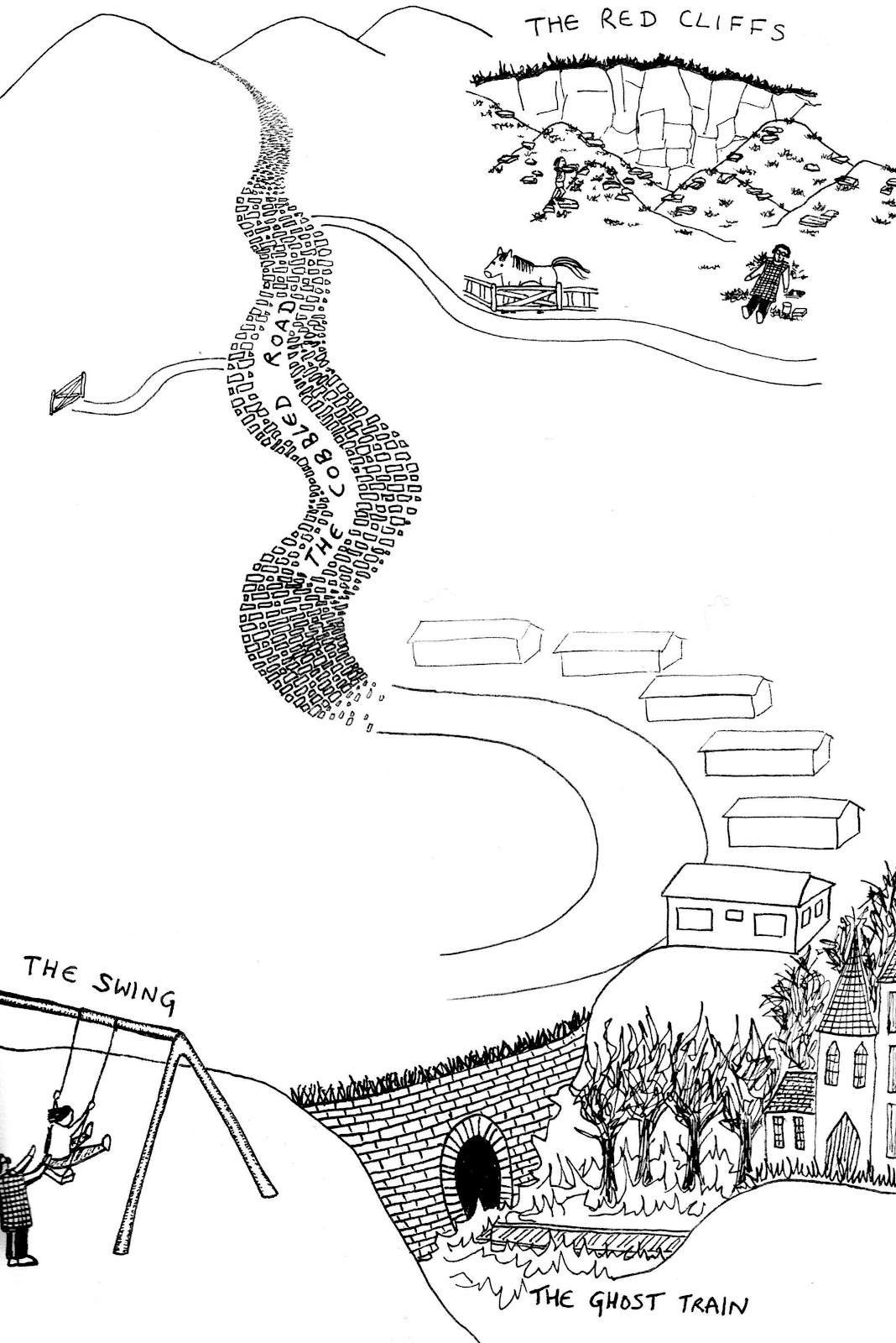
Later, after she moved to Bradford, our days together became adventures where we’d get on the first bus that came along, sit upstairs in the best spot (monarch of the bus), and go wherever it took us – Keighley and Haworth generally being the only options but I didn’t know that at the time. I remember her telling me stories about this family of kids she’d made up, and feeding me maltesers. She’d push me on the swings in the park, take me round the little shops, and get us fish and chips to eat at the bus stop before we headed home to bath and bed.
Love and Loss of Love
When I think of those times together, love is the word for it. The way Audrey delighted in me – my excitement at all that we saw and did and talked about – combined with the safety and kindness I felt from her, cuddled up in the evening watching TV after all the adventuring.
But it’s a complex story because Audrey also taught me what it is to lose love. I remember it vividly. I guess it was around the time I started adolescence. I was being bullied at school: learning that I wasn’t okay in all kinds of ways, that I’d have to hide my innocence and difference and enthusiasms if I wanted to get on. Gran had moved into sheltered housing. I think she probably struggled as much with the other people there as I did with the kids at school but I didn’t see that at the time.
I remember one evening I made a critical comment about someone on the TV who annoyed me. She became furious, saying I didn’t know what that woman had been through, what a hard life she’d had. In retrospect I think it must’ve been someone she identified with. It struck some painful chord from her own life. I remember the disappointment, disapproval, even disgust on her face as she looked at me. I linked it to the way she’d looked when I told her I’d started my period. She called that the curse.
This felt like a curse. Suddenly everything about me was wrong. And the things I was doing to survive this situation I was in made me someone my Gran couldn’t love any more. It happened a couple more times: her getting enraged like that, seemingly out of nowhere. It scared me and it confused me. I didn’t tell anyone about Gran’s anger just as I never told them about the school bullying, or my fears that there was something wrong with my body.
Gran and I became distant. She transferred her affection to my sister. Before I was out of my teens, she died. I felt guilty for betraying her, for seeing her less and less, for rarely visiting her in hospital. Her funeral was horrible: fake music and this person talking who didn’t even seem to know her.
I feel so sorry that I could never know Audrey adult-to-adult: that I could never have these conversations with her directly and also that I couldn’t find out more about her politics and activism. These were probably pretty similar to where I’ve now got to myself. She was heavily involved in the miner’s strike, for example.
Stories and Patterns
You could tell a lot of stories through what happened between me and my Gran. I later found out that this was her pattern with family and friends – to love people fiercely and fully – looking on them as golden ones – and then eventually flipping and feeling betrayed by them – hating them and often casting them out of her life, or at least her heart.
You could say it was terrible that she did that to me – a little kid. Just at the time when I needed her love to be a constant to demonstrate to me that I wasn’t all the bad things I was being told I was, instead she acted in a way which confirmed it. And she was the grown up. She should’ve known better; done better.
Or perhaps she saw what was happening to me: saw the delightful, playful kid she’d loved disappearing and this hard, unhappy, critical person taking their place; clumsily trying to be what other people wanted them to be and losing themself in the process. Maybe she couldn’t bear that: losing me that way. Maybe it was also what had happened to her once upon a time.
Or perhaps this is just what it’s like for everyone going from childhood to adolescence. Maybe I should just get over it.

But the point is I never really could get over it. My whole life I’ve longed to feel again that kind of love I felt from Gran. It’s like she passed her pattern onto me because whenever I seemed to find that kind of love I would love fiercely and fully in return, but if the person ever looked at me the way Gran did those times – with disappointment, disapproval, or even disgust – I’d find it totally unbearable. I would do anything to avoid that happening: becoming hypervigilant, trying to be whatever they would find loveable, avoiding saying or doing anything they might not like.
That kind of pressure often meant that when I couldn’t keep it up – all that work – I would become really hard to handle: desperate, flailing, unreachable, inconsolable, self-loathing. And of course that made it even more likely I’d get that look. As it happened more and more I wouldn’t be able to bear it so eventually I’d leave. Often I’d wait until another person had come along who might give me the kind of love I craved. Somehow being without it at all once more felt too hard.
Of course there’s more to my patterns than this: other stories that I have told – and will tell – in other places. There are stories about the cultural messages around love we all receive, stories about other early relationships I had and their impact, stories about capitalism and what that does to us, stories about how we all struggle to be with each other in our complexity – not grasp for the ‘good’ and hurl away the ‘bad’. There are stories about the patterns of the other people involved – which are not mine to tell – but which were part of the picture too, of course.
And there are relationships where I’ve resisted this pattern: found other ways to be, or containers for the relationship which have enabled it survive moments where I felt like my old horror was being lived out again.
But this feels like a pivotal story for me. And it’s not over yet: the pattern still happens.

Memorial
So today I decided to come here, where I imagine Gran used to come when she was a kid, maybe before all of her patterns got put in place: the ones she somehow passed on to me.
Despite being mostly veggie these days I allowed myself the happiest chicken I could find. I ate it with homemade chips last night and made sandwiches this morning. I got on the first bus that came along near my house: the Coaster that runs from Brighton to Eastbourne. I got off at Friston and walked through the forest. I saw a fawn with an adult deer in the woods: they seemed impossibly fragile to me. Lots of fragility on the walk.

I came to this spot by the Long Man, eating blackberries instead of bilberries along the way. And now I’m sitting to write this on my phone and popping maltesers. Later I’ll have my sandwiches looking down over Eastbourne, watching the trains make their way along the valley beneath me.
It strikes me that through my life I’ve taken the journey Gran took in the opposite direction: from Yorkshire to Sussex. I’ve moved down the country till I’m where she began – walking her chalk hills instead of my moors. I have to stop my progress south now. I’ve finally met the sea.
I’ve carried these patterns with me all this way, leaping from love to love with no break in the chain, trying to get back what I once had and leaving every time it looked like it was going the same way as before. I’ve tried everything to do it differently. I’ve reflected and written about it, I’ve warned people about it, I’ve shown them every part of me. But still I gave too much of myself away in an attempt to get that love and had to leave to get myself back. Still I couldn’t seem to bear it when the love dropped into that other thing – the disappointment, disapproval, disgust.
So now I’m trying the one thing I haven’t tried yet: not doing it. I’m staying with those old, old feelings of loneliness and longing for love, of yearning for somebody else to prove that I’m okay, and fearing that I’m really not. I’m trying not to push the feelings down, not to blame anyone else for them, and not to look to anybody else to make them go away. It’s really fucking hard but I think it’s the only way to change these patterns, and the pain and loss they cause to others and to me.
I’m doing rituals like this to try to find the love and kindness and safe-enough feeling that I long for within myself. I’m reaching out to all of my people, being vulnerable, and letting them into this so that I won’t be tempted to put it on one person any more. And hopefully those people will feel able to let me know if they see that happening again.
Today I do this ritual of regret for my Gran and for myself. I’m so grateful to Audrey for showing me what love can be, and I’m grateful to myself for managing to do this now. I also forgive Audrey for passing on this pattern – this curse – which has lost me so much love, home, and family along the way. Goodness knows what she went through to make her that way, or what the people went through who did that to her, or the ones who did that to them. As I forgive her I try to also forgive myself and to forgive all of us who are caught up in our own patterns, passed down through the generations, hurting each other and hurting ourselves. May we all find some kindness in this sorrow, in this regret.

The post Remembering Audrey: Another memorial appeared first on Rewriting The Rules.
]]>