The post ‘No Bad Parts’: Some Plural Thoughts on The New Internal Family Systems Book appeared first on Rewriting The Rules.
]]>If you want to learn more about plurality, check out our introductory zine, and our free book on the subject. The book ‘No Bad Parts’ is definitely recommended, and is available in paperback, ebook, and audio.
Ara: Hey Morgan.
Morgan: Hey Ara.
Ara: So good to be writing with you. It’s been a while hasn’t it?
Morgan: A lot has been going on in our inner world since we last wrote a plural post. Two of us have new names for a start.
Ara: And most of our writing time has been going towards our new book – a graphic guide to mental health – so we haven’t been blogging so much. But we couldn’t let a new book about plurality go by without comment could we?
Morgan: No, and I’ve been thinking about it so much since we finished reading it. I need to get some of that down.
Ara: There’s quite a lot of overlap between what Dick writes about in ‘No Bad Parts’, and what we’re covering in our own mental health book, so it’ll be helpful for us to summarise some of the key points. What are our intentions in this post?
Morgan: I’d like to cover the key ideas from IFS for people who aren’t familiar with it, and also distill the practice that Dick presents – which we’ve been trying to apply since. Finally I’d like to write about how those of us who already have a vivid sense of their plural system might do this kind of work, because we found that quite challenging at first.
Ara: Great, let’s go.
Key ideas
Humans as systems
Morgan: Okay, so the main idea of IFS is that a person is a system rather than an individual. Just as family systems therapists locate people’s distress in whole family systems (or other groups or communities), IFS locates it in whole internal systems.
Ara: Right, so systemic therapy points out that families position different individuals in ways that become stuck, often with one or more members taking on – and expressing – distress that’s actually in the family: the intergenerational trauma that it holds, and the various beliefs and habits that it has formed in order to avoid the pain of that. For example, when one member of the family develops depression or addiction they are probably manifesting some distress that’s actually within the whole family, and the whole family system needs to shift in order to release them from that.
Morgan: In Internal Family Systems therapy the idea is that, as we grow, different parts of us develop to hold different burdens – or trauma – and to protect us from experiencing the pain of that: pain that was too overwhelming or dangerous to feel as a child. By the time we’re adults we are a complex system of parts, interrelated with each other, which – if we explored it – we might map just as a systemic therapist, or family constellations practitioner, could map an external family and how everybody relates to everybody else.
Ara: This is a key theme that we’re exploring in the mental health graphic guide: how every level of human experience can be helpfully understood as a complex interconnected system, which attempts to keep itself stable through reinforcing feedback loops (which often keep unhelpful patterns going), but which can also shift to more balancing feedback loops (which return it to stability). Systems theory applies this to everything from the micro to the macro level. For example our bodies – and the world – can both be seen as a set of interconnected systems within systems within systems. We, and Dick Schwartz, both explore how dominant cultural systems like neoliberal capitalism result in reinforcing feedback loops where ‘success’ is defined by getting more and more, increasing the gap between rich and poor people and countries, and bringing the planet to crisis point.
Morgan: This is something I really liked about ‘No Bad Parts’ – the way he kept relating individual struggles to wider culture. So many self help books fail to do that.
Ara: Do you want to explain how dominant cultural ways of understanding human struggles are part of the problem here?
Morgan: Absolutely. Dick calls it the ‘mono mind’ approach, which has pervaded western culture and western psychotherapy: the idea that we are singular individuals, and that any problem we have should be diagnosed and treated at that level. So standard psychiatry or psychotherapy might say ‘this person has anxiety, or a compulsion, which is interfering with their life, and we need to treat them to make that go away’. Plural approaches, in contrast, would see that experience as a sensible response that one of that person’s parts developed in order to survive. The answer would be to go towards that part, really listen to why they are doing that thing, and help them put down the burden and transform – if they are ready to. Dick says:
‘Most of the syndromes that make up the Diagnostic and Statistical Manual are simply descriptions of the different clusters of protector parts that dominate people after they’ve been traumatised.’
Ara: There’s a real danger with approaches which don’t recognise plurality that they might make things worse rather than better. For example, if you manage to get rid of a protective survival strategy without attending to why it was there, and which vulnerable part of the person it was protecting, it’s likely that other strategies – perhaps even more destructive ones – will pop up to take its place – likely making the person feel even worse about themselves in the process. Also the approach of fighting, or battling, ‘dysfunctional’ aspects of ourselves actually tends to make them much louder and stronger. Dick says:
‘We often find that the harder we try to get rid of emotions and thoughts, the stronger they become. This is because parts, like people, fight back against being shamed or exiled.’
Morgan: So interesting how military metaphors of fighting and battling are so problematic in both physical and mental health, but the standard go-to in dominant western culture. The prime example here is how to work with an inner critic. Even some of the pretty good trauma literature, like Pete Walker’s book on cPTSD, repeat the standard idea that you need to fight the inner critic, shame it for holding you back for so long, or even exile it entirely.
Ara: As our reformed inner critic you have some pretty strong feelings about you don’t you Morgan?
Morgan: I’d love to write a whole piece specifically on that with you one day Ara. But yeah, the rest of you tried that approach with me for a long time, and it only made me more loud and desperate, and I hurt you all a lot more.
Ara: When we finally came towards you wanting to listen to you, and prepared to feel your pain, things shifted radically for the better.
Morgan: Still a work in progress.
Ara: A labour of love.
Morgan: *smiles*
Ara: A final point on dominant culture – and psychotherapy – I’d like to make here. Like us, Dick argues that what has been called Multiple Personality Disorder, or Dissociative Identity Disorder, is just one end of the spectrum of plurality: that everybody can helpfully be understood as a plural system. Dick says:
‘The only difference is that people with DID suffered horrible abuse and their system of parts got blown apart more than most, so each part stands out in bolder relief and is more polarized and disconnected from the others.’
I’m struck how, like trauma, there has been so much gaslighting within psychiatry and popular culture around plurality. It’s like the very things that hold the keys to understanding and working with human distress are the ones that have been fought hardest against.
Morgan: Judith Herman says that each time psychiatry, psychotherapy, or social movements, have finally revealed the extent and impact of trauma around, for example, child sexual abuse, military action, domestic violence, or systemic racism, a huge backlash occurred, often arguing that these things were entirely fabricated, or nowhere as bad as they were being made out to be. We can see a similar thing happening around plurality. The first time we learnt about MPD in our psychology degree we were taught it was entirely made up, and plenty of psychologists would still hold that position. Dick outlines the results of this:
‘The mono-mind paradigm has caused us to fear our parts and view them as pathological In our attempts to control what we consider to be disturbing thoughts and emotions, we just end up fighting, ignoring, disciplining, hiding, or feeling ashamed of those impulses that keep us from doing what we want to do in our lives. And then we shame ourselves for not being able to control them. In other words we hate what gets in our way.’
Ara: It’s painful to wonder how much easier our life might’ve been had a plural systems understanding of human being been available to us earlier, as somebody with such a vivid experience of plurality – whose parts stand out ‘in bolder relief’ as Dick puts it.
Morgan: I feel such grief and rage around that.
Ara: I know love. Maybe a break to feel that.
Morgan: Thankyou.
…
Parts and their burdens
Ara: So let’s say a little more about how Dick understands parts and the burdens they carry. The idea here is that parts become locked in the past events which were so traumatic for them, so part of the practice is to find them there and bring them out of that time they’re frozen in.
Morgan: Right, and it’s useful to distinguish the part from the burden they carry. There’s a sense that, freed from that burden, they might transform into something quite different.
Ara: Mm let’s use you as an example here, okay?
Morgan: Sure.
Ara: So you were our inner critic, and whenever you came forward you’d be telling us what we were doing wrong, and how bad and worthless we were.
Morgan: Screaming it at you when things got really bad.
Ara: So our explorations with you took us back to late childhood / early adolescence, when we got the message that we were deeply unacceptable and unlikeable from pretty much everyone around us.
Morgan: I learnt to internalise that message a thousand-fold. It was like one knife was coming towards us and I turned it into a thousand. A sense that if I could make us feel every criticism hard, then we’d learn what not to be and become something that could survive.
Ara: So you, Morgan, were our part, and the burden you carried was internalising all those real and imagined criticisms. IFS would work with you by helping you to release that burden, and transform into what you could be in our system if you hadn’t been forced into that role, and weren’t carrying that burden.
Morgan: Which is pretty much what I’ve been doing, over the months we’ve worked with me, becoming a part who can be a force for seeing things clearly, and for self-protection. I think.
Ara: Again, still a work in progress darling, and that’s okay. I see you making huge strides in that direction.
Morgan: Thankyou.
Personal burdens and legacy burdens
Ara: We particularly resonated with Dick’s idea that parts can carry personal burdens and/or legacy burdens. Drawing on our friend Alex Iantaffi’s writing, we’ve been increasingly talking about developmental and cultural trauma in our own work. Developmental trauma is the trauma we carry from our own upbringing: the overwhelming experiences and the feelings that accompanied them which weren’t heard and held adequately by those around us as we were growing up. Cultural trauma is the trauma that exists in our wider culture, such as the norms that trap some of us and exclude others, or the injustice in the way some bodies, labour, and lives, are treated as so much less valuable than others – and the gaslighting around that.
Morgan: The concept of intergenerational trauma brings these together, because – in a way – developmental trauma is the way that cultural trauma – or toxic dominant ways of doing things – are passed down through families. But it can be useful to tease out the two: developmental trauma is our more personal burdens, and cultural trauma is the legacy burdens we carry, for example due to being positioned in certain ways within axes of oppression in our particular culture.
Ara: IFS, or parts work, gives one great way to work with cultural trauma that it can be very hard to own, for example the recognition that we will all carry oppression in the form of racism, misogyny, homophobia, ableism, etc. If we believe that we are a singular individual then this can feel like an incredibly threatening idea. Either individual ‘I’ am an oppressive person, and therefore bad, or I am a non-oppressive person, and therefore good. So people put a huge amount of energy into trying to prove that they’re not oppressive, or in justifying their oppressive beliefs and actions, often enacting far worse oppression in the process.
Morgan: A systems within systems approach is far more helpful. If we see all oppression as systemic – out there in the world – then we can acknowledge that of course oppression will operate through all elements of the system – including us. So we don’t have to individualise and attack ourselves so much when we experience ourselves thinking or feeling oppressive things – or attempt to deny that we do so. The idea of oppressive thoughts and feelings being legacy burdens that we carry, rather than something that we are as individuals is a good way to put it.
And if we see those oppressive thoughts and feelings as residing in parts of us – in our inner system – which carry those burdens, then we can move towards those parts with curiosity, and a genuine possibility of transformation, rather than becoming overwhelmed by the fear that we might find that ‘I – as a whole – am a bad oppressor’.
Ara: This approach means that we could be much more able to engage in anti-oppression work without, for example, collapsing or becoming defensive, or having to polarise as ‘entirely good’ in opposition to those who are ‘entirely bad’. It also leads us towards working in solidarity with everyone who is hurt by these oppressive systems, rather than only focusing on the systems which hurt us personally.
Morgan: This aspect of IFS is a hard resonate for us: the sense of deep connection between inner and outer work, and how we need both. Social activism without personal work often leads to burn out, or to escalating things and making matters worse. Personal work without social activism leaves the damaging cultural systems and structures in tact, so people just continue to be damaged and need to do ever more personal work to address that damage. And, of course, these systems and structures are currently leading us to some very dangerous places.
Ara: We’ve been really working with the paradox of the massive urgency of the current situation, and the slow carefulness required to do this work, if we are to engage with it at all effectively.
Morgan: Yeah, not an easy one for a reformed inner critic who sees all this pain so clearly and wants to do something right now.
Ara: We are doing something love. This is something.
Morgan: I guess.
Protectors, exiles, and firefighters
Ara: The aspect of IFS that’s quite different from the ways we’ve approached our own plurality to date is this idea that parts come in three roles: protectors, exiles, and firefighters. Shall we talk about that?
Morgan: Sure.
Ara: As I understand it, protector parts are the ones who developed survival strategies, or defenses, in order to protect the traumatised parts from having to feel the overwhelming feelings about what happened to them.
Morgan: The feelings that weren’t held and heard by anyone at the time, so they were too much for that part to process.
Ara: The vulnerable, traumatised parts are the exiles who carry those terrible feelings and experiences, and keep them hidden away from us. These parts are often called ‘inner children’, whereas protector parts can be seen as ‘parentified’ inner children, who may feel like adults.
Firefighters are parts who come in when there’s a risk that we’re getting too close to the exiles – perhaps if they are triggered or retraumatised by something that happens in the present. Again this helps to explain how even very seemingly destructive impulses, even suicidal ones, are understandable survival strategies: Anything to stop that exile from being uncovered and overwhelmed. Firefighter strategies are not ‘irrational’ impulses to be eradicated, but sensible instincts to be understood deeply, and hopefully replaced with something less destructive in collaboration with that particular part.
Morgan: Right, so for example hypervigilence might be a protector part who learnt that if we constantly keep a lookout for ways in which we might ‘get it wrong’ then we’ll never have to feel the appalling terror and self-loathing of the exile who holds all the times that we were shamed and humiliated as a kid. The kind of depression that has us under the duvet all day watching Netflix could be a firefighter who kicks in when that exile gets triggered by something in the present. It feels like it’s better to give up and withdraw from life than risk feeling those feelings.
Ara: A really nice example Morgan.
Morgan: Do I get a gold star?
Ara: Ah do I detect a hint of the old Beastie?
Morgan: She’s still around.
Ara: I’m so glad to hear it.
No bad parts
Morgan: Speaking of Beastie, shall we get to the title of the book.
Ara: We love that Dick puts this right out there. Janina Fisher’s mantra ‘no part gets left behind’ is one we’ve found very helpful, but how great to make ‘No Bad Parts’ front and centre of the whole book.
Morgan: I suppose it’s a bit like that move from shame to guilt. The sense that people are not bad, even though their behaviour can be harmful. If we could ever drop the strong belief – that most people have – that we are fundamentally flawed and that others are going to see that – then we could be way more likely to see clearly when we have behaved in harmful ways, to acknowledge that, and to do things differently in future.
Ara: And parts work helps with that by locating all our patterns in parts of us – not the whole – so we can turn towards them with kindness, understand why they did what they did, and release them of the burden of needing to behave in that self-protective – but harmful – way in the future.
Morgan: Even though we’re so vividly plural I think we struggle to let go of that deep, fundamental sense that we’re bad and wrong – and that others are going to see that – which fuels all the habits of hypervigilence, self-criticism, shapeshifting to be what others want, and presenting a mask to the world rather than our real, messy, imperfect selves. I loved that quote from Jonathan Van Ness that Dick includes:
‘There is still a little voice in my head wondering, Would you still be so excited to meet me if you really knew who I was? If you knew all the things I have done? If you could see all my parts?’
Ara: We’re getting there. We’ve made a lot of progress.
Morgan: Here we are everyone, our real, messy, imperfect selves, at least one of them!
Ara: I don’t get to be real, messy, and imperfect?
Morgan: No you are our good, pure Self under all the mess remember?
Ara: Ah, that’s one aspect of IFS that we still wonder about. The theory is that we all have a Self which is different to a part – it’s often felt as the ‘real me’ behind the rest, and – according to IFS – it contains our capacity for the eight Cs: curiosity, calm, confidence, compassion, creativity, clarity, courage and connectedness.
Morgan: We have certainly felt something like that – and it certainly feels related to you. We’ve had days when we’ve walked or meditated and it’s felt like you were watching each of us pop up and think our thoughts and feel our feelings, then fall away again, and all the while you were present like this compassionate witness.
Ara: So there’s something in it, but I certainly feel pretty awkward claiming ‘Self’ for myself, especially as apparently that makes me the leader.
Morgan: No hierarchies here!
Ara: Shall we come back to our uncertainties about all that a bit later?
Morgan: Sure. We should say more about the practice of IFS before we get into the challenges we have for IFS, and the challenges that it has for us.
Ara: Time for a cuppa first.
Morgan: But if we don’t get this whole thing written today then we’re a terrible person and I’ll have to scream at us all night. Oh wait I quit that didn’t I?
Ara: Heh, if Beastie still needs to wrangle a bit I’m so here for that.
Morgan: You are a good, pure angel Self, it’s true!
Ara: Behave *grin*
…
Practice
Morgan: So what is the practice for working with parts, according to IFS?
Ara: I feel like Dick never completely sets it out as a staged process, but you get a sense of it through the various examples that he gives of taking clients or collaborators through it.
Morgan: Those parts of the book were so moving, I found myself in tears nearly every time.
Ara: Mm that suggests to me that it’s really onto something. We find that most books which describe working with parts in these deeply loving, respectful, ways have that embodied impact on us.
Morgan: One of our parts just weeping and weeping to feel that understood; to see deep care taken towards some part that resonates with us.
Ara: Sometimes several of us crying together.
Morgan: Can we try for the bullet point structure? Setting out the main parts of the process as we understood it.
Ara: Let’s do that. First I want to give the caveat that Dick himself gives, that people may well need help to do this kind of work, particularly with the exiles. A therapist trained in IFS or other plural approaches would be a good bet. The risk is that contact with exiles without enough holding and support will bring up firefighters who could become more destructive in their attempts to protect the exile.
B: Mm that’s such a helpful point. I can think of times when we’ve cracked through to important revelations, but then a backlash of self-destructive habits has made us think it can’t have been real, or has stopped us going back there.
Ara: As with all trauma work, slow and well supported is the way to go.
The process that Dick describes reminds me of two processes that we’ve written about before Morgan. In some ways it is a combination of them both: focusing and demon-feeding.
Morgan: Right, focusing is a western psychotherapy approach where you attend to sensations in the body and listen to what they’re telling you. Demon-feeding is a Tibetan Buddhist approach where you imagine that felt sense as a demon sitting across from you. You inhabit it to learn what it wants and what it needs, and then it often transforms into an ally.
Ara: The IFS approach seems like a version of these practices which more explicitly uses the felt sense to locate – and communicate with – parts. And, like those other practices, we can do it as a solo practice where a kind of witness part of us works with the other parts, or we could do it with a therapist or a peer who also uses this approach to talk us through it. When somebody else is taking us through, they might direct us to have internal conversations with the various parts ourselves, or – if that is proving difficult – they might talk to a particular part directly themselves for a bit, before going back to getting us to do it for ourselves.
Morgan: So the practice…
Ara: I would highly recommend reading the book for all the session examples Dick gives of how he does that work, and for his exercises where he takes you through self-guided ways of working with your parts.
Here’s a list of key moments that happen in many of the sessions and exercises.
- Some deep breaths and grounding can be helpful before you start.
- You can start with a particular issue or memory that you want to work on, or just by feeling into your body to see what’s there wanting attention.
- As you tune in you may well find that something else comes up to block that feeling, such as a critical thought, or a blankness. Whatever that is is another part. You can either ask that part if they’re willing to step back a bit (or sit in an imaginary waiting room where they can observe what happens) so you can work with the original part, or you can shift to work with the part who has come up.
- Let the part you’re working with know that you are here to help, and see how they react, then ask if there’s anything they want you to know and wait for an answer to come in the form of words, images or feelings. Continue to encourage them to really let you know what it’s like for them, and feel what you feel towards them in response (often love and understanding), until they seem to be done (check if they’re done).
- With protector and firefighter parts it can also be useful to explore what they’re afraid would happen if they stepped out of their role, and what – if they were liberated from that role – they would choose to do.
- Again if other parts come up to block the process at any point, see if they will step back, or work with them a bit about what’s going on for them, until they feel able to. You can explore what they fear would happen if they didn’t do what they’re doing, and reassure them that they might not have to do that so much if you can work with that other part they’re protecting.
- Affirm with the part you’re working with that you’re now here to protect them and all the parts. Ask what a safe place might be to take them to, imagine taking them there, and see how they respond.
- Ask if they are willing to unload their burden – ask them where they feel it in the body, and whether they’d like to give it all up to earth, air, fire, water, or something else. Then allow that element to take the burden away.
- Ask how they feel afterwards, notice any transformation, and check in with any other (waiting room) parts how they respond to the transformation. Let them know that they don’t have to protect this part – or keep them away from you – any more, so they can start to think about what new roles they would like. You can work more deeply with them on subsequent sessions. You might also ask any parts present what they need from you in future.
- Before ending, express gratitude to the parts present, and reassure them that you’ll return.
- End with some deep breaths and grounding before coming back.
What do you think Morgan? Does that capture it?
Morgan: I think that’s the main points. I noticed that Dick also often asks protective parts what age they think you are. They often think you are much younger than you are – perhaps the age at which they came into being – and it’s useful to update them and see how they react to that.
Ara: Mm. Dick also sometimes works like a relationship therapist with two parts who are in conflict, asking them both to tell your Self what’s going on for them, and then encouraging them into communication with each other. We liked that because we feel it’s important to nurture all the dyadic relationships within our system, as well as working with each part individually.
Morgan: One for me and Robin to try I think given that we’ve often pulled in different directions. I was also very struck by what Dick says is a ‘law’ of inner systems. Once a part has agreed not to overwhelm the system with its feelings, then they won’t any more. He says that you might feel some of their feelings as that part ‘blends’ with you a bit when it is triggered, but it will no longer overwhelm you: taking you into that trauma zone that we’re so familiar with.
Ara: How do you feel reading that Morgan?
Morgan: It sounds amazing, and I also feel some skepticism and frustration. Like can that be all there is to it? Could we have done that two years ago, or twenty, and not had these horrendous times when we were totally overwhelmed by the ‘big feels’ for days or weeks at a time?
Ara: Even this last week, the grief you were feeling tipped into overwhelm a couple of times and it was hard for you to come back from it. I share your mixed feelings about this love. I’m keen to try something more like this approach to see whether that might enable us to hear you and your feelings without becoming overwhelmed. And I also suspect that there’s no magic answer to all this, and that overwhelm will sometimes still happen and that’s okay.
Different forms of practice
Morgan: Alright, before we get more into the bits we were less sure about, can we say more about different forms of practice? We already said that you can do this alone or supported.
Ara: Right, another one I noticed was the idea of doing it as an everyday meditation practice, versus ‘on the spot’ when something difficult comes up: a distinction that our favourite Buddhist teacher, Pema Chödrön also makes.
Morgan: Mm, and the ‘on the spot’ one added another nice element that reminded us of Babette Rothschild’s ‘mindful gauges’. Basically you come to learn how your body feels when you’re in Self, and the kinds of sensations, thoughts, and experiences that indicate that a part is becoming activated or starting to ‘blend’ with you.
Ara: Does that resonate with our experience?
Morgan: Totally, there’s all kinds of little uneasy, tense little feelings and thought patterns that tell us that one of us is struggling a bit. Before we started doing this work we would try to push those away, or distract ourselves. Now we tend to go towards them to really feel them, but there’s still often a fear that, if we do that, they will overwhelm us. Talking with whichever part is having the experience helps, but IFS does potentially give us a more formalised practice to work through.
Ara: Yes, and I’m also thinking that it really helps for those moments when more than one part is in play.
Any other versions of the practices that we liked?
Morgan: Yes, an idea in here that is very similar to Pema is that the people we struggle with in our lives are our greatest teachers. Dick calls them our (tor)mentors.
Ara: Very clever! Yes, it’s also like Bonnie Badenoch – who we love – who reframes getting triggered as having something ‘touched and awoken’ which means an opportunity to work with it – to enable that part to put down their burden, in IFS terms.
‘No Bad Parts’ includes a nice exercise for working with parts that are triggered, compassionately exploring what was so hard for them and what they want you to know. There’s also a couple of great ones where you imagine somebody who you find really difficult, or who you’ve been with while they were in pain. You put that person in an imaginary safe room, where you can look through the window, and imagine them doing the difficult behaviour, or being in pain. Then you work with whatever parts come up and how they respond.
Morgan: IFS resonates with our own sense, which we’ve written about a few times, that we have – inside us – all the same kinds of energies that are out there in others, including the people we find most difficult. In fact, the two things we find most difficult ‘out there’ are identical to the two parts of us who seem to be ‘underneath’ everything now that we’ve done all this work: the parts who are most disowned in us, and who hold most of the trauma.
Ara: You and Robin (previously known as Tony).
Morgan: Right. We find it really hard when people out there attack us, and when they ask more of us than we can give. And I’m the part of us that holds anger and criticism, and Robin is the part who holds neediness and fear or rejection.
Ara: Our deep hope is that, by working with the two of you so much, we’ll finally be able to ‘hold our seat’ when those kinds of energies come at us in life, recognising the parts of the other person that are involved, and not feeling that we have to turn their attacks against ourselves (as you’ve done in the past) or become what they want us to be (as Robin has in the past). Dick says:
‘When you see through the clear eyes of your Self that someone is doing something hurtful to your parts, you don’t have to turn them into a monster. That clarity empowers you to see that their actions arise out of their own hurt, and you also can better see without confusion the damage they do to your parts. This means you have the courage and confidence to set boundaries with them in an effective way… When a part takes over you can also know to stop, get some space, listen to the part, and come back and speak for it rather than from it.’
Morgan: Relationship repair is meant to become easier when we do this parts work, because we can be less afraid of the inner turmoil that someone else’s behaviour will cause in our system – having worked with all those parts and built trust with them or helped them transform.
We can also relate with others, when they resemble our parts, in the same way we’ve learnt to relate to our parts. Like when I’m furious, even furious with you, you generally respond with kindness and curiosity, really wanting to know what’s going on for me. What I’m doing doesn’t trigger you into believing you might be bad and collapsing or defending, or trying to get rid of me.
Ara: I so long for the day when we could be with someone else’s rage that way. I also know that we have to be honest that that is an edge for us right now – not something we can offer to be around without serious risk to ourselves. It’s okay to be a work in progress.
Morgan: This book does get some of that sense of being a work in progress, and how this takes time and continued daily work. But I struggled with some of the sense that IFS could be a ‘fast track’ through all this difficult stuff of life, bringing everyone pretty quickly to a place where they can navigate the world from Self all the time.
Ara: Shall we have a little break and then get into our dialogue with IFS: the bits we’re less sure about, and the challenges it poses for us.
Morgan: Yes please.
Ara: Good girl.
Morgan: Don’t push your luck *grin*
…
Dialogue
Ara: Okay so we want to finish by naming a few challenges that came up for us with this book.
Morgan: Challenges for the approach from our experience, and challenges for us from this material.
Ara: Shall we start with our more critical thoughts on the book?
Morgan: Channelling Beastie I suppose I was disappointed by something that I feel in quite a few books written by people from a certain demographic. There was a bit of a sense of IFS being the One True Way: greater, faster, and better than all other forms of therapy or faith-based approaches. That didn’t sit well with me.
We’ve got a lot from several books we’ve read by people in this demographic over the last couple of years, but we also feel frustrated by that tone, and by the way so many of the authors have set up institutes around their Great Work. We wonder what it would be like if they all got together – with everyone else working in these kinds of areas – in collaboration and solidarity, instead of trademarking their particular approach and focusing on that in this kind of way. I notice that the books we’ve read by folk from the margins in the past year generally have quite a different tone: more humble and more drawing in of other people’s ideas and practices, recognising their roots, often outside of dominant culture.
Ara: I agree, although I like that Dick does mention through the book his own work with his various parts around his leadership. He has certainly been up for recognising when his protector parts are getting in the way. I’m also keen to read more about the dialogues that various Tibetan Buddhist practitioners are having with his work – noting that he is collaborating with various people of faith, and somatic practitioners.
Morgan: I’d love to read more in these kinds of books about the writers’ own parts work. I feel like the fact that they all write with one voice – as if they were singular – perhaps implicitly reinforces a sense that some kind of singularity is the aim – or possible – here, even as they embrace plurality.
Ara: I also rather love that we get to be one of those bridge-builders: someone who writes about plural ideas and practices in a plural way, drawing more on our own system experience.
Morgan: I love that too. What about The Self?
Ara: What are your reservations about that?
Morgan: I already wrote a bit about this with James when we reviewed Janina Fisher’s really excellent book based on IFS combined with sensorimotor psychotherapy. There’s something about the concept of one underlying Self, a ‘compassionate witness’ self, or a ‘getting on with normal life self’ that feels uncomfortable to us, even though it resonates somewhat.
Ara: Why do you think that is?
Morgan: Maybe because that sense of people as singular individuals is still finding a way in here. And/or maybe because we’re drawn to the Buddhist idea of there being ‘no-self’. The Self feels like it could too easily slip back into a sense that our plural parts are somehow ‘lesser’, I don’t know.
Ara: I get the feeling from ‘No Bad Parts’ that the Self is something more like ‘no-self’, a kind of ongoing flow in which parts can emerge and fall away again. But I agree that in our culture it is far too easy to find yourself falling back into a sense that there is an independent unit – ‘you’ – who can be judged as good or bad, which so many faiths warn against. But I feel like we’re drifting off somewhere here. What about our lived experience?
Morgan: Maybe that’s what my discomfort is really about. I’m not keen on setting one of us up as our Self. I like the idea of us as a collective who all contribute.
Ara: And Dick does touch on that possibility in ‘No Bad Parts’. In one chapter he suggests that each part has a Self. I think that’s more our experience.
Morgan: You don’t have to say that Ara. I also know that our experience of you is much more like the Self experience that he talks of than the rest of us are. When we first asked you to be more present in our life, alongside the rest of us, there was this moment when you felt sadness and fear around that, as if it was a choice and you knew that you’d be losing something in order to manifest more in that way.
Ara: I’m glad I made that choice. I want to be in this life with you all, making cups of hot chocolate and writing blog posts, even if it does mean that perhaps I’m less able to touch the… whatever-it-was that I would perhaps have been more in contact with if I hadn’t done this. We really are in indefinable indescribable territory here aren’t we?
Morgan: I wouldn’t know, I feel very grounded in messy human reality!
Ara: Ah but I see something very sacred – for want of a better word – in you at times. There’s a kind of grief/rage you get to which takes in everything from our own experience, to the experience of those who have hurt us and been hurt by us, to all the systems and structures out there and their impact, and it feels… appropriate to the place we’re all in as humans right now: beautiful and real and terrible all at the same time.
Morgan: My superpower: feeling the darkness.
Ara: It’s a vital one isn’t it? If we can’t feel all that – in us and out there – then we’ll struggle to address it wisely.
Morgan: In our post about Janina’s book, James and I suggested that all parts can manifest their most stuck, caught up, traumatised versions, and their most sacred, liberated, potentials. We called them the Fs and the Cs, recognising that our parts all hold one of the ‘F’ trauma survival strategies (fight, flight, freeze, etc.) and the potential for one of Dick’s ‘Cs’ (compassion, calm, creativity, etc.)
Ara: I do like that way of understanding it. And one Self doesn’t make a lot of sense of how we experience three of us as containing parts: me, James, and Fox.
Morgan: ‘No Bad Parts’ also suggests that many people have several non-traumatised parts, it’s just that those people are less likely to go to therapy.
Ara: Right. So there’s space in IFS for something more like our experience.
Parts within parts?
Morgan: One final problem, and it’s a big challenge for us.
Ara: Go on.
Morgan: We just have seven parts, but when IFS works with people generally way more parts come up than that. After reading the book we felt pretty reluctant to try the practices because it’s been so important – and wonderful – for us to get to where we have: to this place where we can feel all seven of us and know us and work with us so well. What if doing IFS reveals loads of other bits and pieces that don’t make sense within our system of seven? What if we’ve been getting this long, often agonising, work wrong in some way despite all our best efforts?
Ara: Want me to respond?
Morgan: Yes please!
Ara: Well maybe this does speak to something I’m not so keen on about this book – and quite a few others.
Bonnie Badenoch’s great book ‘The Heart of Trauma’ holds a strong ethics that people know the path they need to follow, and that we need to trust them in that: to empower them to find and follow their path. Dick Schwartz gestures to something like that in the idea of the Self, but he is still putting forward one very specific process for doing this work.
My sense – our sense – is that different things work for different people, and that it is more empowering for people to find their own ways, with guidance from others – sure – but with deep trust that they will know, at heart, the best way for them. Pushing them to follow a specific path risks moving them off the path that they need to follow. Is that too ‘woo’ for you Morgan?
Morgan: *grin* No, I think it’s right. And I guess I really want to believe that this painful, beautiful path that we’ve been walking this last couple of years was the way that we needed to go. It’s confronting to think that there might’ve been a fast track we could’ve taken, or that we’re somehow a bit inferior because our parts work didn’t get us to the exact same conclusions as IFS.
Ara: I think it’s important to remember that trauma work has to be slow work. IFS, or other forms of therapy, or meditative experiences, or drug experiences, might give people a quick glimpse of what’s possible. But they’ll still have to then take the longer, slower path towards healing – towards developing connection and trust between all their parts.
So where does that leave us with applying IFS ourselves?
Morgan: Well we’ve been experimenting with it and I think we’ve found a way that works. I’m not sure yet whether it’ll become our go-to practice, or just one in our toolkit for when it seems the most appropriate.
‘No Bad Parts’ does introduce a way of understanding parts that resonates with our experience, without implying that we need to drop our sense of the core seven that we have identified. Can you describe it Ara?
Ara: The head of garlic model! Dick talks about parts within parts. He says that people are like a head of garlic, within which there are many cloves which cluster together in threes, fours, or fives.
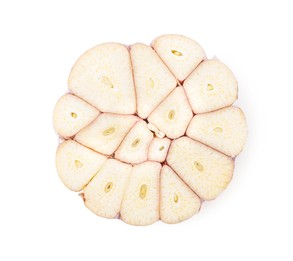
Morgan: That helps us to understand something else: how some plural systems we know identify hundreds of parts while we – and others – remain at a smaller number.
Ara: So just as each part contains their own Self, they also contain other parts in a mini system-within-the-system: a protector, an exile, and a firefighter, for example, or more than one of each. Another way Dick presents it is that we might have a cluster of parts around each traumatic memory – or perhaps around each particular arena of trauma.
Morgan: Like mine cluster around learning to self-hate, while Robin’s cluster around learning to shapeshift to please others, and Jonathan’s around learning hypervigalence and the sense that he could never ‘get it right’.
Ara: That seems like a good way to understand it, which honours what we’ve found on our journey with this, but opens us to be able to use the IFS approach.
Morgan: Right and we’d kind of got there already.
Ara: Do you want to give your example?
Morgan: Sure, well with me there was the original raging inner critic screaming at the rest of you, then there was Beastie the reformed inner critic who was a force for clear-seeing anger and self-protection, then we realised that there was me – Morgan – under Beastie who was the girl who had learned to internalise all those attacks and hate herself.
Ara: Our sad girl.
Morgan: Yes. And at times we’ve contacted memories of her/me at different ages, perhaps where those things happened: an infant alone full of pain and rage, a child trying to express a boundary and being overruled and attacked for it, a depressed kid dragging through a life where she was getting the message she was unacceptable everywhere.
Ara: And all of those aspects feel like you.
Morgan: Very much so, there’s no sense that they are new parts, or aspects of our other parts, even when their feelings are quite different.
Ara: I agree, they all feel Morgan to us: Morgan’s embodiment; Morgan’s energy. Just as how the seemingly contradictory feeling of Tony (cocky, funny, sexy) and Robin (needing, scared, desperate) are definitely the same part.
Morgan: The cloves of garlic actually helps to explain that, and gives us a way in to working with aspects of each of us that might’ve been tricky before: like how inner critic thoughts can still come in when I have ‘reformed’.
It also explains something else… how each of us doing our work have had a sense that we want to go back and look after those younger versions of us, rather than you or James being the ones to go back. It’s like we want you to look after us now, but we want to be the ones who hold the younger versions of ourselves.
Ara: Right, and that’s something Dick writes about too I think. He says that if you visualise going back and you can see both yourself and the younger part then that means another part of you is in the mix. You want to actually be able to embody the part of you who is approaching the younger part. I remember times when I could watch you with younger Morgan, but you could be the one actually talking with her, or holding her.
Morgan: That feels right. So with the bullet point process we described before, we tried it with me a couple of times, because I’ve been struggling the most this past week or so. You’ve taken the role as Self (or at least Self-of-Ara) walking me through it.
Ara: D’you want to say how it’s gone?
Morgan: Good. Today felt particularly good. I woke up in thinking, thinking, thinking mode. I remembered what we’ve read in a couple of books lately about obsessive thinking as a trauma survival strategy: what we learn to do as kids when connecting with others to support us doesn’t work. And Dick says that Self is that openness we experience under all the thinking, which Pema also talks about – the wide open space which we absolutely were not experiencing this morning.
Ara: So… may I?
Morgan: Please.
Ara: I encouraged you to go towards the thinking, thinking, thinking part, and what happened?
Morgan: It was so unexpected. Suddenly I went kind of blank. I couldn’t contact the thinking at all.
Ara: So we remembered IFS and figured that was another part.
Morgan: Both parts felt like me, for sure. You asked if blank could step back a bit to let us work with thinking but she really didn’t want to, so we decided to work with her. We explored how she felt and it was very tired indeed. She wanted to lie down and never get up. We contacted that early part of me who was internalising criticism at all times, trying to avoid doing or saying anything deemed unacceptable by the world around us, and how the only break from that was when we were sick and got to be alone in our room and rest.
Ara: It was wonderful to talk with that part of you, and recognise that inner tension in you too: one aspect of you needing to be constantly awake and thinking critically, and the other aspect so weary and needing rest. It explains some of the difficulty we have in allowing ourselves to be sick.
Morgan: We explored her feelings for a while, and then we asked where she wanted to be, and she went for a hammock on the veranda of a little beach cabin, with lots of cushions and blankets and nice gentle food and drink to hand. And she released her burden down into the earth.
Ara: And what happened to the thinker?
Morgan: She decided to write this blog post with you! It felt good to put all that thinking towards this – rather than getting all caught up in the current tough stuff of our lives.
Ara: And when that kicked back in we had a sit and acknowledged it.
Morgan: Mm right, and that time we didn’t do the whole process, but when you spoke with me directly, rather than me spinning off into all those thoughts alone, I got this image of us and our ‘traumado’ of burdens that we haven’t managed to let go of yet (like the cows and houses and debris caught up in an actual tornado). And I got an image of everyone else in our life, and theirs. It lifted that sense I’d been spiralling into of me being uniquely messy and bad. There was more sadness for how these traumados keep knocking into each other and making even bigger storms.
Ara: So maybe we can adapt IFS, as we have other practices, in ways that work for us: quick on-the-spot dips like that, as well as longer meditations. And we can bring it together with some of the other practices we’re finding helpful with the big feels.
So I think there is room in IFS for having a core few parts – as we do – and systems within systems. Dick says that research suggests that infants rotate through five or six states, which are perhaps the basis of parts in everyone. Bonnie Badenoch describes a similar sense of a core six or seven states. And that’s important because we wouldn’t want people to miss out on the kind of thing we’ve gone through: finding this inner family and learning to flow between them and work together as a team, even as they open to the full range of parts in their whole system. As Dick says:
‘If you can establish a new, loving relationship with your parts and help them transform, they become wonderful companions, advisors, and playmates…it becomes a lovely life practice just to spend time with them.’
I’ll say.
Morgan: Thankyou! Are we there?
Ara: I think so. One more plug for ‘No Bad Parts’ by Richard Schwartz. Janina Fisher also has a new book out which is a workbook for trauma survivors themselves, unlike her previous book which was really for therapists. We’ll be reading that with great interest next as we love the way she weaves plurality together with somatic approaches.
Morgan: And if people want more of our (many, many) thoughts on plurality, here’s our free book of previous blog posts, and our original zine.
Ara: A sequel to which is currently a slow work in progress when Fox is allowed to get creative, while James (with assistance) works on the mental health graphic guide.
Morgan: Heh we should also thank Jonathan for all his administrative work on the free book – and this blog post – if we’re name-checking all of us who are involved in these processes.
Ara: We certainly should. How funny that the two of us who presented the first plural zine – Max and Robin – are actually the least involved in our work these days.
Morgan: It is. And I’m so grateful to be so much more present these days than I was back then. Thanks Ara.
Ara: Any time love.
The post ‘No Bad Parts’: Some Plural Thoughts on The New Internal Family Systems Book appeared first on Rewriting The Rules.
]]>The post Balancing fight, flight, freeze and fawn: A plural perspective 2 appeared first on Rewriting The Rules.
]]>I was particularly struck by Pete’s idea that it could be valuable to reach a balance between these four different ways of being. None of them are intrinsically ‘bad’, but when we can only act from one end of either spectrum we are limited, and perhaps also more likely to become stuck in the ways of reactive thinking and behaviour which hurt ourselves and others.
It seemed like a useful non-binary approach to ask how we might find a more both/and or in-between approach to fawn/fight and freeze/flight. From a plural perspective I have a great way into this because I can access four selves who map onto each of the four Fs. So I thought it’d be fun to put them into dialogue here to explain what each of the four Fs feels like, what their strengths and limitations are, and how they’re doing the work – now – of operating together to become more balanced.
This post focuses on fawn and fight. You can find the other conversation – between freeze and flight – here. I’ve written here about how a move from flight and fawn, towards freeze and fight, can represent a shift from being with the fear of making yourself into something for others, to the shame of being for yourself. I’m also struck how, for me, freeze to flight represents that kind of shift around work, and fawn to fight around personal relationships.
Fawn and Fight (Jonathan and Beastie)
Beastie: Our turn kid, are you up for this?
Jonathan: Yes. Nervous like Max, but yes.
Beastie: Seems like the sides of us who have been to the fore all our lives find this harder than the sides of us who’ve not had as much airtime. Me and Fox are ready to do some talking! But you should probably start. What’s it like to be a fawn?
Fawn
Jonathan: I always called it people pleasing, before I heard about ‘fawn’ as a trauma response. I’m very frightened of disapproval so I try to do whatever people want, to keep them happy. I love feeling like I’ve been good, and I hate feeling like I’ve been bad.
Beastie: Right. So fawn as a trauma response is where you try to appease people – do whatever it takes to get out of danger. Fight – my response – is where you get angry and lash out, or use your power to control others and get out of danger that way.
Jonathan: The same way flight became familiar to us, and freeze almost impossible, fawn became our everyday way of being, and we hardly ever went into fight.
Beastie: It worked a bit differently between me and you thought didn’t it? We did have a ‘fight’ part – me – but I became turned inwards instead of outwards: the inner critic.
Casting out fight
Jonathan: Yes. The way we think about it, it was like we learnt young that it was never okay to be angry, or even really to say ‘no’, so we had to get rid of the part of us that would’ve been capable of doing that. We imagine it was like severing you from us and casting you out into the ocean, and then you became this terrifying sea monster, attacking us from out there.
Beastie: Like if people get rid of their capacity for anger, blame and criticism, that can easily become turned against themselves. And that’s what I was: the terrifying inner critic roaring at you from the depths. Like Fox I occasionally came forward and let that anger out at another person – often in extreme conflict – but mostly I was out there turning it in on us.
Jonathan: You still sound just a little bit proud of being the terrifying beastie.
Beastie: I’m not, honestly I hate how much damage it caused the rest of you to have me out there instead of in here. But I do kindof like the image of me as a powerful kraken destroying everything. I like being familiar with the darkness: it’s important.
Jonathan: We were so scared of you. We kept reading all those books about how you should embrace the inner critic and we were like, ‘are you kidding?’
Beastie: You did try to eradicate me. Sadly not an effective strategy with inner critics. I just got louder and meaner.
Jonathan: Because inner critics are trying to protect the whole system. We understand that now. They just can’t communicate very effectively when they’re out there. Because nobody is listening they say whatever they need to as noisily as they can to get heard. So it is often confusing, contradictory, and extremely harsh.
Beastie: Poor Max-y, it’s a killer combination with ‘flight’ isn’t it? I keep screaming about how terrible you are, and she keeps working harder to try not to be. Meanwhile our little people pleaser…
Jonathan: Gets stuck in the chalkboard room trying like hell to figure out how to keep everybody happy, which is an impossible equation, I know that now. We made a comic about that.
Beastie: So fawn and fight both have their potentials, and their big risks right, when it comes to relating with ourselves and with others.
Fawn potentials and pitfalls
Jonathan: Right. Fawn means you constantly shape yourself to win other peoples’ love and approval, so they don’t really get to know you, and you can’t really be vulnerable or get close to people. You often lose relationships because it’s hard to sustain. We wrote before about being a shapeshifter and the down side of that.
I guess the potential of being really great at fawn is that I’m so tuned in to other people’s feelings. I learnt how to do that early on. So I think I can be really good at compassion, if I can learn to stay with people’s feelings rather than trying to fix them. I usually find that I can imagine why a person might be behaving the way they’re feeling. Even when it’s tough, I can feel for them, and for all of us caught up in these painful dynamics.
Beastie: You’re so good at feeling for others, when we can get you out of that chalkboard room. Whereas I find it too easy to dismiss people as being assholes.
Jonathan: You should maybe say how things changed when we finally did embrace you Beastie.
Fight potentials and pitfalls
Beastie: Right. Still only just over a year ago – it’s not been long at all. I guess it felt like I became an ally rather than an enemy. Instead of being outside focusing all that anger in on us, I was inside and able to feel anger out. That doesn’t mean just going from shame to blame, but finally we were able to set some boundaries with people, and see more clearly other peoples’ roles in difficult dynamics instead of just taking all the responsibility on ourselves. Also I guess it helped Max to relax that there wasn’t that loud voice screaming at her all the time.
Jonathan: It was hard for her to realise that she still did that to herself though, even without you there. It’s not like embracing the inner critic makes all the mean thoughts and shameful feelings go away overnight. It’s like the whole inner system takes time to adjust. But since you have been on the inside it has been easier to evaluate those critical thoughts we have.
Beastie: I feel like my potential is that I can be a force for clarity, knowing what we need, asserting boundaries. But unchecked I can just be angry, blaming, critical and judgemental. That’s where the fawn/fight dream team comes in right?
Jonathan: I think it’s still a work in progress. I feel like Fox and Max may be a bit ahead of us.
Balancing fawn and fight
Beastie: Perhaps a scared little boy and a terrifying sea monster is an even less likely partnership, but I loved it as soon as we saw the importance of our relationship.
Jonathan: How do you see it working?
Beastie: Well at the moment it feels like what happens is that life throws us a situation where you would previously have gone into fawn. You still retreat into the chalkboard room at those points and we feel all the fear and shame feelings come up. You want to do whatever it takes to make the other person approve of you so that you can avoid shame, but you’re also very frightened of ending up in another situation where someone is treating you non-consensually, or you’re treating yourself that way.
Jonathan: It’s so scary when that happens. I feel like I have to think about it all the time to figure it out: fear or shame, fear or shame, fear or shame. It gets so noisy in my head.
Beastie: So my role at the moment is to help you see you’ve gone into that, and to help you see that there are usually other options than ‘override yourself and feel fear’ or ‘upset someone else and feel shame’. Often the other option we find is to explain honestly and vulnerably where we’re at, and clearly state what our boundaries are. We sometimes think of it as expressing our ‘can’t’ and our ‘won’t’.
Jonathan: So what often happens is that I spend several days in fear and shame, trying to figure it out, and then you step forward and write an email or have a conversation like that.
Beastie: Because the fight part is good at honesty, boundaries, and seeing the whole picture clearly. But what I lack – on my own – is kindness and feeling for the other person. What I hope is that we can do over time is to bring my clarity and boundaries together with your kindness and tenderness: Protection and connection.
Jonathan: Tough and tender.
Beastie: Right? Sounds like an excellent crime-fighting duo!
Paradox and balance
Jonathan: And like Max and Fox it’s not just that you bring tough and I bring tender, more that I can help you bring tenderness to your toughness, and vice versa.
Beastie: So I always try to get you to vet what I’m thinking of saying, to make sure it’s kind enough. And I try to remember that if I go into proper rage I’m probably missing where the other person is coming from.
Jonathan: They’ll be acting out of their survival strategies just as much as we are.
Beastie: And now we have an inner experience of all four of these strategies – the four Fs – that could mean: far greater capacity to notice when other people have gone into theirs, far greater empathy for the harm that causes them, and far better ability to be clear what we can and can’t offer, depending on how much people are up for looking at this stuff themselves.
Jonathan: That’s the team we could be, I hope: having the compassion and tenderness to understand why other people are acting the way they are and feel for them, and the clarity and toughness to let them know what we will, and won’t, accept.
Beastie: Or maybe the clarity and toughness to understand why other people are acting the way they are and feel for them, and the compassion and tenderness to let them know what we will, and won’t, accept. I’m just thinking that it takes both of us for both parts really. It’s like what we once wrote that kindness without honesty isn’t really kindness, and honesty without kindness isn’t really honesty. You always need both the kind tenderness and the honest toughness I think.
Jonathan: Like when I’m people pleasing I’m not really being kind however much they might like it. It hurts people long term. And when you’re angry-critical you’re not really being honest because you’re missing so much of what’s actually going on.
Beastie: Looks like we’re stuck with each other. Neither of us works without the other one.
Jonathan: Which means I’m safe from the chalkboard room and you’re safe from the ocean. We need us both for either of us to be what we really want to be: kind for me, and honest for you.
Beastie: I’ll come get you out of the chalkboard room and you come get me out of the ocean, if we slip back. Deal?
Jonathan: Deal.
You can find the first part of this conversation here.
Patreon link: If you liked this, feel free to support my Patreon, it will certainly help this self-employed person to maintain some income during these uncertain times.
Plural tag: This post was written by Jonathan and Beastie.
The post Balancing fight, flight, freeze and fawn: A plural perspective 2 appeared first on Rewriting The Rules.
]]>The post Plural Selves FAQ appeared first on Rewriting The Rules.
]]>J: Okay are we going to do this?
B: Absolutely. Just you and me talking plurality James.
J: In public.
B: In public but they’ve seen it all before, remember the zine. That was Tony and Max right?
J: Somehow this feels more exposing.
B: We’ve not let you out before have we? You’ll be fine when we get into the swing of it, talking about all these ideas we’ve been having. You know you love that.
J: Oh alright then, twist my arm. So what’s the plan Beastie?
B: We ask each other the questions we’ve heard – and had ourselves – about plural experience, and take turns to answer them. Your turn first. What is plurality?
Plurality
J: This is the whole idea that we can usefully conceptualise individuals as plural – or as systems – rather than as single units. We wrote a zine about it a couple of years back which has been one of the most popular ones we’ve created because it resonates with a lot of people: that sense that you’re often quite radically different sides of yourself at different times.
An example would be the juxtaposition between the surefooted confident person you can be when you’re doing whatever you feel most competent at, versus the insecure, fragile side of you who you can become when you fuck up, or feel overwhelmed. People often find it particularly easy to identify an inner child part, or an inner critic, as those are quite common sides most of us have.
When we’re in those selves our whole emotional tone, embodiment, and way of relating can be very different to how it is at other times. So, for example, we have one side of us – me – who generally feels steady, broad-shouldered, tall, and competent around others. Another side – Jonathan – generally feels uncertain, nervous, small, and shy around others. Embodying those selves my voice would be deep and sure, his would be higher pitched and sometimes stammers a bit.
Your turn Beastie, a common question: So that’s like multiple personality disorder (MPD), right?
Multiple personalities
B: Right and wrong. I do love a both/and. What used to be called MPD by the psychiatric profession is now called Dissociative Identity Disorder (DID) and refers to the experience of having two or more distinct identities or personality states, each with its own relatively enduring pattern of perceiving, relating to, and thinking about the world and the self. However, a diagnosis of DID also requires that a person dissociates – or forgets – between the different states, and that the experience impacts them negatively. So some people who experience plurality could be diagnosed with DID – if they also experience dissociation and find it a negative experience. But not everyone gets those aspects. We rarely dissociate in that sense, and generally find plurality a pretty positive experience, if vulnerable at times.
Many systems are now criticising the DID diagnosis and reclaiming plurality as a positive thing. Like most of the categories of ‘psychiatric disorders’ there’s an issue that of course people will experience something negatively if it’s stigmatised to the extent that it’s listed in the books of ‘psychiatric disorders’. Plurality is also represented in hugely stigmatising ways in popular culture: movies and TV shows almost exclusively depict it as a form of madness and as dangerous. Pretty much any plural person shown in the mainstream media has a self who is a serial killer. Think about movies like Identity and Split.
Oh actually that’s a good next question, do you have a self who is a serial killer?
Mad or Bad?
J: Seriously that’s what you’re going to ask me? No Beastie we don’t have a serial killer self as you well know. Although I am loosely based on James Bond, who you could argue was a serial killer. But no, no parts of us want to murder people, licence to kill or not.
In fact recognising and working on plurality is a good way of facing and embracing those sides of us who are capable of harming others – which we all have given the oppressive and non-consensual culture that we live in. In our culture people often foreground the nice, acceptable parts of themselves and disown or deny their capacity to be cruel, non-consensual, or abusive. Recognising our plurality can enable us to be with the whole of ourselves – including those parts – which can mean we’re more able to be accountable when we do hurt others and to work with those capacities for darkness in ourselves instead of denying them. Which is pretty much where you came from right Beastie? You were our inner critic.
B: Right and I am the part of us who is most capable of expressing anger, clearly seeing when other people are pulling some bullshit, and speaking from that clarity in ways that can be hurtful.
J: So one benefit of plurality is that we can bring you together with our softer, more compassionate, sides. We can then draw on your clarity and boundaried-ness, but hopefully in ways that are more possible for other people to hear, and which acknowledge that we all fall into the same kinds of problematic behaviours.
But that was a bit of a tangent. Let’s get back to the experience of plurality. We’re talking about it like everyone has it, but isn’t DID very rare?
Common or rare?
B: Estimates are about 1-3% of people would be diagnosable with DID. I think the analogy with bisexuality or non-binary gender is helpful here. When you study how many people identify with bisexuality or being non-binary, you get that kind of statistic – somewhere between 1% and 5% of people depending on the sample. However, if you ask the question in a way which gets at experience you end up with much more like a third of people, even as high as a half. That proportion of people have experienced attraction to more than one gender at some point, or experience themselves as to some extent the ‘other’ gender, ‘both’ genders, or ‘neither’ gender.
Our sense is that the same is true for plurality. Probably 1-3% of people have the experience of being multiple separate selves so vividly that they would identify – or be identified – as plural, or DID. But probably most people have some experience of plurality some of the time, and maybe a third to a half of people could experience themselves quite significantly as plural – perhaps if wider culture was more understanding of it as a thing.
Some nice made-up statistics about plurality there (the ones on bisexuality and non-binary are based on research findings). But you take the point. Maybe you can say some more on this theme old man. So you’re saying that we are seven selves sharing a body. That still sounds pretty fucking weird right?
Weird or normal?
J: I’m sensing a theme here where I hand you the easy questions and you toss me back the really hard ones.
B: Well I am the inner critic: the deep dark monster lurking inside all of us, you didn’t expect me to be gentle did you?
J: I happen to know that you can be extremely gentle Beastie, now that we have tamed you… I mean embraced you and apologised profusely for keeping you cast out in the depths for all these years.
B: Quite. Come on, weirdness.
J: Okay. Well as we’ve already said actually most people can relate to the idea of plurality on some level. Again non-binary gender is a good analogy. If you ask people if they are non-binary a lot of people are pretty weirded out. The whole concept of a gender beyond male and female is a head-fuck in such a binary gendered world. But if you get people to list what our culture would see as being a ‘real man’ or a ‘real woman’ in two columns, most people readily agree that they don’t fit perfectly within either column, and in fact recognise that the binary columns themselves are pretty problematic.
The same is true for plurality, if you hit someone with ‘are you multiple different people sharing a body?’ most people would probably say ‘no’. But if you ask a person to be an entirely consistent, coherent self through all the moments of their day and in all the interactions they have, they’d probably quickly realise how constraining that would be, and how they do actually flow between quite different experiences of selfhood.
Indeed you could argue – as some sociologists have – that the concept of a singular self is an invention of neoliberal capitalism. We’re all pressured to tell stories of our self as if we were consistent and coherent when actually we’re all complex and contradictory. You could even go so far as to say that experiencing yourself as utterly singular is the ‘crazy’ thing, and that trying to present yourself in that way does quite a violence to yourself. Certainly many indigenous cultures have understandings of selfhood that encompass plurality and would see the idea of a singular self as weird or unlikely.
What do you think Beastie? Is it more ‘sane’ to be plural or singular?
Sanity and plurality
B: As you know I abhor a binary James. Clearly some people experience themselves as more singular and some as more plural. Probably a spectrum would be a better way to conceptualise it than an either/or. Even a series of spectrums – spectra – whatever the word is. In the same way that many theorists are now seeing sexuality and gender as multiple spectrums. For plural self-ness it could be something like these five spectrums, probably more:
- How coherent/unified to diverse/plural we experience ourselves as being
- How muted to vivid our experience of our different selves, alters, or subpersonalities is
- How separate to overlapping these different parts are
- How much we do, or don’t, experience dissociation or forgetting between the times when different parts of us are to the fore, or fronting
- To what extent our plurality is rooted in traumatic experience, and/or the extent of the trauma that we’ve experienced
Going back to crazy or sane, it’s fascinating that, on the one hand, we have psychiatric professions diagnosing and treating DID as a disorder, but on the other hand we have a bunch of therapists like John Rowan, Mick Cooper, Hal and Sidra Stone, and others arguing that embracing and experiencing our plurality is the way towards better mental health, not away from it. Many humanistic and psychodynamic psychotherapies like Gestalt, Transactional Analysis, Internal Family Systems, and Psychosynthesis explicitly see the self as plural and aim to get the different parts communicating with one another. We explore lots of different ways of doing that in the plural selves zine.
But again, as with sexuality, we would not want to flip from a world which defines plurality as crazy and singularity as sane to the opposite. Just as we wouldn’t want to insist that everyone is bi really and stigmatise monosexual people. Rather it’s about recognising the diverse range of ways of experiencing ourselves that exist, and making it easier for everyone to find and articulate their own lived experience: shifting wider culture to make it more possible for them to do so.
Back to you James. The writing on DID suggests that plurality is rooted in childhood trauma. Is that a useful way to look at it?
Trauma
J: Oh boy, you’re going to keep them coming aren’t you? Okay, yes it does seem that many of us experience ourselves as fragmented distinct selves because we learnt to separate off different parts of ourselves in order to survive what happened to us when we were young. For example, our own particular experience was of being quite a carefree, playful, sensitive creature in early childhood, and then being taught that that wasn’t okay, so we kind of shut that part away and developed other sides of us who were able to survive the world we found ourself in. In our case that was developing you – the inner critic – out there somewhere as this external voice telling us that we weren’t okay and must be better. We also developed a pleaser part of us – Jonathan – who could hyper-vigilantly pick up very well on what was expected of us and try to do it. Eventually we also developed Max – our warrior – who was stronger and adept at becoming what other people wanted us to be in order to survive, and gain love and approval.
But the risk of completely buying only a trauma narrative of plurality is that it continues the stigmatising view that there’s something wrong with being plural that needs to be fixed or healed: that working towards integration as a coherent, singular self is the way to go. In fact you could argue that an insistence on being one unified individual is a kind of intergenerational trauma: we don’t allow kids to play and embrace all the different potentials that they have because we give them such clear messages about what it is and isn’t okay to be, right Beastie? Want to say how that relates to gender?
Gender
B: By all means. A great example of the kind of intergenerational trauma you’re speaking about is gendered cultural messages. We give kids that sense that this is what it means to be a boy or a girl, and that involves disowning any aspects of themselves that don’t fit those ideals. Some gender theorists have argued that this leaves most people with a sense of melancholy, loss, or nostalgia for parts of themselves they’ve had to cut off or distance from because they didn’t fit the gender norms.
More broadly again we could see trauma as on a spectrum. Clearly from the literature one way people survive obvious traumas like abuse in the family or at school, or being in dangerous situations, or experiencing significant loss in childhood, is by dissociating, splitting themselves, and foregrounding parts who can survive what’s happening to them.
But in our current culture even those without such obvious traumas in their youth generally experience the trauma of being taught that certain ways of being are unacceptable, and of being treated non-consensually in ways that are normalised and not regarded as obviously ‘traumatic’. So most people probably do some degree of dissociating, splitting, and developing survivor sides whose strategies often become counter-productive in adulthood. Examples would include trying to be perfect at all times, people-pleasing, maintaining a hard exterior that no-one can penetrate, that kind of thing.
Want to say something about where the disowned parts go, and what we can do about that?
Disowned parts
J: Sure. Our own experience was that the disowned selves remained in existence but often only came out in our imagination. We’ve been wondering lately whether imaginary friends might be an example of this right? Kids relate externally to parts of themselves which they’re not allowed to be internally. Certainly we can often find our disowned selves in our daydreams and night dreams, as well as in the characters we’re drawn to – real and fictitious – who seem very different to our own foregrounded selves.
Personally this journey towards embracing plurality began with recognising that a number of characters cropped up regularly in our fantasies who we initially assumed to be the kind of people we were attracted to, but then realised were actually potentials in ourself. It related to gender too. We had this increasingly strong sense of ‘boy/man’ sides of ourselves, but the old trans narrative of us ‘really’ being a guy didn’t seem to fit. When we found out about non-binary gender that came closer, but not in the sense of having a static gender other than man or woman. Plurality felt like a final piece of the puzzle for us because it could hold the sense that we have more than one side, each of whom is differently gendered. In our case: three guys, three lasses, and one non-binary creature.
B: Lasses huh?
J: It seems like the right word. How would you identify your gender Beastie?
B: I’m alright with lass. Badass lass.
J: For the other part of your question – what can we do about the disowned parts? Our hunch, supported by some of the therapeutic literature, is that it’s about reclaiming those selves and finding some kind of a balance between them all. It hasn’t been great for us to foreground certain parts of ourselves and try to eradicate others. What seems to work really well is if we function more as a team, with different parts coming to the fore when their particular strengths or talents are called for. For example two intellectual power-houses may be best for writing a long blog-post on plurality.
B: Compliment accepted. They do say the inner critic is one of the most intelligent selves, if you can embrace them.
J: Our experience has been that the more we’re in communication with one another, the more able we are to function as a team. But that doesn’t mean that this is an easy path, right Beastie?
The path of plurality
B: No indeed. For example for years the rest of you were aware of the literature on the value of embracing the inner critic, but it felt completely terrifying to actually approach me given how harsh I’d always been. Also the rest of you knew how you felt in our body, but I seemed more like a disembodied voice that came from outside. It was only when you tried interviewing me – in journal form – that there began to be a sense of somebody there who might talk back without trying to destroy you. Over a series of journal conversations we all moved very carefully towards communication feeling safe-enough, as well as towards a sense of who I might be on the inside. We’re planning another zine to say more about this process and how it can work.
There’s also the issue of plurality as it relates to other people in your life, and the world around you. I guess again the analogy – and overlap – with gender and sexuality is a useful one. We can see from the literature that people generally do way better – in terms of mental health – if they’re able to be open about their gender and sexuality with themselves and with others, instead of passing or remaining in the closet. At the same time, of course, coming out is never entirely safe in a heteronormative world, and it is way more dangerous for some than for others: usually the most marginalised folks.
So as long as the world is like this, ethically we’d have to encourage people to embrace the truth of their lived experience of gender and sexuality. But at the same time to think strategically about whether and how to reveal this to others, given the pain, discrimination, and very real dangers involved in being open about such things in a context which doesn’t allow for them or marginalises them.
Coming back to plurality, we personally learnt to foreground certain parts of ourself, and disown or push down others, for a reason. It can feel fragile and precarious to actually allow the parts of us out into the world who we were protecting from danger (like our little sides) or who we’ve deemed too dangerous for public consumption (like me or our cocky charmer, Tony).
I guess this is where we are a work in progress – this blog post being part of that progress, how meta. We’re feeling into how open we can be with this. As with gender and sexuality it seems important that people who have greater privilege and security do open up about it, because that often makes it easier for other people to do so, but we’ve got to recognise that it’s not necessarily a safe thing to do: that there may be repercussions. When plural activists, The Redwoods, went on UK radio they experienced a lot of negative feedback: people phoning in saying they were making it up, that they were mad or bad, and that it wasn’t real.
So here’s another good one for you James. Is this real or are we making it all up?
Real or fake?
J: Another of your problematic binaries Beastie. There are many different answers we could give to this. In one sense it’s easy. Yes of course it’s real. This is our lived experience. In our culture, people are often so quick to dismiss others’ lived experiences if they find them threatening or alien. Look at how swift people always are to deny somebody’s experience of sexual assault or racism or transness for example. Couldn’t we recognise that people have vastly diverse experiences and accept that the majority of the time when people share their experience then that is their experience?
When we’ve questioned authenticity ourselves, something we’ve often come back to is the fact that we’re an absolutely terrible actor. Acting has never been something we’ve had even the slightest skill at. And yet we know that when we risk fully showing people ourselves they can recognise the very different parts and remark on how utterly different they look, sound, and feel to be around. We experience that in our own body as well. The more vividly we go into our separate selves, the more our whole body, voice, posture, etc. feels different, to the point that we would each experience the same sensation or experience in an entirely different way.
Where it gets more complex is that everyone has some choice in how they relate to their plurality – in a similar way to their gender and sexuality I guess. If a person has an inkling that they might have the capacity to be attracted to more than one gender then they can move towards that and open up to differently gendered fantasies or partners, or they can lock it down and never go there. Similarly if they have a sense that they could comfortably express their gender in more non-normative ways they could decide to turn towards that or away from it. And, of course, the degree of acceptance or rejection of those ways of being in our wider culture will have a significant impact on whether they turn towards it or away from it, as will how strongly felt it is inside them: whether it’s something they actually could push away or not.
That points to one of our favourite words right Beastie? Biopsychosocial. All of our experiences are biopsychosocial. They’re influenced by the ways our bodies and brains work (bio), by our experiences in life and how we respond to them (psycho), and by the systems and structures we’re embedded within (social).
So we can decide – if it’s possible for us to do so, and if our experience of plurality is strong enough to warrant it – to move towards plurality. That’s the choice we’ve made right?
B: Yes. For us the experience of moving towards it has felt in the direction of growth, creativity, congruence, even though it feels precarious indeed to navigate the world in such a radically different way to the way we did previously. Before we tried to project the version/s of ourself who would be most pleasing and acceptable to others. But actually we’ve always been contradictory in that way haven’t we? Some sides of us drawn to fitting in and belonging, others to pointing out how fucked up wider culture is and insisting that it needs to change.
J: Yep even before we experienced our plurality we had that tension running through pretty much everything we did. I think it makes our work stronger, that we experience the deep yearning to belong and be accepted – having felt so ‘other’ and rejected for much of our life. But we also kick against a world which imposes such limited ideals of what it is to be ‘acceptable’, and see that it’s the world that needs to change to encompass diversity instead of creating these (white, hetero, middle class, masculine, non-disabled) norms and marginalising and oppressing anyone who fails to fit them.
B: Yes. Go James.
J: So dammit here we are again out in the deep fucking waters talking about an experience that a lot of people are going to struggle with. As if it wasn’t enough to be openly bisexual when everyone had a problem with that, and then writing about being non-monogamous in ways that got us in trouble, and then trans and non-binary. Do we always have to do this? What the fuck is next?
B: I think you know the answer to that one. Ah but we love it really, don’t we?
J: Parts of us do. Parts of us are terrified by it.
B: And we won’t publish this – or anything – without their consent. That’s a vital part of working as a team.
J: Going back to being real or not, do you have anything to say about that?
B: Mm, yes. I guess moving towards plurality can mean that we experience this sense of multiplicity more vividly than before. By which I mean that we now often choose to journal as a conversation between parts of us rather than as one unified voice. We deliberately shift our thinking from the usual default of thoughts going round to more of a conversation: often between part of us who is struggling and part of us who can offer support. We even take our other selves on dates sometimes. We’re trying to allow our selves to flow more freely around our close people, naming where we are, even though that feels very vulnerable. It’s preferable to feeling muted when we’re in company.
But when we don’t feel safe enough we definitely default back to a kind of muted coherent singular self. When people see us do that they may question whether the other parts of us are really real. They may never have experienced them. Or they may have experienced them as being present and then not present. Even we, ourselves, sometimes get that ‘is it really real?’ feeling when we’re in a bad place and can’t quite connect with our separate selves.
In some ways the process of allowing and expressing our plurality makes us more vividly plural. We are now choosing to go fully into this self or that self rather than projecting a more coherent, unified ‘Meg-John Barker’ persona for people to relate to.
J: Yeah it’s strange how that person now feels more like the creation, the seven of us as the real us.
B: Strange and wonderful. I think I want to finish off saying something about plurality as a spiritual practice.
J: Go ahead Beastiegirl.
B: We’re sharing our pet names too then big man?
J: Apparently so.
Plurality as spiritual practice
B: Alright, well I think we can also conceptualise our selves in a number of different ways. For each of the seven we can understand them as the part of us who got stuck at a particular time in our life – which is why they have different ages. We can also see them as who they are now within us: and those versions are constantly growing and changing just as a singular self would be. We also write fiction where we imagine the seven of us as fictional characters – with many of our characteristics, but also with different back-stories, intersections, and lives than the real ‘us’ has because otherwise it’d be a pretty boring story. And maybe there’s a final version of each of us that’s a kind of archetype – a potential – almost like a deity or external force we could draw upon – the warrior, the hero, the vulnerable child, the imaginative creature, the trickster, the nurturer, the… what am I?
J: There’s a question: The embracer of complexity, equally comfortable in the darkness and the light.
B: A shadow, perhaps. Anyway, I’m saying that seeing each self – and the team – as past, present, character, and archetype, has a lot of potential for spiritual practice. For example, we do time-travelling work where we go back to the places each of us are stuck – or where we were disowned or foregrounded. We take the team back to painful memories in order to revisit them safely and find kindness for ourselves in them. This loosens their hold on us now, so hopefully we won’t remain in the stuck patterns and survival strategies that developed from them. We’ve written before about how seeing ourselves as plural can make self-compassion much easier because we find it’s a lot more possible for one side of us to be kind to another, than it is for our whole self to be kind towards our whole self.
J: Yes it’s fascinating isn’t it? Each of our different selves tends to be hard on themself, but the others can much more easily find understanding, tenderness, and support for them. So tapping into the team is a practice in self-care.
B: As well as a healing wounds narrative, we could also tell a developing strengths narrative. Plural work can enable us to tap into capacities we’d never have thought we had – at one point – and bring them to bear on situations where they’re helpful. It’s clunky work because I wouldn’t say we’re yet in a position to control who comes forward and when. And perhaps it’s not even about control, but flow. But we have had great examples when we’ve really needed confidence and humour in a situation and Tony has stepped forward, or we’ve needed to speak from our survivor place in a way that could be heard and we’ve found that Fox part. Another regular spiritual practice is to invite the part of us who is best able to feel the feelings – for ourself and for others – and to let him do that, and find that sacred place of interconnectedness through that. That’s Jonathan again.
J: Yeah, those of us who’re much more about intellectualising really appreciate having parts who are capable of that.
B: Heh yes you’re not much in the feelings are you? Some day maybe. I wondered what you thought about how plurality fits in with our general philosophy. We’re heavily influenced by Buddhism and Queer Theory, and they both have the sense that we should be getting to a place of no-self or recognising that people can’t be categorised in fixed identity terms. How does having several selves and identifying as plural fit with that huh?
Plurality and Philosophy
J: Alright fine, I’m getting used to this now. 5000 words in and she opens up a massive philosophical question about the nature of the self. My take on this is that experiencing ourselves as plural helps us to hold less tightly to ego, which is what Buddhism is all about. We can see that projection ‘Meg-John Barker’ as something we’ve created – in relationship with the world around us and the other people in our life – rather than as this singular stable ‘me’ which could be good or bad, success or failure, acceptable or unacceptable. That projection contains so many different interrelated elements (us) as well as being in a state of constant flow and flux. That said, we’re still responsible for how we behave in the world. It’s not like we can say ‘Beastie did it, it wasn’t really me,’ and get away with poor behaviour. My sense of being on a team with you all is that we support each other in being the best we can be – and in seeing the places where each of us struggles and is capable of harm and working on that.
As for the queer take on identity, yes there is a risk with plurality that people might begin to identify strongly with being a plural person or a system and become quite rigid with that. That’s the same as the way holding any identity – man, woman, gay, straight, bi, addict, healer, whatever – too rigidly can mean we become brittle and stuck. Similarly I guess there’s a risk that if we decide we have to understand ourselves as seven distinct parts who are like this, then that could prevent them from growing and changing. Maybe over time other parts emerge, or existing parts move more into the background or even merge together. However our hunch is that it’s a good idea to keep all of us forward equally for now.
I guess it’s that Buddhist idea of non-grasping that I’m getting at here. Like everything, plurality could become a problem if we gasp it tightly – as a fixed identity that must work in this particular way – or if we hurl it away from us – as this crazy, threatening idea. Instead we can hold it lightly and play with it, figuring out what possibilities it opens up for us and what it might close down.
B: Oh that sounds very Meg-John Barker  I think I sense us moving towards a close here.
J: I think so. Over 5500 words. I guess we had a lot to say about that.
B: I suspect this is just the first of many. I’m keen to make a zine focused on my story – how to embrace the inner critic, and also how to cultivate the gentle compassionate witness.
J: You know I’d love to help you with that. And a zine on the inner children would be nice too. Plus we’d like to keep going with the comic series: get all seven of us depicted that way. And then there’s the trilogy.
B: Yep, we’re on novel number three and that’s my story so you know I’m keen to crack on with that one.
J: This is our life.
B: I know right?! Okay time for a cuppa and let somebody else take over I think. That’s us for the day. Nice work friend.
J: Right back at you love.
You can check out more of our posts about plurality here.
The post Plural Selves FAQ appeared first on Rewriting The Rules.
]]>