The post Bisexuality and biphobia appeared first on Rewriting The Rules.
]]>How much does social acceptance or rejection define our sexual identity and orientation? It’s curious to see that Generation Z is the one with most LGBTQIA+ members, and, going back, there’s less and less in each generation. What’s the correlation between the two factors?
Social acceptance has a big impact on how open people feel able to be about their sexual attractions and how free they feel to act upon them. It’s likely that shifting proportions of LGBTQIA+ people across the generations reflects how socially acceptable diverse sexualities and genders are in wider culture, as well as how possible it has been to act upon them without stigma, discrimination, or restriction. Another factor is how important it has been seen over the years to identify your sexuality and gender.
It’s also important to remember that the proportion of people who identify with a particular sexuality is the tip of the iceberg. For example, with bisexuality, far more people will have sexual experiences with more than one gender than identify as bisexual, and even more will experience attraction to more than one gender which they don’t act upon.
Are sexual orientation and identity biological or a social construct?
Both! Our sexuality is biopsychosocial, which means that – like most aspects of human experience – it comes down to a mixture of the social context we grow up in, the experiences that we have through our lives, and the ways in which our body and brain function. All of these things interact with each other in complex ways that we could never really tease apart. For example, the ways in which our body and brain function impact how we’re treated by others in our particular culture, and also the wider culture shapes the experiences that we’re able to have, which – in turn – shapes our bodies and brains.
You might think about the ways in which certain body shapes and sizes, and mental abilities, are deemed ‘sexually attractive’ in our culture, leading those who have them to have radically different experiences of sex and relationships. Or you might think about the ways in which culture enables and restricts certain forms of sexual expression, meaning that we’re more or less likely to have access to those experiences, which will impact how our bodies and brains will respond to those possibilities (e.g. with pleasure, joy, fear, shame, etc.).
What impact does fear of child sexuality have on how we develop our sexual identity and preference?
Fear of childhood sexuality has a massive impact at the moment. Few children receive anything like a good education around sex and relationships because there is so much anxiety about talking with kids about sex. Tragically this actually results in more young people have abusive, unwanted, and risky sexual experiences, not less, because they are so ill-equipped to talk about sex or to navigate sex consensually. Certainly most sex education and advice assumes that people will be heterosexual, or only includes LGB sexualities very briefly. This restricts how able young people are to explore the full range of possible sexual and asexual identites and experiences.
It is often said that everyone is bisexual or that no one is, which are biphobic expressions. Why does society have trouble accepting bisexuality specifically. Could it be a human need to categorize everything in extremes? (black and white/ good and bad)
This is an idea that my co-author Alex Iantaffi and I explore at length in our book Life Isn’t Binary. It certainly seems that humans – particularly in western cultures – are drawn to these kinds of binary polarisations when, of course, so much about human life is diverse rather than binary. It wouldn’t make sense to divide people into short and tall – clearly height is a spectrum. A similar thing could be said about various mental capacities, we can’t divide people into a binary of unintilligent or intelligent, rather we can locate people in different places on a number of spectrums of various abilities (mathematical, linguistic, spatial, etc.). So why, when it comes to sexuality and gender, do we assume a binary?
You’re right that, many times over the years, people have tried to argue that either nobody is ‘really’ bisexual, or that everybody is bisexual. Both of those extremes risk erasing actual bisexual experience, as well as limiting human sexuality to one dimension (the gender of the people we’re attracted to), when really there is a lot more to it than that.
It is often said that putting labels on ourselves or others can be damaging, but by not calling something by a name, you can deny its existence. Do we really need labels to identify ourselves and what we’re attracted to? Why?
This is another non-binary! There are many arguments for and against people labelling their sexuality. I find it more helpful to ask what labels open up, and close down, for people, assuming that they probably do both. For people whose sexual attractions – or absence of attractions – are marginalised, labels can be important in claiming their experience, communicating it to others, and finding supportive community within a world that harms them. At the same time, labels can come with a set of expectations which can be limiting and rigid, and it can be difficult to let go of labels – and all that they bring – if things change for you.
Culturally we’re in a place where the only accepted way to fight for equal human rights is generally on the basis of identity labels. It’s very hard to fight for the rights of a group to be treated in just ways unless that group identifies under a label and can prove, through research, the negative impact that marginalisation has upon them. This has been a key tension in discussions of the labels around attraction to multiple genders. Some argue for the dropping of labels entirely, or embracing multiple labels like pansexual, queer, omnisexual, plurisexual, and so on. However, most governments and organisations only recognise the ‘B’ for bisexual, so there are strategic reasons for people to use that term, even when it may not feel the best fit for them.
At least in the United States, bisexuals comprise more than half the LGBTQIA+ collective, but that’s not what it looks like. It seems that they’re actually a minority. Why could that be?
There’s a long history of bisexual people being treated with suspicion in the wider LGB movement and community. This dates back to the fact that ‘gay rights’ were often fought for on the basis of the idea that sexuality was binary (straight or gay) and that gay people were a minority group who were marginalised and oppressed within that binary. Anybody whose sexuality didn’t fit that binary model were seen as ‘muddying the water’ and potentially jeopardising the fight for gay rights.
Many theorists and scientists now recognise that human sexuality is actually diverse and fluid across many dimensions, and that the proportion of people attracted to the same gender or more than one gender is probably at least equal to the number of people who are attracted to the ‘opposite’ gender only. However it is taking a long time for this way of seeing things to find its way into mainstream culture and governmental policies.
Have the different definitions of bisexuality through history influenced biphobia and formed misconceptions on what bisexuality is?
Yes certainly they have. The most widely accepted definition of bisexuality within the bi+ community today is ‘attraction to more than one gender’, with some also using ‘attraction regardless of gender’. However, early definitions of bisexuality mixed gender and sexuality and saw bisexual people as people who had more than one gender. Later definitions assumed that bisexual people were attracted exactly equally to men and women. We see the legacy of these kinds of definitions in the assumptions that bisexual people will also be androgynous, and in the equation of bisexual with attraction to only two genders. As The Bisexual Index points out, if people are concerned about the ‘bi’ in bisexual meaning ‘two’, they can understand it as ‘attraction to both people of the same gender as themselves, and to people of different genders to themselves’.
It’s not common to hear about bisexual characters on the history of LGBTQIA+ rights although they’re there. Why are they not that visible?
This is particularly striking when you think that one of the most famous sexologists of all time (Alfred Kinsey) and the woman who co-ordinated the first Pride march in 1970 (Brenda Howard) were both bi! However people who identified as bi or had attractions to more than one gender are often erased from LGBTQIA+ history. I suspect this is for the same reason that I mentioned above: that a lot of gay rights has been fought for on the basis of a straight (majority) / gay (minority) binary, and the existence and prevalence of bisexuality seems like a threat to this.
What is the reason that bisexual women are the ones to experience the most sexual violence?
Bi women seem to experience higher levels of both sexual and relationship abuse than straight or lesbian women. One reason for this is the stereotype of bi women as hypersexual and sexually available, which means they experience higher levels of sexual harassment of all kinds. Another reason is that so many people find the idea of bisexuality threatening, and sexual violence can be used as a way of policing and punishing that. In relationships, the stereotype of bi people as promiscuous, suspicious, and lying means that bi people are often wrongly assumed to be more likely to leave – or cheat on – a partner. This can lead to biphobia in relationships where bi people are encouraged to hide their sexuality, and may be treated in controlling – even violent – ways by partners who are insecure about their bi-ness.
How do we work towards ending biphobia?
I’d like to see far better awareness and education in wider culture, and for young people, about the diversity of sexuality, moving away from binary models which see it as being all about the gender of the people we’re attracted to. In my book Sexuality: A Graphic Guide I draw together lots of theories and research which suggests that there are many dimensions to sexuality, including the amount of sexual attraction that we experience, the kinds of erotic desires we have, the other features of a person that we find attractive beyond gender, and much more. We need to get to a point where we see all forms of erotic experience as equally legitimate and beautiful, so long as they are acted upon consensually.
The post Bisexuality and biphobia appeared first on Rewriting The Rules.
]]>The post Trans sex appeared first on Rewriting The Rules.
]]>This post is mostly aimed at trans people – and those who have sex with us – who want to think more about sex. Using both ‘trans’ and ‘sex’ in the broadest possible ways of course. For more of a basic overview about the topics of trans and sex for everyone, check out this post I wrote last year. Hopefully there’ll be something useful here for everyone – whatever your relationship to gender and sexuality – though.
This post is based around four questions which are useful for us all to reflect on. For each question I’ll give you the opportunity to make some notes of your own answers before reading other people’s responses, and my thoughts. The post ends with some further resources which can help you to tune into your erotic desires, and to communicate them to others.
Question 1: How do I feel when I’m most alive?
I borrowed this question from awesome mental-health activist Sascha Altman DuBrul. I think it’s a perfect starting point for thinking about sex, just as much as it is mental health.
Generally when we think about sex – perhaps particularly as trans people – we make so many assumptions about what we should be doing, and how we should do it, that we lose track of what we’re doing it for. That is because of all the cultural baggage about what sex is, how it is gendered, and how bodies should work.
So let’s put all that aside for a moment and think about the feeling we might look for from sex – and from aspects of life beyond sex.
Consider the times in your life that you’ve felt most alive. These may not necessarily be sexual times. How did you feel at those times? For Sascha and myself, for example, we came up with answers like ‘I notice I feel keen to make eye contact with people’ and ‘I feel comfortable in my body’…
How do I feel when I’m most alive?
Here are some of the answers that came up in the trans sex workshop I ran, in response to this question:
- Expansive, taking up space.
- Bouncy, moving.
- Competent.
- A surge of energy.
- Creative, motivated.
- Relaxed.
- Trusting.
- Connected to everyone.
- Free.
- Spontaneous, like I want to laugh out loud.
- Like I’m uncovering the truth.
What would it be like for this feeling to be the starting point for thinking about what we want to do erotically? How might we invite this feeling into our sex lives, and everywhere else for that matter?
The problem with much sex advice is that it’s not about inviting that kind of feeling at all. It’s much more about how to do what wider culture defines as ‘sex’ in the most ‘normal’ way, and how to achieve a specific goal such as erection, penetration or orgasm. As Juno Roche points out, this approach can leave trans people feeling deficient, because it’s based on a cisgender ideal of what sex is, and how bodies should operate. Also this approach doesn’t actually work so well for many cis people either.
Starting with pursuing the kinds of sex – and other activities – which make us feel most alive is way more helpful. It helps us to tune into whether we even want sex at all. For many folks on the ace spectrum, other activities bring this feeling way more than sex does. You don’t have to have sex at all, unless it does bring that feeling for you or you want to do it for other reasons.
This question also helps us to tune into what kinds of sex we enjoy, instead of feeling we have to do certain things. It puts solo sex on a level with sex with other people, rather than thinking that sex with other people is somehow better.
It also helps sex to be more consensual, because we get familiar with checking in with what we – and anybody else – actually wants, instead of doing what we think we – or they – should do.
As Black feminist Audre Lorde – and many who have followed her – have pointed out, this question of how we feel when we’re most alive could be a useful starting point for much more in life than just sex. If we took it seriously, we’d be inviting life in general to be pleasure-giving and consensual for all, and challenging the ways in which it isn’t.
Question 2: What blocks me (in general / as a trans person) from being open with myself about my desires, and from tuning into what turns me on or gives me pleasure?
Sascha Altman DuBrul says that two things are vital when it comes to mental health: Cultivating the capacity to communicate well with ourselves, and with others. The same is very much true for sex, but this is an area where many people struggle hugely.
In the next two questions we’ll explore what blocks us from being open with ourselves about our desires, attractions, turn-ons and turn-offs, and what blocks us from being open with other people about these same things.
Let’s start with what makes it difficult to be open with ourselves…
What blocks me (in general / as a trans person) from being open with myself about my desires, and from tuning into what turns me on or gives me pleasure?
Here are some of the answers that came up in the trans sex workshop I ran, in response to this question:
- Body dysphoria.
- Peer pressure from others outside or inside the trans community.
- Internalised transphobia.
- Shame.
- Overthinking things.
- Wanting to be politically correct.
- Pain from physical conditions.
- Disability.
- Confusion.
- The way these things can change over time.
- Being monogamous.
- Other people’s perception of gender.
- Lack of feeling.
- Worrying about a partners’ pleasure.
For trans people in particular it can be hard to grapple with cultural ideals about what bodies ‘should’ look like and respond like, given that these are cisgender ideals. We can feel pressure to be ‘normal’, and fear that we might not be. On the flip side there can be a sense of pressure to be ‘trans enough’ or ‘queer enough’ which can make us feel bad if we do want ‘normal’ sex, or if we have discomfort with our trans body. It’s fine to enjoy what you enjoy, to have the body you have, and to feel how you feel about it. Whoever you are, you are trans enough.
It can be hard for us to accept dysphoria and to allow that we might want to avoid touching certain parts of our bodies, keep certain clothes on, etc. It can also be difficult – if we don’t feel dysphoria – to allow ourselves to enjoy parts of our body which don’t fit cultural assumptions about our current gender. It’s fine to be anywhere on the spectrum from dysphoric to euphoric about any parts of your body, and for that to change over time, or not. It’s fine to use your anatomy sexually in culturally expected ways, or in culturally unexpected ways, for your gender.
In order to access medical services, many trans people have had to distance themselves from the idea that their transness is in any way erotic for them. This can make it hard to really tune into what we enjoy, especially if it does involve eroticising our gender in some way. It’s important to remember that many – if not most – cis people find it a turn-on to be desirably feminine and/or masculine, and to ‘perform’ their masculinity or femininity during sex. It’s fine to be turned on by your transness, or femininity, or masculinity, or non-binary-ness. And it’s also fine not to be.
We can feel pressure to be sexual in ways that map onto our current gender rather than our birth-assigned sex, in order to affirm our transness. It’s fine for everyone – trans or cis – to enjoy things sexually which match the stereotypes of how their gender is sexual, and which don’t. For example, whether you are a woman, a man, or a non-binary person, it is fine to be active or dominant, or passive or submissive, sexually – or both, or neither, or different things at different times.
Question 3: What blocks me (in general / as a trans person) from communicating my desires, turn-ons, and pleasures with others?
This isn’t just an issue for trans people. Research on cis people has found that even those who have been having sex together for years know under two thirds of what each other enjoys sexually, and under a quarter of what they dislike. People are also unlikely to communicate openly about their turn-ons and turn-offs with people they are dating or hooking up with because there’s so much stigma and fear about being ‘dysfunctional’ or ‘abnormal’ when it comes to sex.
However, there are reasons why communicating honestly about our desires and attractions can be particularly risky for trans people. Let’s reflect on these here…
What blocks me (in general / as a trans person) from communicating my desires, turn-ons, and pleasures with others?
Here are some of the answers that came up in the trans sex workshop I ran, in response to this question:
- Fear of rejection.
- Worrying about losing a partner.
- A sense of scarcity which means you feel that you have to stay with a person if you’ve found someone who wants you, even if the sex/relationship isn’t good.
- The struggle of finding people who aren’t either transphobic or fetishising of trans people.
- Avoiding conflict.
- Fear of upsetting people.
- Not wanting to interrupt the flow of sex.
- Lack of confidence.
- Internalised transphobia.
- Other people not holding space for our needs, just going after what they want.
- The impact of hormones.
- Not having the vocabulary or language to communicate with.
The current cultural moral panic about trans people makes this such a troubled area. As the documentary, Disclosure, pointed out, trans people are demonised in relation to their sexuality. Trans women – in particular – are frequently depicted in the media as sexual predators, despite the fact that they are statistically far more likely to be the victim of sexual assault, and other violence, than they are the perpetrator. It’s important to be very kind with yourself about the challenges of navigating your sexuality during this moral panic. It can help a lot to develop communities of support, if possible, and trusting relationships in which to be sexual.
Most trans people carry experiences of trauma which also tend to impact our sexual experience. If we have been painfully rejected, or assaulted, in the past, we may be very fearful of being open with partners in the present about our sexual needs and boundaries. Therapy with a trans affirmative therapist, and/or queer peer support, can help us to learn how to tune into our needs and wants, limits and boundaries, and to communicate these with others if we find this hard.
There can be big power imbalances in play with cisgender partners, which can also make it hard to communicate openly about sex, and about other vulnerable topics in our relationships. It’s important to talk about these power imbalances as part of a consent conversation. Of course other aspects of our experience comes into play here too, so it’s useful to consider how our transness or cisness intersects, for example, with our race, class, disability, age, HIV status, survivorship, immigration status, etc.
Communicating about sex can also be vulnerable when we’re with trans partners given that both/all people are likely to carry trauma, and we might want to be particularly careful to affirm others, and be fearful of hurting them more. Partners – whether one-off or long term – should want the sex we’re having to feel as safe and free as possible. The resources at the end offer some suggestions for how to start having these kinds of conversations if you find it tough.
Hopefully these answers help you to see that you’re not alone in finding this tough. Juno Roche’s book, Queer Sex, is a great resource outlining various ways in which trans people have found safe-enough and free-enough relationships and situations in which to enjoy their sexuality.
Question 4: Why is sex with trans people so awesome?
It’s sad that when we think about trans sex, the things that most readily comes to mind are these blocks that we face to having good sex. It’s certainly important to be mindful of how tough things are at the moment, and to affirm that the struggles we experience are very real and understandable, and not our fault. However, it’s also possible to flip this and to ask what might be particularly great about trans sex, which everyone could learn from.
Most people who are not trans are actually having unsatisfactory, mediocre, or even unwanted or non-consensual sex. That’s certainly the sense you get from the annual NATSAL survey which finds that at least half of those surveyed see themselves as having one or more sexual problems. This is because most people are trying to conform to a very limited idea of what sex is, what bodies should do, and how the different genders should be sexual, and failing at that.
So perhaps trans people might have something valuable to offer everyone when it comes to sex, given that we have stepped outside – to some extent – the rules and norms about bodies, sex, and gender. That’s certainly a key theme in Juno’s book, and it relates to Travis Alabanza’s idea that trans people should be seen as a gift for the rest of the world, instead of a problem. So let’s consider it…
Why is sex with trans people so awesome?
Here are some of the answers that came up in the trans sex workshop I ran, in response to this question:
- We think and talk a lot about gender, bodies, and sex.
- Communication skills.
- Expertise around consent.
- We are storehouses of knowledge around bodies, hormones, the impact of medical stuff, etc. (which actually impact all people, not just trans people).
- We’ve had to discover or redefine gender roles.
- We have less assumptions and expectations so can see the full, unique person in front of us.
- Opening up creativity and freedom.
- Humour and playfulness (which takes away ‘performance anxiety’).
- Acceptance of awkwardness and things not working as anticipated.
- We’re more up for the process of sex rather than aiming at a particular goal.
- Generosity.
When sex and relationships educator, Justin Hancock, and I wrote our book about sex – Enjoy Sex (How, When and IF You Want To) – we deliberately didn’t have any separate material about how to have sex with trans people, or as a trans person. This was because we figured that the way we’d want people to have trans sex is actually the way we’d want all people to have any sex. For example:
- Don’t make any assumptions about the body and desires in front of you, whether that is your own body and desires in solo sex, or somebody else’s in partnered sex. All our bodies and desires work differently, and change over time.
- Approach everyone – including yourself – with curiosity, openness, and ongoing consent check-ins.
- Don’t focus on genitals and orgasms. This body may experience different forms of pleasure, in different parts of the mind/body. Leave the genital sex/orgasm script behind and consider all the different things that could count as sex (mentally and/or physically) and explore which of these you might want to try.
- Drop the gendered script as well. There’s no reason you have to have particular sexual desires and behaviours just because you’re a woman, man, or non-binary person. Everyone has a complex, changing, relationship with their gender, body, and desires.
Resources
If you want more on all of this, check out my book with Justin. We also have a zine – Make Your Own Sex Manual – which takes you through a number of activities to figure out what you do – and don’t – want, and how to communicate that with others. It can be a great idea to create your own living document about your sexuality which you can share with others to explore what you might do together. If you want to explore your sexual fantasies more, we also have a zine on that.
Another recommendation is the Gender Stories podcast by our friend Alex Iantaffi which focuses more on trans issues. Alex and I wrote How To Understand Your Gender together, and are now working on How to Understand Your Sexuality. Also check out the So Many Wings podcast by Sascha Altman DuBrul (mentioned above), and his collaborator, genderqueer writer and artist, Jacks McNamara.
For more on consent, check out Justin’s latest book, Love Uncommon’s resources on how to develop self-consent, and my Consent Checklist zine.
Gender GP also has an excellent series on trans sex education. And Scottish Trans and Waverley Care have recently brought out an awesome report on trans sexual health.
If you’d like to support my writing then feel free to drop me a dollar or two on my Patreon.
The post Trans sex appeared first on Rewriting The Rules.
]]>The post What is queer? appeared first on Rewriting The Rules.
]]>Thanks to an invitation by colleagues at the Scottish Parliament, I was recently drawn back to the question that started me working on this series of graphic guides back in 2014. That is how we can understand the word queer. You can check out our discussion here and I’ve written a few more thoughts below.
One of the reasons that my editor at Icon approached me to write Queer: A Graphic History, was that she came across presentation I’d once been asked to give about what the word queer meant. In that talk – and in the book that followed – I began by unpacking all the different meanings that the word can have, how these have shifted over time and location, and how the different meanings can co-exist as well as being contradictory in places.
While the Sexuality, Gender, and (hopefully) Mental Health and Love graphic guides don’t have the word queer in the title, they all take a queer approach, and they all dig deeper into themes and topics that were touched on in the first book. The word queer is often taken as a catch-all reclaimed word for marginalised sexualities and genders, but queer activism and queer theory have generally had a wider remit: to challenge any cultural ideals around what is ‘normal’, to reveal where they come from, and the systems of power these serve.
Queer approaches also question whether a person can have any kind of individual identity separate from the systems, structures, and cultural messages around them, and the impact that the sense that they do has on us. Like intersectional feminism, queer approaches recognise that the ways in which we experience ourselves are inevitably impacted by how we’re positioned in relation to gender, sexuality, race, class, disability, age, and much more – and that these aspects cannot be disentangled.
For these reasons it makes sense to me to be equally queer when it comes to writing about mental health and love as about gender and sexuality, and hopefully other writers in this series will take a similar approach to some of those other interconnected themes.
For example, the idea – and ideal – of being normal is pivotal to the way we’ve come to understand what is mentally healthy. Also we’re impacted by the legacy of the individualising of struggles which are due to social injustice or toxic cultures. Similarly, cultural norms of what love should look and feel like impact which relationships are, and aren’t, seen as acceptable and afforded legitimacy, and these are deeply connected to colonialism, capitalism, and patriarchy. This is something that I explored a while back in my queer relationships zine which takes each different meaning of queer and applies it to relationships.
There’s more in this recent blog post about how we might question the cultural separation of gender, sexuality, mental health, and spirituality (as well as race, class, disability, ways of doing relationships, and so much more, of course). This one tackled how queerness can apply to creativity. Perhaps we can benefit from considering all aspects of identity and experience a little more queerly.
You can check out more of my posts, vids, and podcasts about queerness here, here, and here.
Patreon link: If you liked this, please feel free to support my Patreon.
The post What is queer? appeared first on Rewriting The Rules.
]]>The post Sexuality: A Graphic Guide Book Launch appeared first on Rewriting The Rules.
]]>The post Sexuality: A Graphic Guide Book Launch appeared first on Rewriting The Rules.
]]>The post New sexuality book out! The real sex education! appeared first on Rewriting The Rules.
]]>
The podcast asks contributors to reflect on the sex education they received themselves, and to talk about what would’ve been more useful for them and more relevant to the real world. It occurred to me that the main sex education that I received were three books left in my room when I was around the age of eleven. I’m now nearly done writing a trilogy of books which would be the ones I wish I’d received instead:
- Enjoy Sex (How, when and IF you want to) with Justin Hancock: This book contains all the advice I wish I’d received about how to go about having sex with yourself and others, as well as knowing that you never have to unless you want to. Justin’s follow up book Can we Talk About Consent is also a great companion to this.
- Sexuality: A Graphic Guide with Jules Scheele (out today!): This book explains ‘with compassion, humour, erudition and a touch of the erotic’ everything that I now know about how sex and sexuality work, drawing on the activists, scholars, therapists and others who’ve taught me the most useful things I know about this topic. It’s part of our graphic guide trilogy.
- How to Understand Your Sexuality with Alex Iantaffi (out next year, we just finished writing it!): This book takes the reader through how they can understand their own relationship to sex and sexuality, within the wider understandings they grew up with, and those which surround them today. It also covers how they can communicate their sexual or asexual identities, attractions, desires, and practices to themselves and others, if they want to. It’s part of our ‘how to understand your…’ trilogy.
To celebrate the launch of the second of these books, I thought I’d reflect here on the sex education that I received myself, as well as the messages that I’m passionate about getting across in the ‘real’ sex education that I now put out there.
Content note: There’s brief mention of the traumatic impact of bullying and non-consensual sex and relationships in this post, no detailed descriptions.
My sex education
I didn’t receive much explicit sex education at all myself. In middle school (9-13) it came in the form of a couple of anatomy lessons from an obviously highly embarrassed science teacher. It now seems striking to me that this lesson came from the same teacher who – when vexed – would make her class raise our arms above our heads and ‘clench and unclench your hands’ until we were in pain. It was said that she did this because she was no longer allowed to hit the kids to punish them, something that had only just been made illegal in state schools in the UK. I wonder now how it impacts you when you receive education about sex in the same context as you receive both emotional awkwardness and non-consensual/abusive behaviour. My high school was Catholic which – back then – meant that the only sex education came in the form of a disturbing anti-abortion video.
At home sex, education took the form of the three aforementioned three books which several of my friends received around the same age. These were the Usborne books Growing Up and Babies, and a book about periods Have You Started Yet? It looks like there are more recent versions of the Usborne books, which were also combined into a book called Understanding The Facts of Life. Recently a friend found some images of the 1980s version of the book including this one about sex:
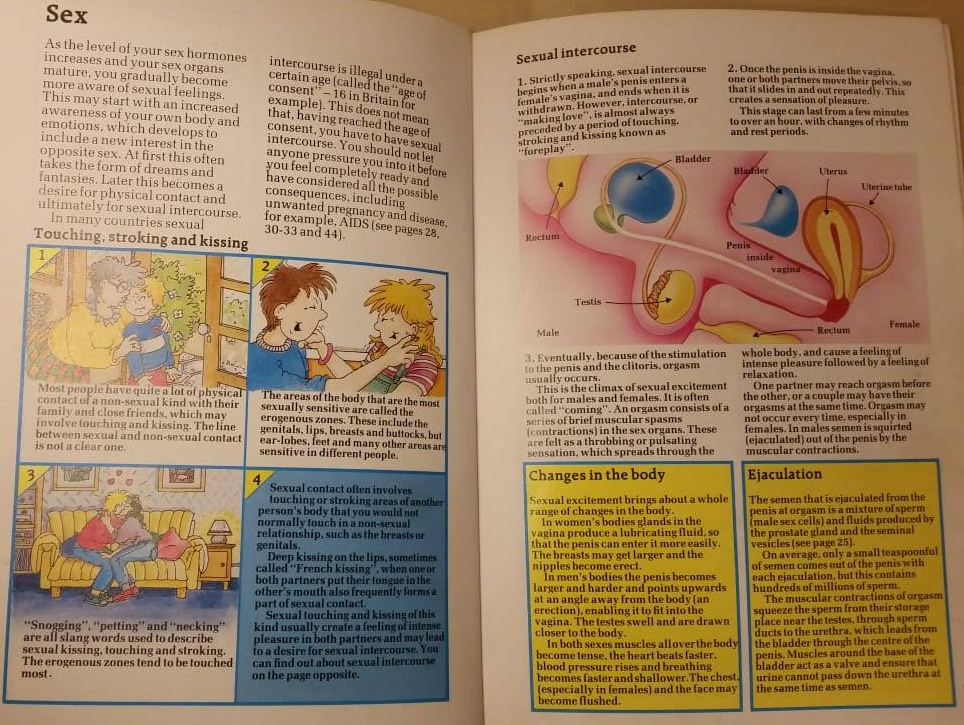
In some ways this book was impressive for its time. The pages before and after this one include boxes explaining that it’s perfectly fine to fantasise and to masturbate ‘during puberty’ (although by implication less okay afterwards?), and that around 1 in 10 people is ‘homosexual’ and even more are ‘bi-sexual’.
The ways this book covers sex is not dissimilar to any number of popular sex advice books today. It assumes that sex equals penis-in-vagina intercourse, and that we do it to achieve orgasm. It includes some mention that ‘foreplay’, masturbation, and same-gender sex as legitimate activities – although these are given nowhere near the amount of room as hetero ‘sexual intercourse’.
The messages in explicit/implicit sex education
The messages that I internalised from these books – and from the more implicit forms of sex education that circulated in pop songs, teen mags, peer conversations, and romance fiction – were the following:
- There are two kinds of people – boys and girls (there were also boy and girl specific Usborne books called What’s Happening to Me?)
- Boys have penises, girls have vaginas.
- Boys want sex with girls and vice versa (‘Homosexuality’ is this other strange thing that requires an explanation).
- Sex is penis in vagina intercourse.
- People generally orgasm from penis in vagina intercourse, which is the goal of sex.
- If you want to fall in love and have ‘a relationship’, you need to have sex.
These messages were unfortunate for me given that:
- I had a pretty strong sense that I wasn’t the gender everyone seemed to think I was.
- My genitals didn’t seem to work in the ways these books described.
- It didn’t make a lot of sense to me to be interested in girls and boys in different ways.
- The things I thought about when I was excited were not penis in vagina intercourse.
- When I eventually tried it, it was impossible for me to orgasm from penis in vagina intercourse.
- I desperately wanted to be loved and became convinced I wouldn’t be because I wasn’t physically able to either have penis in vagina sex, or to be attractive to the ‘opposite sex’ in the ways described.
Nowadays I’m thankfully aware that the things on the second list all apply to large numbers of people. In fact, if you put together all the people that at least one of those things apply to you would have the vast majority – rather than the minority – of people.
The impact of sex education
When I think about the legacy of any one of these disconnects – between the messages in implicit/explicit sex education and my own experiences – they are very painful. So many teenagers share the experiences of being convinced that they’re unattractive and/or abnormal because of their physical appearance, the ways their genitals work, their experience of gender, or their erotic desires and attractions – or lack of them.
It’s worth repeating that those who have at least one of these disconnects are actually in the majority rather than the minority. Also there are far too many – like me – for whom that sense of unattractiveness and abnormality was reinforced on a daily basis for several years in the form of bullying. From what I now understand of trauma, it’s hard to compute the damage done from being repeatedly told that you – and your body – are abnormal, unattractive, unacceptable and even disgusting, with nobody to counter these messages or to help you to bear the excruciating pain, fear, and shame that comes with them.
In my case I eventually learnt that I must conform – or pretend to conform – to that former list of messages, if I ever wanted the bullying to end, or to find love and belonging. This is the second layer of damage done by explicit and implicit sex education: all of the people forcing themselves to have unwanted sex, trying to conform to gender norms that don’t fit, allowing things to happen to their bodies which are not pleasurable or may even be painful or non-consensual, and entering relationships which aren’t good for them because that’s the kind of relationship they’ve been told is normal or romantic.
And, of course, it’s very painful indeed to realise – later in life – that none of this was necessary, that there were other ways you could have lived your life. It’s little wonder that many people double down and try to ensure that they – and others – conform to the sex, gender and relationship norms they grew up with. As Alex suggests, we could see that as a form of intergenerational trauma.
Real sex education
This all perhaps explains why I’m so committed and passionate about getting different messages about sex and sexuality out there: why I’ve co-created my own trilogy of books to provide a very different kind of sex education than the trilogy I received as a kid.
For me, the following list of alternative messages would be the absolute baseline required for decent sex education or advice.
- Gender is diverse and we all have a unique and complex relationship to gender.
- People have a diverse range of bodies – including sexual anatomy – which work in diverse ways. So it’s always about finding out how your body, and anyone else’s body, works at this particular time, without making assumptions.
- We can be attracted to all kinds of people, in many different ways, on the basis of all kinds of physical, psychological, and other features.
- Anything can ‘count’ as sex so long as it feels erotic to you, and it’s all fine to think about or act upon so long as that’s consensual for you and everyone else involved.
- There are all sorts of reasons to have sexual, sensual or erotic contact with yourself and/or others, and it tends to work best if you’re being present rather than trying to reach any kind of destination or goal, such as orgasm.
- All different kinds of relationships are equally valid – again so long as they’re consensual. None of them should require that those involved have any kind of sex – or do anything else – because that’s inherently non-consensual.
We really can’t get these messages across if we centre any one kind of body as the default kind of body, any one kind of gender or sexuality as the default kind of gender or sexuality, or any one kind of sex as the default kind of sex – even if we acknowledge that other kinds of bodies, genders, sexualities and kinds of sex exist.
Returning to the 1970s and 80s
Thinking about the book that Jules and I have just published, in the light of this trip down memory lane, I realised that we managed to return to the media of the 1970s and 1980s in another way in what we created. That is in addition to trying to come up with something that was better than the sex ed books that I received at that time.
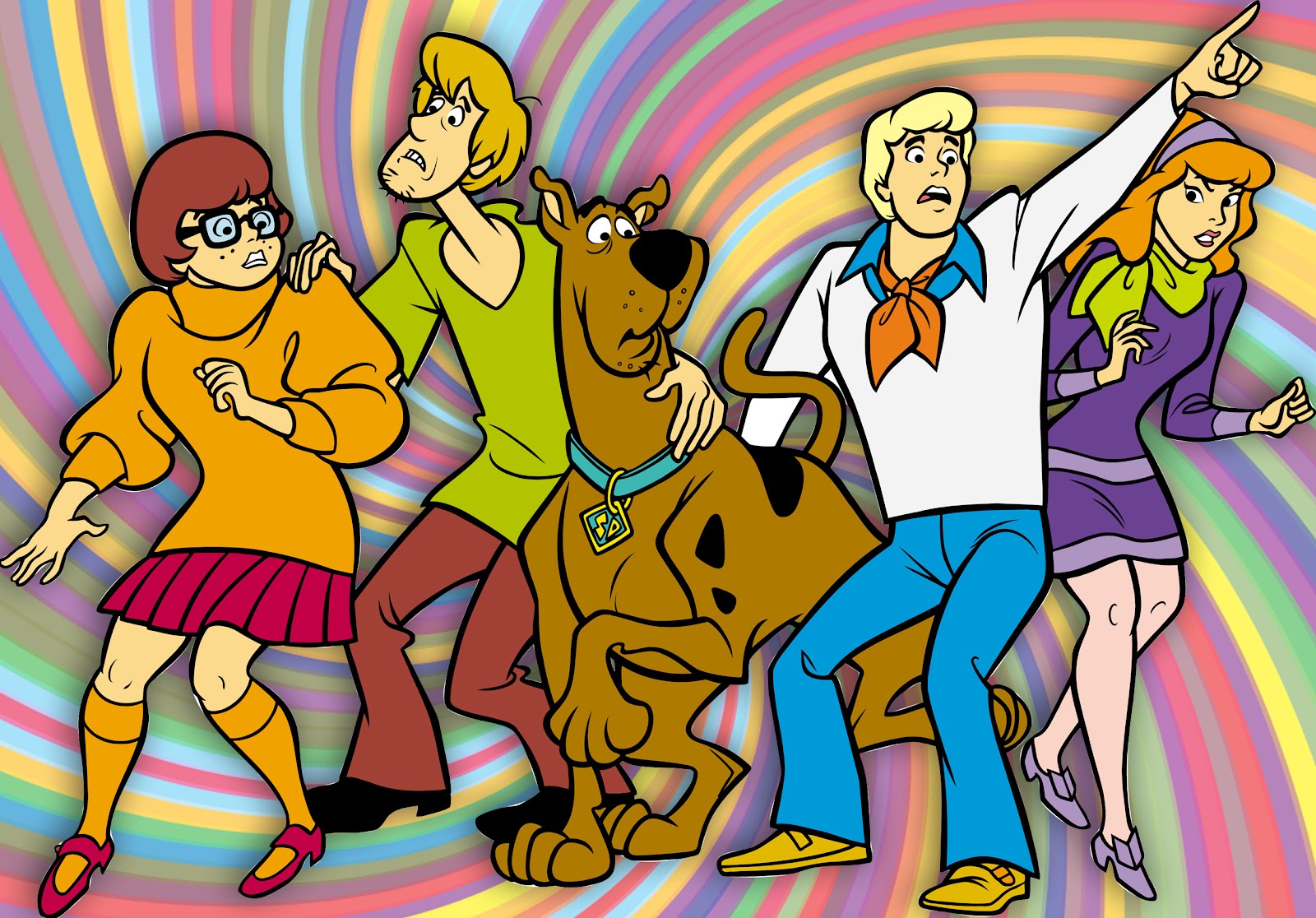
Our background theme for this book is a mashup between two 1970s creations which remain popular and are constantly reimagined: The Rocky Horror Show Picture Show and Scooby Doo.
As a kid I was obsessed with Scooby Doo and with anything relating to ghosts. In fact Usborne – who published the Facts of Life books – also published some of the best true ghost story books which I devoured.
I also vividly remember the first time I saw The Rocky Horror Show Picture Show at a friend’s house and all the confusing feelings it left me with: this depiction of another world in which all the rules of sex, gender, and relationships which I thought were set in stone were completely different. I remember the massive sense of loss that came – for me – at the end of the movie, when the human characters are left on earth with just the sense of how everything they thought they knew has been upturned. At the time I hard-related to the character of Janet, although nowadays that has certainly shifted!
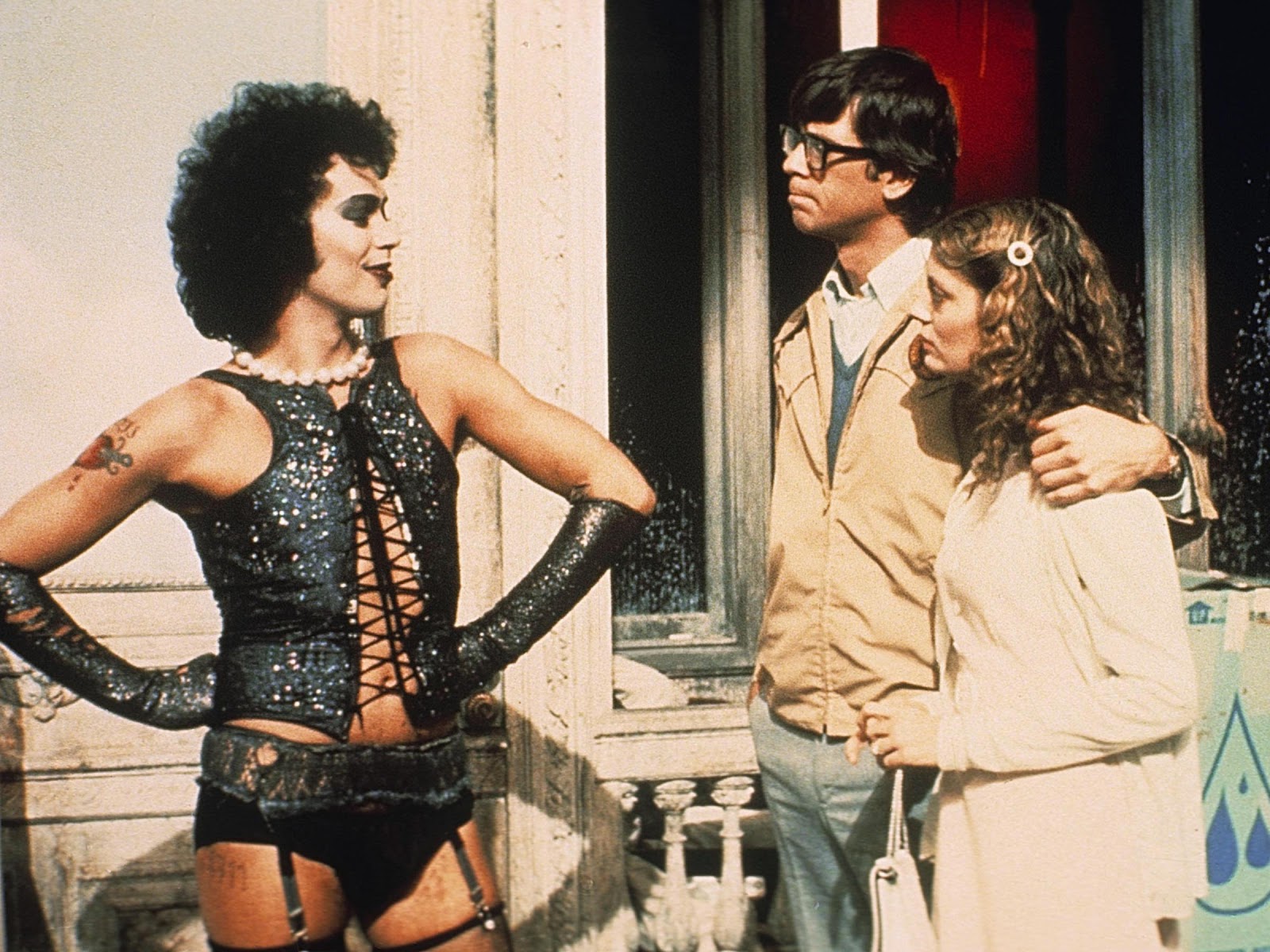
Jules and I mashed Scooby Doo and The Rocky Horror Show Picture Show together because we wanted a sense – like in The Rocky Horror Show Picture Show of unknowing characters entering the potentially confusing, frightening, exciting, wonderful world of sex and sexuality and returning changed by the experience. But, of course, in Rocky Horror, the main characters who do this are the young, white, heternormative couple Brad and Janet. Scooby Doo gave us the potential to imagine a more diverse group of characters to navigate this fun house / house of horrors. In the process we took the opportunity to (re)imagine a Scooby gang who included more intersecting experiences and identities, and a more consensual version of Frank-n-Furter and his friends for them to engage with, which made us both very happy.
Of course no book is perfect, and there’s so much more that I wish we could have covered in Sexuality: A Graphic Guide, some of which Alex and I have been working to incorporate into How to Understand Your Sexuality. For example, Alex and I include much more on how trauma of all kinds – as well as pleasure – shapes our sexualities. We also touch on more indigenous scholarship, which is a vital perspective when considering the problems with western understandings of sex and sexuality, and how these have been imposed on people around the world in forms of historical trauma which link to claiming/owning of land. Despite having studied sex and sexuality for well over two decades now, I’m still learning about it – personally and politically – and still have much to learn.
I hope that Sexuality: A Graphic Guide is a helpful starting point to get folks questioning the messages that they’ve received in their own explicit and implicit sex education. I also hope that some people may receive it – and other resources like it – young enough that a more open understandings of sex and sexuality may become a foundation for their burgeoning erotic experiences, instead of them having to begin by undoing the damage of previous messages.
More information…
You can listen to me on The Real Sex Education podcast here.
There are details of the online launch events for Sexuality: A Graphic Guide here.
If you liked this post, please feel free to support my Patreon.
The post New sexuality book out! The real sex education! appeared first on Rewriting The Rules.
]]>The post First book on audio appeared first on Rewriting The Rules.
]]>What can psychology teach us about sex?
How do different bodies and brains respond sexually?
How can we prevent people being stigmatised for their sexuality?
The Psychology of Sex takes you on a tour through the different ways that psychologists have created and sustained certain understandings of sex and sexuality. Bearing in mind the subjective nature of sex, the book explores cultural concerns around sexualisation, pornography, and sex addiction, as well as drawing on research from sexual communities and the applied area of sex therapy.
When so much of our relationship to sex happens in the mind, The Psychology of Sex shows us how important it is to understand where our ideas about sex come from.
The post First book on audio appeared first on Rewriting The Rules.
]]>The post Figuring out your sexuality appeared first on Rewriting The Rules.
]]>Is it common for people to question their sexuality?
It’s actually really common. Although many people assume that we’re born with a fixed sexual orientation, actually recent research has found that most people’s sexuality is fluid, meaning that it changes over the course of their lives. For example, we might have been attracted to one gender for our whole lives but experience an attraction to somebody of another gender. This might start us questioning how we identify our sexuality going forward.
It’s also important to remember that sexuality isn’t just about what gender or genders we’re attracted to. It’s also about the amount of sexual attraction we experience (from none to high), the kinds of sex we enjoy, the types of people we find attractive, the roles we like to take sexually (more active or passive, submissive or dominant), and many other things. All of these aspects of our sexuality can change over time meaning that we might start to question what our sexuality is, or how we identify it.
Can this happen at any time in your life?
Absolutely. Most people experience some changes in their sexuality over the course of their lives, for example in the age of the people they’re attracted to, the amount of sex they want to have, or the types of things that turn them on. Our sexuality can be impacted by our physical and mental health, the amount of energy we have, the people we hang out with, who we’re in relationships with, and the messages about sex that are around us in our communities and cultures. All of those things change over time as well.
Why might someone question their sexuality?
Some common reasons for questioning our sexuality include:
- Finding that we’re attracted to someone who is quite different to our usual attractions (e.g. a different gender, physical appearance, or background)
- A friend, colleague or family member coming out as a different sexuality which can make us realise that it might apply to us too
- Learning about a sexuality we were previously unfamiliar with in the media or from a friend. This can give us a sudden sense of realisation: ‘oh maybe I could be that,’ ‘that label might apply to me.’
- Watching porn, reading erotica, or having a fantasy and realising we’re turned on by something that we didn’t used to be turned on by, or which we just hadn’t thought about before.
What should you do if you think you might be gay, bisexual, pansexual, queer etc?
First of all it’s really important to remember that whatever your sexuality is – and however you decide to label it – is absolutely fine. Sadly we live in a culture which gives us the idea that it’s more ‘normal’ or ‘better’ to be straight than it is to be gay, bisexual, pansexual, queer, etc. Actually, recent research suggests that at least as many young people are on the spectrum from ‘exclusively heterosexual’ to ‘exclusively homosexual’ than are at the ‘exclusive heterosexual’ end of that spectrum. Also more people have some kind of kinky sexual desires than don’t. And many people are on the asexual spectrum. Even if your sexuality is very rare or unusual, it’s still completely legitimate, so long as you only act on it consensually (that’s also true for common sexualities too of course!)
If you think you might be a different sexuality than the one you thought you were then it’s a great idea to do some self-exploration. Give yourself time to reflect on your sexuality and how you might like to label it, if at all. Journalling, engaging with ethical porn (and paying for it!), reading erotica, and fantasising are all great ways to do self-exploration.
It can also be really helpful to get support from other people who are in these sexual communities. There are online groups, meet-up groups, and community resources for all of these sexualities, as well as books and videos online. Check this stuff out but do remember that nobody should be pressurising you to label yourself in any way, or to come out unless that feels good to you. Go gently and take your time.
Is there a way to know?
Sexuality is a complex, constantly changing and evolving, thing so there’s no way to be sure whether you are ‘really’ straight, gay, bi, pansexual, asexual, demisexual, submissive, etc. It’s much more about whether those words – or others – feel like a good fit for you. It’s fine to just call yourself ‘questioning’ for as long as that feels right, or simply not to label yourself. It’s also fine to use one label for a while, and then change it if it stops feeling like such a good fit.
The main thing to remember is that it is perfectly legitimate to have whatever attractions and desires you have sexually, so long as you only act upon them consensually. If that feels like a struggle for you – or if these questions are causing you distress – then it’s worth getting some professional help from a therapist or counsellor. The Pink Therapy list in the UK is a good one for therapists who specialise in this area. The Kink Aware Professionals and Poly Friendly Professionals lists online are also useful international resources.
What would you recommend for people who think they might be but aren’t sure – any resources, books, practical tips?
I’m writing a book called How To Understand Your Sexuality next year which will hopefully be helpful! Meanwhile BishUK and Scarleteen are excellent resources for younger people questioning their sexuality, and contain useful material for people of all ages too.
You might also find these zines helpful to work through:
Justin Hancock and I talk about these themes often on our podcast at megjohnandjustin.com.
The post Figuring out your sexuality appeared first on Rewriting The Rules.
]]>The post Rethinking sex in relationships appeared first on Rewriting The Rules.
]]>Why do many couples feel pressure to have a certain type of sex?
Unfortunately we have a cultural script that only certain things count as ‘proper’ sex. Generally this is penis-in-vagina sex leading to orgasm, although there are different scripts among women who have sex with women, or men who have sex with men. Even there there is still often an idea that there’s a default way that people should have sex.
Other things that many people like just as much – and often more than – penetration are either seen as ‘foreplay’ before the ‘real thing’ (like oral sex or mutual masturbation) or as ‘alternative’ forms of sex, with a lot of stigma around them (like kinky play or threesomes).
We see this idea of proper, normal, default script everywhere from Hollywood movies, to the medical categories for ‘sexual dysfunction’, to sex advice books, so it’s hard to escape from even when we know that it’s problematic.
How can people start to move beyond these expectations?
I think it’s useful to realise that – far from being good for us – the idea of a certain kind of normal sex is responsible a lot of problems people have with sex.
Trying to ‘achieve’ penetration and orgasm takes us away from being in the moment and from being open about our desires, which are the two things that are most vital for enjoyable sex.
The default sexual script also leads to a lot of people having unwanted sex – because they feel they ‘should’ do this ‘proper sex’ – which makes them end up wanting to do it even less. In long term relationships, people often stop enjoying sex because of having such a limited sexual script, rather than being able to enjoy how their desires shift over time and pick from a wider menu of activities which can all be great.
If people are experiencing a period of no sex within a relationship, how can they approach and resolve the situation with their partner?
The first thing to say is that it’s absolutely normal to stop having sex. Actually far more relationships stop being sexual over time than those that stay sexual, and even in those that do remain sexual, the sex fluctuates over time.
As therapist and writer Esther Perel points out, it’s actually very difficult to have relationships that are both warm and companionable, and hot and passionate, at the same time. As most long term relationships become more warm, they stop being hot. It’s a cruelty of the sex advice industry that it sells us the myth of ongoing hot relationships.
Also people in asexual communities teach us that it’s perfectly possible to be a healthy human being – in a healthy relationship – without being sexual, so accepting not being sexual is absolutely an option. One thing people should never do is to try to make themselves have sex that they – or their partner – don’t want. So much non-consensual sex happens this way and it takes a massive toll on people’s mental health.
If one or both partners do still feel desire for sex then there are a huge array of openly non-monogamous and monogamish relationship styles to consider. It’s also worth thinking how each person is building solo sex into their lives, including fantasy, erotica, and/or porn – this is really important in itself, and for understanding yourself as a sexual person. If partners do want to have sex with each other, then exploring their individual fantasies and desires, communicating about these, and finding the potential areas of overlap is a good start.
What are the best ways to begin a conversation with a partner about rethinking expressions of sex and intimacy within the relationship?
I’ve created some zines to help with this, with Justin Hancock, called Make Your Own Relationship User Guide and Make Your Own Sex Manual. These can help you to figure out both what relationship style works for you and your partner/s, and what you’re into sexually, as well as communicating that. It’s a great idea to make these things an ongoing conversation in your relationship as people often have different assumptions about what their relationship rules are, or what they’re looking for from sex.
Beyond heteronormative penetrative sex, what forms of sex could couples explore?
Justin and I recommend expanding out your notion of sex as far as possible. Get together and write down all the things that could possibly be thought of as erotic, sensual, or hot by somebody somewhere. Then you have a menu to work off and can go through ticking which ones you’d be keen to try, or not, and other thoughts about each activity. That way you can build up a sense of your overlapping desires and interests.
It’s also a great idea to explore sexual fantasy – whether that’s fantasies you have in your head, erotica, or porn, that you enjoy. Sharing this can be an excellent way to see where your areas of overlap might be.
Justin and I did this podcast of all the things you can do sexually with somebody which don’t involve genitals – it’s a really long list. The Wheel of Consent 3 minute game is also a great way to explore different kinds of physical touch and dynamics between you. It’s a good way to learn how to be consensual too.
What other forms of intimacy could couples explore?
Often when people want sex it’s for some particular reason, for example to feel close with their partner, to relieve stress, to get into a high energy state, to relax, or to be playful. It’s worth checking in with the state you’d like to be in – rather than just saying that you want sex. There might be lots of things you could do – alone or together – to get into that state.
Taking the pressure off sex is one of the most common pieces of advice from sex therapists. So think about carving out time to spend together as a couple where you tune into what you’d like to feel at the end of the time together, and come up with non-sexual things you could do to get there. For example it might be that a massage, cooking together or going for a walk together relaxes you and meets your need for intimacy, or that playing a game together, teasing and tickling each other, or watching comedy meets your need for playfulness.
It’s great to do solo time like this too because it’s good for couples to get both time together and time apart.
The post Rethinking sex in relationships appeared first on Rewriting The Rules.
]]>The post Hot love: Being and having appeared first on Rewriting The Rules.
]]>The wider cultural sense of it seems to be that it’s one of the best experiences we can possibly have. Perhaps the best experience. The thing to do with it is to build a whole relationship upon it: clearly the person we have such feelings for must be our true love or The One and this means they’re also the person who should become our best friend and the person we have sex with, live with, commit to more than anybody else, and build a life and family with. It’s also important to keep the hot love alive in that relationship over time: the passionate, in-love, erotic and romantic feelings. Struggling to do this is seen as some kind of failure. Even some communities that question the cultural norms of romantic love – like polyamous and sex positive communities – seem to accept that the thing to do with hot love is obviously to go for that relationship.
I’ve written a fair bit in Rewriting the Rules and elsewhere about the issues with putting that much pressure on any one relationship. I’ve also explored Esther Perel’s theory that we can’t get warm love and hot love in the same place over time, so that idea of keeping hot love alive sets us up to fail (but ensures that the sex and relationship therapy and advice industries do rather well!) I’ve also written before about New Relationship Energy and what that might open up and close down, which is a similar idea to hot love.
But what of hot love? Where does it come from and what might we do with it?
Having and being love
I recently read an excellent book by Erich Fromm called To Have or to Be? which is helpful on many things, not least on what we need to do in order to avoid the destruction of humanity (the fact he was writing all this back in the 1970s though makes for some painful reading).
Basically Fromm talks about how we can do pretty much everything in ‘having’ mode or ‘being’ mode. Having mode is when we’re trying to get something for ourselves, and being mode is when we’re present and open to the experience. Of course the capitalist culture which we’re embedded in is all about having mode – trying to get more and more of what we want, and none of what we don’t want. Fromm’s sense of what we need to do is to move – individually and culturally – towards being mode, and he offers a combined Marxist, Buddhist, and Psychodynamic path for how we might do that.
What has that got to do with hot love? I think when we experience hot love it’s often a combination of a having kind of love and a being kind of love: like two interwoven threads through the hot love experience.
Having love
We all have our childhood – and later – wounds, attachment issues, traumas, patterns – whatever you want to call them. Hot love often seems to come when there’s some kind of fit between our’s and the other person’s that we recognise on some – perhaps unconscious – level. Maybe it seems that we’re finally getting the kind of love that we lost as a child. Perhaps it feels like there’s a promise or potential to play out our early patterns differently. All of this occurs within a wider intense cultural promise that romantic/erotic love will save us. So we’re drawn to hot love: to immersing ourselves in it and to escalating it to make it a main relationship.
Of course our bodily responses come into all of this as well, making the hot love experience yet more overwhelming. Our nervous systems and neural pathways seem to recognise these familiar dynamics, drawing us in. The experience of strong erotic desire – and/or of nurturing and being nurtured – results in various hormonal reactions that intensify the experience.
However, chances are high that our patterns will play out in similar ways to the past if we’re not aware of them, and perhaps even if we are. It’s particularly risky if – on some level – we’re looking outside ourselves for somebody else to fix that stuff. It’s easy to approach the relationship in a having kind of way – wanting all of that promise and none of the toughness that will inevitably come with being confronted with our old patterns, habits, and pain again.
Being love
We all have the capacity for the more being kind of love. In fact Fromm – like bell hooks – questions whether the having kind of love should even be called love. He says that love isn’t a thing we can fall into, or a feeling we can have. It’s an action that we do when we’re acting in a loving way towards someone or something. The having kind of love is not really very loving at all.
Being love is real kindness and care for the self and others: being alongside each other, accepting and loving all that they are and all that we are. Hot love can give us a glimpse of this kind of love, as if we just tapped into the source. Perhaps hot love is one of the main experiences in life when we really feel that capacity for being love: our connectedness to ourselves and the other person, a sense of knowing that we are okay (because we feel so loved) and they are okay (because we feel so loving towards them).
But it’s so easy to drop from being to having mode with this kind of love because we want so much to keep hold of it. Quite quickly we may try to alter the very relationship which enabled this being love experience to happen because we want to get more of this feeling. This actually risks us getting less and less of it.
So what do we do about hot love?
If the having and being kinds of love are intertwined in the hot love experience should we run a mile from it, or embrace it? Or both? Or something else entirely?
Personally I think it is worth being cautious, recognising that the force behind hot love is often this very consuming yearning that comes from needs and desires that haven’t been met in our lives, whipped up by chemical reactions and cultural stories which encourage us to look to erotic and romantic love in particular to meet these yearnings.
Generally when we feel hot love we don’t know the person well, and we have no idea whether we’d be compatible in various ways, or enrich each other’s lives. We’re going on a feeling which is likely in large part projection of our stuff onto them and the hope of what they might be for us (the having kind of love).
The popular idea is that we only feel hot love for certain people, so those are the relationships that we should go for. There’s an argument that the opposite is true. While such relationships definitely give us the opportunity to see where we’re stuck and what our yearnings and patterns are, the old dynamics and intense feelings can make them hard places indeed to see clearly and to separate off enough to work on that stuff in ourselves.
I think it’s worth disentangling the people we feel hot love for from all other aspects of relating, like who we spend time with, have sex with, build family with, cohabit with, work with, etc. If we can see all of these as different strands then we can intentionally decide which relationships are compatible in the best ways to do these things: in ways that enhance, enrich and expand the experience of all the people involved.
Then we can see hot love as hot love: separate to all that other stuff, and decide if and how we want to engage with it. If we do engage with it I’d suggest doing so with our eyes open: recognising it for what it probably is and slowly and creatively engaging. Ideally we’d have no expectations or assumptions about the shape it would take, and a lot of space to keep reflecting on what it brings up for us.
What about hot love showing us our capacity for being/doing love?
But if hot love is one of the – perhaps few – places in life where we can realise our capacity for that other kind of love – the being kind – shouldn’t we go for it in order to experience and enhance our ability to do that? Surely we should be all about expanding our ability to love others and ourselves in ways that see all of them, offering kindness and care, and not treating each other as objects (like having love does)? As Fromm points out – this is essential given the current state of the planet and the way we mostly all treat one another: on the individual level of interpersonal conflict and abuse, and on the cultural level of valuing some lives, bodies, and labour way more highly than others.
Personally I think it’s more about nurturing that capacity for being love in all of our relationships, including our relationship with ourself. Maybe it is partly because our culture is so stuck in having mode that we only experience being love so fleetingly, and only at certain times like when we fall in love, or share an intense experience in a crowd, or perhaps when we feel love for a child or companion animal.
Perhaps we can see those kinds of experiences as giving us a useful sense of what being love can be like, so that we can start the slower, longer process of cultivating that capacity in ourself and bringing it to all of our relationships and projects. It’s a bit like being helicoptered up to the top of the mountain to see the view, and then back down to the bottom to start the climb.
Another metaphor that occurred to me is being given a candle with a flickering flame. In having love we’re so grateful for that flame, and so frightened of losing it again, that we hide it away in a dark room and huddle around it with another person to get the small amount of heat and light that it gives off. But an alternative would be that we could use that flame to light a whole bunch of sticks and create a fire. We could keep feeding and nurturing this with others so that the fire keeps going, and keeps way more people warm.
One thing we know for sure about hot love is that – like the candle – it will eventually, inevitably, flicker out. Either the relationship will turn into a different kind of relationship (like a warm, companionable, kind) or it’ll end. And if we go more and more into having love then either we’ll have to break up or remain in something much more challenging, recognising our old issues of rejection, abandonment, feeling trapped or unsafe, for example. I recently read someone suggest that whether a relationship breaks up or remains together, the things that the people in it will be confronted with – and the work that they’ll be called upon to do if they’re up for it – is pretty much the same.
But if hot love brings us up against our stuff isn’t that a good, useful thing?
In a way it is. I think it’s always useful to see where we’re stuck or hooked. It gives us the opportunity to work on that stuff in ways that free us up, leave us more real and humble, and more able to love and be loved in that being mode. But given the ways we tend to engage with hot love – and the cultural promises that are attached to it – it’s really hard to see what it reveals to us as any kind of gift, or to engage with these hard hard lessons.
When we’re in the having mode of love the initial wonder, joy and pleasure at finally having our yearnings met (being seen, approved of, or desired, finding safety, etc.) are the flip side of eventually not having them met because we’ve put them all on this one relationship and asked too much of it. That can be extremely painful as it treads a familiar path of loss, hurt and rejection which we were likely trying so hard to avoid when we grabbed hold of the hot love in the first place.
We can do our work alone, in a couple, in a family, with friends, in a community. Whatever our life is like these things will come up and we can choose to face them or to run away. Is a hot love relationship the best place to do our work? It may well bring everything up very intensely and starkly, but we can also get so caught in the dynamics that it’s extremely hard to see clearly. Also in focusing on a couple relationship, we can become separated from the kind of support systems that we need to do the work.
So again I’d be very cautious. Hot love can be the basis for a later, warm, relationship if it is flexible over time. But I’m not convinced that it has any more going for it than forging and nurturing multiple connections and building intentional relationships based on shared values, ways of living, etc. In hot love we’re often building a relationship on the foundations of that intense emotional experience, without taking our time to get really informed about the other person, the dynamic between us, and what we each want before building anything together. It’s kind of like forming a relationship while we’re high and hoping it’ll still be good when we sober up.
Hot love has a high risk of falling purely into having mode. This is not to say that other kinds of relationships escape from having mode, or the kinds of unconscious processes and unhelpful habits that I’ve covered here, of course. But they can be less intense, more spacious, and more supportive of us doing this work if we share these kinds of understandings.
And that’s my hot take on hot love!
The post Hot love: Being and having appeared first on Rewriting The Rules.
]]>The post Showing Your Working: On Writing Vulnerable appeared first on Rewriting The Rules.
]]>Writing is a vulnerable act. This is one of the many things that it has in common with sex (which needs to be the topic of a whole further blog post). When you write, you’re putting yourself out there – exposed. Even people who are doing pretty safe forms of writing – where there’s nothing personal in there and where every statement is backed up with facts and figures or references to other peoples’ work – still feel massively vulnerable. We’re scared of getting it wrong, we can easily imagine every possible critical comment, we fear being ‘found out’ in relation to how little we know and/or how poorly we write, we compare ourselves to other writers who we admire and we can’t possibly measure up because our voice is not their voice.
Writing about vulnerable stuff
How much more vulnerable then when we’re writing about things that we, ourselves, feel vulnerable about. I felt that heavily last year when I was finishing the writing for my new graphic guide on gender. It struck me just how much of what I was writing about was deeply personal and painful: Writing about trans during the trans moral panic; about #MeToo as a survivor; and about intersectional feminism when I’m so aware that I’ll inevitably perpetuate the very systems I’m challenging at times, because of the things that I don’t see in the areas where I’m privileged.
And then there’s writing more directly about our personal lives. This has come up with several clients lately. One worries that describing his daily moments will be read as egocentric – that it’s not doing anything for anybody else – even though it’s the writing he feels so passionately drawn to. Another fears what limits may be put on their activism, or their future career, if they write as openly about their own experience as they’d like to. I’m surprised when another client doesn’t see the link between the memoir-style posts that they write, and the writing that I do. I feel like my own vulnerabilities are starkly apparent in much of what I write, but perhaps the critical self-help style that I generally use obscures them somewhat.
The challenge from that client spurred me on to publish a few of the more vulnerable blog posts that I’ve been holding back on: ones that are more directly related to my own life and my own struggles. I put one out there last week. The feelings on publishing a more personal post always follow a familiar path. First a fizzy nervous feeling: ‘did I really do that?’ Then a fear of negative repercussions. Then a few comments come back: people saying that they connected with what I wrote, that it was just what they’d needed to read on that particular day, that they share that experience and it left them feeling less alone, that it helped them to reflect on their own lives. Those comments help me feel less alone and more connected right back. And I’m reminded that it’s nearly always the more vulnerable things that I write that get that kind of response.
I’m reminded of something Mollena Williams-Haas said in this talk: How creating from our most vulnerable places often leads to the best work we can do – for ourselves and for each other. It’s often higher quality, connecting creator and audience on a more visceral level, and it’s one of the best ways in which we can be of service to our communities. I love the way that Mollena links submission to vulnerability to activism in this way, it’s something that resonates deeply for me too. In fact that talk is an excellent example of what I’m talking to because she went for the vulnerable, open approach – weaving together the erotic and the creative – and it spoke to me so much that I remember it to this day.
Showing and telling
One of the classic pieces of advice to aspiring fiction writers is ‘show, don’t tell.’ Readers don’t want to be told the main character is a cocky piece of work who hides an inner vulnerability, they want to see that from the way he strides across the bar in the first scene, oh-so-casually glancing around to check that everyone is clocking him.
So is there a value to showing rather than telling in non-fiction too? I guess the writing that I do which I experience as most vulnerable is the stuff where I show my workings, rather than just telling the reader that this is something I struggle with too.
When I first wrote Rewriting the Rules the main place that I did this was the conflict chapter. I illustrated that with a detailed description of the kind of excruciating conflicts that I’ve had in partner relationships. In the second edition I added much more detail about my own relationship patterns in the love chapter, in order to demonstrate how these come from a combination of wider cultural messages, and our own lived experiences growing up with these messages all around us.
Nowadays I do a few kinds of vulnerable writing. I write more memoir-style pieces where I reflect on something I’ve been through, or am personally struggling with, or attempting to put into practice at the moment. I write fiction which is well summed up by this person on twitter.
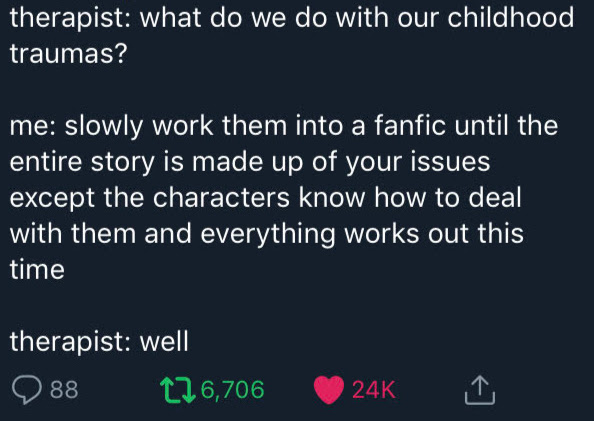
I also create comics and zines about aspects of my experiences.
Generally I use the personal sharing I do in such writing as an example: this is how you could do this kind of work, this is how you could understand how our experiences shape our habits, here’s a practice you might try. But sometimes I let the showing stand alone. Perhaps there’s not always the need to tell as well as show.
When is vulnerable too vulnerable?
This is complicated territory because writing from the vulnerable place is also risky. You could end up hurting yourself by trying to write about something which is still too raw and painful. The writing could stray into something over-sharing or self-focused in a way that doesn’t really connect with others. This is particularly likely if you’re still very caught up in the details of what happened in that particular situation. It could feel too vulnerable if people respond critically to it once you’ve put it out there.
There’s some kind of balance to be struck between the value of writing about what’s live when it’s live – the authenticity and sense of aliveness that kind of writing can have – and the wisdom of knowing when something needs more time before you approach it creatively – either in order to be safe enough for yourself, or for it to take a form that others can connect with.
On our podcast Justin and I often come up with ideas we’d love to cover but they feel too live for us – or for others in our lives – at the moment. We keep a list on our phones of topics that would be great to cover, but we want to come back to them when it feels like we have a bit more distance from them ourselves.
Another thing I do is to journal about the things that are really live initially in a format which is not for public consumption. I’ve filled hundreds of pages in the last year, going through major transitions in work, home, and relationships. Many of the ideas and practices that have come out of this writing will likely eventually find their way into my non-fiction and fiction writing, but it’s probably best that the writing I do for the initial processing is for my eyes only.
There’s an inner sense of ‘not ready’ and ‘ready’ which I’m beginning to trust in this – and other – aspects of life. For example, there will hopefully eventually be seven comics in this series, but this is the only one that’s felt complete enough to get down so far.
If something starts to take shape as a piece of writing for a reader beyond yourself you can always write it when live and return to it later. It’s a great idea anyway to separate the writing process and the editing process. This means that in the first drafting you can really sink into the flow and write it however it comes, knowing that you’ll be coming back to it before it goes out anywhere, so you can free yourself up to make mistakes and be imperfect. This is what Anne Lammot calls the ‘shitty first draft’ – something we’re allowed to do in writing and in life.
Personally I find it helpful to have a notepad or extra document open alongside my writing, where I write down the worried or critical thoughts I have about while I’m doing it: from information I need to check to issues around diverse representation. Then I know I can go back to those concerns during the editing process, but can park them and keep writing for now.
When I’ve written something and it has that feeling of potentially being too raw, or too vulnerable, to put out there at present, I leave it and return to it later: a month, a year, whatever.
I also have a sense of who my crew are for reading things that I’ve written which I’m not sure about sharing. If you know that the future version of yourself, plus several friends, will be reading the writing and feeding back about it before it sees the light of day, that can also help you to feel more free to write now.
Over time you can get a feel for what is just the right amount of vulnerable and what is over the line. Like if the exposure scale goes from 0-10 perhaps 5-6 is that sweet spot for things that are real and vulnerable in ways that stretch you a useful amount, and will likely connect with other people. But over a 7 is into the too-vulnerable zone and worth leaving till it feels less live. I’ve adapted this from an idea I got from Love Uncommon, that when our feelings are 0-7 the thing to do is to stay with them, but over 7 has tipped us into trauma/overwhelm and the thing to do there is to get back to a sense of being safe-enough before we try to stay with the feelings.
What if…
Here’s a few things people often worry about when writing about vulnerable stuff, plus my thoughts on them:
What if…people hate it?
I figure for everything I write there’s going to be a few folks who’ll really love it – the ones for whom it hits just the right point on the right day. Now that I have quite a lot of people who regularly engage with my stuff, there’ll probably be quite a few others who like it, which is great. Then there will be the vast, vast, vast majority of the world who have no idea who I am, no wish to read my stuff, and would feel pretty meh about it if they ever did. Then there’ll be a few people who – if they did read it – would totally hate it, either because they hate me – or people like me – or because it’s the opposite of what they think, or because they’re just having a bad day – or whatever.
In my case I’m generally writing for the people who find my stuff interesting, useful, or entertaining. Nobody else has to read it. If they do, and they don’t like it then that’s okay, they don’t have to read my stuff again.
What if…people are mean about me?
I think that people imagine that this will happen a lot if they put stuff out there, but it’s actually pretty rare. I write on some fairly controversial topics and I’ve very rarely have someone attack me or criticise my writing. It has happened, but to be honest it’s usually been something out of left field that I could never have predicted. I wouldn’t have avoided the experience by deciding not to write about the vulnerable stuff.
It’s definitely worth having some plans in place – if you write publicly – about what you’ll do if you do find yourself being criticised or attacked in a big way. Is there somebody who can take over your inbox and social media during the time it’s going on? Could you get away and do self-care till it’s died down a bit? Is there a holding message you can prepare in advance to put out while you take your time responding – if a response is required? Can you think advance of some kinds of filters to decide which kinds of critical feedback you’d like to take seriously and which you wouldn’t (around who gives it, in what form, what kind of issue it raises, etc.)?
What if…I change my mind later?
People worry that once you’ve written something it’s somehow set in stone and you could be judged for it FOREVER. I think it would be great if we could make a habit of returning to things we’ve written in the past and say how our views have shifted, or what we know now that we didn’t know then. We’re all in an ongoing process, and it’s not fair to judge a person now by who they were or what they knew 5, 10 or 20 years ago. Also culture is moving on and this makes it more possible to do better on many issues today than we might’ve done in the past. We could reflect on this process of change in our writing in useful ways – being accountable for the impact of our work – instead of being defensive and insisting that every word we’ve ever written was perfect.
What if…it’s vulnerable for other people I’m writing about?
This is where consent comes in (I said writing was like sex in more ways than one). If you’re writing about other people then it’s not okay to put something out there that could leave them vulnerable without their consent. There are several options here:
- Only write your story, not those of other people who might struggle to read themselves depicted, or to have themselves read about by others. Having had the experience of being reported about in the press twice without my consent I know very well how utterly traumatic, confusing, and powerless this experience can feel. I wouldn’t wish it on anybody.
- Keep things general rather than specific.
- Anonymise people (like I did when mentioning my clients earlier).
- Have consent conversations with people you would like to write about. Remember to acknowledge the power you have in the situation and any pressure they might feel under to agree to it: Ideally give them several options rather than just ‘go ahead’ or ‘don’t do it’. Take anything other than a definite ‘yes’ as a ‘no’. Remind them it’s fine to change their mind at any time (ongoing consent).
- Write collaboratively with the other people concerned so that you all have control over it together – this could be a useful process anyway.
- Write it as fiction rather than non-fiction, changing all identifying features, combining people together, or completely making up characters but keeping features of the experience true to life. This is what a lot of therapists do when they want to write about client work without breaking confidentiality. It’s what Alex and I do when we want to write a bunch of diverse experiences around an issue in our collaborative books.
There are complexities around all this of course when it comes to memoir writing particularly: what constitutes writing about somebody else versus telling your story? Again it can be useful to give yourself complete freedom to write what comes in the first draft, and then decide which strategies – or combinations of strategies – you’ll use to keep it ethical when you’re editing.
What if…I get something wrong?
You can go gradual. It’s not a binary of keeping something to yourself or putting it out there for all to see. You can have trusted friends read it first to give you a sense if it’s something worth sharing more widely. You can have sensitivity readers who you offer something to in return for reading it with an eye to particular aspects you want to be sure you’ve got right (e.g. axes of oppression you’re not personally familiar with but have written about, or science or history parts). If you have a publisher then you’ll have at least one editor who will read it before it goes out there. If it’s a blog then you can always share it only with a certain group of people, or put it out publicly but only share it with your social media friends or followers initially. And if you do get something wrong you can acknowledge that and change it immediately if it’s online, or in a later edition if it’s in print.
Writing vulnerable
Why would we write vulnerable stuff given all of these fears and potential pitfalls? I think that it does something very important for us personally, and for others reading our work.
Personally there is what Patrick Califia calls an antidote to shame in writing vulnerable stuff. This is often the stuff that we fear – deep down – might not be okay about us. Writing it and putting it out there is a way of saying ‘this is me, with all my inevitable frailties and failings and flaws, and I’m still okay.’ Under capitalism it could also be seen as a political act to challenge the success/failure and good/bad person binaries by speaking openly about our struggles, our mistakes, and our messes.
Related to this, writing vulnerable goes against the current pressure to curate and present a perfect image on social media and beyond (which brings with it a horror of being revealed as imperfect, which we inevitably are).
For me it’s always been about resisting the common depiction of the ‘self-help author’ or ‘expert’ who has it all together and doesn’t struggle in the way that ‘regular people’ do. Fuck that noise quite frankly. We hardly need another point of comparison to judge ourselves against and find ourselves wanting in the current climate. If we only put out our successes and triumphs and never our struggles and tragedies we’re feeding that culture of comparison. So we’d better get vulnerable.
Or we can sidestep the whole thing entirely as I do on Instagram and only share images of lovely nature/animals and food I’ve cooked (yes I am quite a good cook, but I’m rubbish at loads of other things I promise).
The post Showing Your Working: On Writing Vulnerable appeared first on Rewriting The Rules.
]]>