The post A new ‘world’ and book updates appeared first on Rewriting The Rules.
]]>It feels appropriate that I have an addition to our Plural Tarot project, from last year, to share with you at this time. Back then we ended the Plural Tarot zines with the final card in the major arcana – The World – which showed me, Fox, heading out into the world to re-engage after our seven years of crisis and collapse, and our five years of deep retreat. The other plural selves in our system were very much in the background of that card, as that’s how I experienced them at the time. I wondered whether it would just be me, with Ara’s support, going forward, given that we hadn’t been able to connect with the others vividly – in the way we used to – for a whole year.
Turns out that – thankfully – this wasn’t the case. We head into 2026 feeling deeply connected as all seven of us (having had several years of just five, and one year of just two). I’m particularly spending a lot of time with our ‘critic’ (Morgan) and fearful one (Jonathan) helping them to know what essentional members of the team they are. It still seems to be me, Fox, who needs to engage with the outer world, but my ‘council of four’ are close by, informing all that I do, and I feel James and Ara holding us all. Here’s the new card which is the best depiction I can manage of how it feels inside Team MJ at the moment…

I’ve updated our Plural Tarot Companion, and Plural Tarot, zines on this website to include the new World card. All of this bodes well to finally writing the book we’ve been hoping to write in 2026: a book sharing the learnings from our plural path, expanding on the zines we’ve already written and exploring how this kind of work/play relates to mental health, relationships with others, social justice, and spirituality.
However, creating this new card also reminds us of how things can – and do – change and change again. Perhaps we’ll need to make further ‘World’ cards in future to represent new selves configurations. Being open to what unfolds – rather than resisting it – is certainly one of our biggest learnings. And, relatedly, this may not be the year for that book. We have a strong sense that we’ll need to be in a certain place, ourselves, before writing it, even if that won’t ever be any kind of end point. There’s a draw to various fiction projects too, as well as to writing about writing, and we’ll hopefully be making a third Queer Creative Health zine with QueerCircle as well.
In more certain news – for those who want to read our writings! – there will be new editions of two of our old books out in 2026. Routledge asked me to do a second edition of The Psychology of Sex, as they are relaunching their Psychology of Everything series. Managing that project back in Autumn gave me the confidence to revisit Rewriting the Rules (the book this website is named for): also for Routledge. That felt like a much greater challenge as the book is so personally meaningful to us, being the first self-help style book that we (or rather Max) wrote, and a book that sets out one of our most pivotal philosophies (that it’s important to rewrite our rules, the other ones being that ‘life isn’t binary‘ and that we’re all ‘incorrigibly plural‘ – the title of our next book!)
So watch this space for updates on those two new editions. The second edition of The Psychology of Sex includes a whole new long chapter about un/conscious sex and trauma, as well as updates about sex and tech, and queer/intersectional sexualities. The third edition of Rewriting the Rules includes a foreword addressing recent and current crises, new afterwords where I reflect on each chapter from where we’ve got to now, and a new afterword to the whole book about the importance of Rewriting our Rules (plural) at the level of ourselves, our relationships, our culture, and our ecosystems.
The Psychology of Sex is already available for pre-order, and I’ll update here as soon as Rewriting the Rules is available too. A few chapters in edited collections on love studies, neuroqueerness, and madzines should also come out this year…
The post A new ‘world’ and book updates appeared first on Rewriting The Rules.
]]>The post Talking about How To Understand Your Relationships appeared first on Rewriting The Rules.
]]>The post Talking about How To Understand Your Relationships appeared first on Rewriting The Rules.
]]>The post More free books – happy new year! appeared first on Rewriting The Rules.
]]>In 2021 I published free books on Plurality, Trauma, and Consent – the main themes which I’d been blogging about during the pandemic. The new free books go back further in time to cover the themes I’ve been writing about since I began blogging, particularly gender, sex, relationships, and mental health.
As with my latest zine (which I made five years on from making the first Plural Selves zine) these free books mark an imporant anniversary for me. It’s a decade on from 2012: the year when I published the first edition of Rewriting the Rules (my first self-help style book) and started blogging.
It feels helpful, somehow, to bring all the material from this vital period of my life together, and – perhaps – to draw a line there, marking a turning point towards what I might create in the future. Whatever that is will be deeply shaped by this time of external and internal emergency/transformation/paradigm shift, and my learnings from that experience, and from others who are writing on such themes.
Caveat
I begin each of the new free books with a caveat that some of the earlier pieces may not represent (all of) my current thoughts and feelings on these topics. I’ve learned so much more from my own experiences, and from engaging with other people’s work, in the last ten years.
I hope – as with my older published books – that people will read these free books mindful of the time and context in which some of the content was written, and with compassion for the places where the language or ideas are limited and/or have now been replaced with something more inclusive, nuanced, or helpful.
The Books
Here’s a list of the new free books, and what you can expect to find in them:
Relationships
This book contains all my writing on love and relationships. It goes back furthest because these topics were the focus of most of my first blog posts after Rewriting the Rules was published. It also includes some of my most recent writing on slow relating and break-ups.
The book is divided into sections on love (mostly the impact of cultural love norms or amatonormativity), crushes and new relationship energy, slow relating, monogamy and non-monogamy, conflict and communication, and break-ups.
This book is hopefully a good companion to my published books Rewriting the Rules, The Secrets of Enduring Love (with Jaqui Gabb), and How To Understand Your Relationships (which Alex and I will hopefully be writing next year).
Download here.
Sex
This book contains all my writing about sex. It’s divided into sections on sex ed, sex advice, sex in relationships (particularly sexual incompatibility), sexual desires, sexual practices, and BDSM/kink (the theme of by far my most popular blog posts for some reason!)
This book, and the relationships and feelings ones, contain versions of several of my summary posts from The Meg-John & Justin podcast, (with links to where you can listen to the audio episodes) as well as posts from this website and elsewhere.
This book is hopefully a good companion to my published book with Justin, Enjoy Sex (How, When and IF You Want To) as well as to the next free book – and published books – on sexuality.
Download here.
Sexuality
This book starts with a general section which covers figuring out your sexuality, coming out, and the diversity and fluidity of sexuality. Then we have sections on heteronormativity and heterosexuality, bisexuality and pansexuality, queer issues (like nature/nurture and same-sex relationship recognition), further sexualities (like kink and sapiosexuality), and porn.
This book is hopefully a good companion to my graphic guides on Queer and Sexuality (with Jules Scheele), as well as Alex and my How to Understand Your Sexuality.
Download here.
Gender
Like sexuality, this book starts with a general section which deals with gender diversity and fluidity, my vision for gender affirmative and inclusive therapy, and the future of gender. Then we have sections on trans (including pieces on the trans moral panic, trans time and space, and trans sex) and on non-binary genders (including my post coming out as non-binary in 2015!) The book ends with a couple of older pieces about understanding masculinities and femininities.
This book is hopefully a good companion to my graphic guide to Gender (with Jules Scheele) as well as to Alex and my How to Understand Your Gender, Life Isn’t Binary, and the edited collection Non-Binary Lives.
Download here.
Mental Health
This book includes most of my writing about madness and mental health which isn’t specific to trauma (which has its own full book).
The mental health book starts with a number of general articles covering my thoughts on mental health, mostly focused on why we need to understand it at a sociocultural and sociopolitical level, as well as at the level of individual experience, and why we need to challenge mad/sane and ill/well binaries. After this, the book includes sections on mental health and relationships, self-help, mindfulness, and depression.
I also included a section on new year resolutions towards the end of this book because I’ve written so many pieces about this over the years, and because I wasn’t sure where else to put them! My critiques of new year resolutions are quite similar to my critiques of self-help and self-improvement more broadly. This book ends with a short piece on therapy, and a couple of pieces that touch on plurality and madness – another topic that has its own free books.
These books, and the next one, are hopefully good companions to Alex and my book Hell Yeah Self-Care!, my book on Mindfulness, and Jules and my forthcoming graphic guide on trauma and mental health (hopefully arriving 2024).
Download here.
Feelings
Linked to the mental health book, the free book on feelings covers emotional struggles and emotional experiences more broadly. It starts with a couple of earlier pieces about being with feelings, which eventually lead to my Staying With Feelings and Welcome Monster Feelings zines. Then there are a number of posts about happiness and why we might be suspicious of approaches that encourage us to strive for happiness.
After this there’s a section about other feelings include anger, failure, gratitude and more. Several of these posts are more personal reflections on my own experiences, as are the three ‘memorial’ posts on themes of loss and grief that follow. This book ends with another short piece about therapy, including ideas and practices from some of the main therapy approaches.
Download here.
Writing
The shortest free book is on writing – something that I plan to write plenty more about. But I was able to find 50 pages which seemed enough for a brief book (the others are mostly around 100 pages long).
This book starts with my essay about queer writing and writing queerly (for anyone, not just for queers!) and includes a few other pieces about how I write and my advice for people who want to start writing. In this book I’ve also included some material about journalling and zining, as well as a piece I wrote about purpose and integrity.
Download here.
You can find links to all of the free books here.
The post More free books – happy new year! appeared first on Rewriting The Rules.
]]>The post New book out today! How to Understand Your Sexuality appeared first on Rewriting The Rules.
]]>
The idea with all these books is to be a gentle, friendly guide to how gender, sexuality, and relationships work, and how to understand your own relationship with these aspects of ourselves. So this time we cover:
- What sexuality is and the different relationships people can have with it, encompassing diverse forms of asexuality and allosexuality
- How the world around us generally understands sexuality, and the impact that has on us
- Our experiences of sexuality growing up
- Our experiences of sexuality now
- How we can live our sexualities, in terms of identifying, expressing and practicing them
- How we navigate our sexualities in relationships of various kinds
- Finding support and community around our sexualities, if we want to
In this book, in particular, we recognise that our sexuality or asexuality can take us towards delight, pleasure, belonging, and freedom, and it can also be a place where we experience trauma, shame, isolation, and restriction. For most of us there will be elements of both, especially given the stigma around diverse sexualities, and the commonality of non-consensual sex. Hopefully one of the strengths of the book is that it encompasses how all of these things impact our relationship to our sexualities, and how we can engage with them.
We were very pleased to have Jules Scheele contribute a wonderful cover, and several drawings, to the book again. And this time another wonderful comic creator, Erika Moen, contributed a lovely forward. We hope you enjoy it 
The post New book out today! How to Understand Your Sexuality appeared first on Rewriting The Rules.
]]>The post Free book 3: Consent appeared first on Rewriting The Rules.
]]>Free Books
The first three free books I’ve created are largely based on the writing I did last year as I navigated learning about trauma (personally, and in general), and considering how my relationship with my (plural) self, and other people, might work (consensually) under this new understanding – all during a global pandemic! So there are now three free books on these topics of trauma, plurality, and consent.
In future I hope to add free books of my best writing on gender, sexuality, love, and mental health, along with one about writing itself.
I thought I’d announce each free book over the coming weeks for people who follow my blog or twitter but don’t regularly check out the website.
Consent
The third free book is all about consent. It starts with my consent checklist zine and then goes on to all the recent writing I’ve done, particularly focused on sexual consent and social scripts, how we can make all our relationships more consensual, the importance of boundaries, the impact of gaslighting on consent, and applying consent ideas to various contexts.
We hope you enjoy this first free book. More about the other ones to come…
The post Free book 3: Consent appeared first on Rewriting The Rules.
]]>The post Free book 2: Trauma appeared first on Rewriting The Rules.
]]>Free Books
The first three free books I’ve created are largely based on the writing I did last year as I navigated learning about trauma (personally, and in general), and considering how my relationship with my (plural) self, and other people, might work (consensually) under this new understanding – all during a global pandemic! So there are now three free books on these topics of trauma, plurality, and consent.
In future I hope to add free books of my best writing on gender, sexuality, love, and mental health, along with one about writing itself.
I thought I’d announce each free book over the coming weeks for people who follow my blog or twitter but don’t regularly check out the website.
Trauma
The second free book is all about trauma. What do I mean by that? As I say at the start of the book:
In this collection the focus is on trauma as the impact of what happened to you. As Steve Haines points out in his great little overview Trauma is Really Strange, bodily trauma responses such as mobilising into fight or flight, or going immobile or dissociating, are the same whether we’re talking about developmental trauma from the past, a recent traumatic event, or the cumulative impact of stress.
When we consider what causes us to be traumatised, I like this definition used by Bonnie Badenoch in her book The Heart of Trauma:
‘Any experience of fear and/or pain that does not have the support it needs to be digested and integrated into the flow of our brains’
This helpfully highlights the point which many trauma experts agree on that there are two elements to traumatising circumstances:
- A key event, or accumulation of events, which is frightening, shameful or otherwise painful to us (whether or not it would be to other people in similar circumstances, it’s about the meaning for us)
- Not receiving the support we need in order to process the event or events (which usually means having somebody to hold us and hear us in our distress, reflecting it back to us in ways that reassure us that it is understandable and help us to tolerate it)
The book considers personal forms of trauma as well as cultural forms, and the interconnection between the two.
We hope you enjoy this first free book. More about the other ones to come…
The post Free book 2: Trauma appeared first on Rewriting The Rules.
]]>The post MadZines 1: Crafting contention appeared first on Rewriting The Rules.
]]>You can read the first part of our conversation at the Graphic Medicine website here. We focus on how the comic graphics in zines can ‘craft contention’ about mental health: opening up different possibilities to mainstream ways of understanding mental health.
HS: Can you remember how you went about making your first zine?
MJB: I can. It was back in 2014 or so. I was part of a network, which you’re also engaged with, of Buddhists and mindfulness practitioners who are critical of the ways in which mainstream mindfulness is often co-opted by capitalist systems and doesn’t engage with the social aspects of mental health. I wanted to explore what a more ‘social mindfulness’ might look like.
I wrote a zine by that name in which I worked through how we might understand suffering as operating on multiple levels of experience (cultural, systemic, relational, and internal). So when we are ‘mindful’ it might involve being aware of those other ways in which suffering is exacerbated, as well as just that sense of how we exacerbate it with our own internal thought processes. The second half of the zine is open, like a workbook, encouraging people to incorporate this into their meditation – or other – practices, and make their own notes about how it works for them.
Since then my zines have become more integrated – words and pictures. This one was a bit more like a series of short blog posts, plus comic illustrations to go with each one. I hadn’t got creative with the format at that point. I was still making that move from more conventional forms of writing to zineing.
HS: Oh yes, I remember you talking about that zine at a social mindfulness event. I loved the way it illustrated the two-way dynamic between our internal and external worlds. Rather than just seeing ourselves as either internalising social norms or externalising our feelings, it’s like understanding that whilst we may be implicated in our own suffering, it’s usually through no fault of our own. These ideas can be hard to get our heads around, so it’s helpful to have a zine which distils this into something useful and meaningful to people’s everyday lives. I think the diagram really helped with that. It’s hard to show complex dynamics through text. Read more…
The post MadZines 1: Crafting contention appeared first on Rewriting The Rules.
]]>The post Free book 1: Plurality appeared first on Rewriting The Rules.
]]>Free Books
The first three free books I’ve created are largely based on the writing I did last year as I navigated learning about trauma (personally, and in general), and considering how my relationship with my (plural) self, and other people, might work (consensually) under this new understanding – all during a global pandemic! So there are now three free books on these topics of trauma, plurality, and consent.
In future I hope to add free books of my best writing on gender, sexuality, love, and mental health, along with one about writing itself.
I thought I’d announce each free book over the coming weeks for people who follow my blog or twitter but don’t regularly check out the website.
Plurality
The first free book is all about plurality. This is the idea that we can usefully conceptualise ourselves as systems made up of interrelated parts, rather than as a singular whole ‘individual’.
The book is mostly made up of written conversations between my own parts about the concept of plurality, and how it relates to trauma, mental health, mindfulness, attachment, and more. Hopefully, along with my zine about plurality, this would be a useful introduction to people who want to engage with these ideas, or who are wondering about how to explore their own plurality. I – or rather we – are currently working on a follow-up zine about plurality as a way towards self (selves) love. Plurality and systems will also be major themes in the next graphic guide on mental health.
We hope you enjoy this first free book. More about the other ones to come…
The post Free book 1: Plurality appeared first on Rewriting The Rules.
]]>The post Sexuality: A Graphic Guide Book Launch appeared first on Rewriting The Rules.
]]>The post Sexuality: A Graphic Guide Book Launch appeared first on Rewriting The Rules.
]]>The post New sexuality book out! The real sex education! appeared first on Rewriting The Rules.
]]>
The podcast asks contributors to reflect on the sex education they received themselves, and to talk about what would’ve been more useful for them and more relevant to the real world. It occurred to me that the main sex education that I received were three books left in my room when I was around the age of eleven. I’m now nearly done writing a trilogy of books which would be the ones I wish I’d received instead:
- Enjoy Sex (How, when and IF you want to) with Justin Hancock: This book contains all the advice I wish I’d received about how to go about having sex with yourself and others, as well as knowing that you never have to unless you want to. Justin’s follow up book Can we Talk About Consent is also a great companion to this.
- Sexuality: A Graphic Guide with Jules Scheele (out today!): This book explains ‘with compassion, humour, erudition and a touch of the erotic’ everything that I now know about how sex and sexuality work, drawing on the activists, scholars, therapists and others who’ve taught me the most useful things I know about this topic. It’s part of our graphic guide trilogy.
- How to Understand Your Sexuality with Alex Iantaffi (out next year, we just finished writing it!): This book takes the reader through how they can understand their own relationship to sex and sexuality, within the wider understandings they grew up with, and those which surround them today. It also covers how they can communicate their sexual or asexual identities, attractions, desires, and practices to themselves and others, if they want to. It’s part of our ‘how to understand your…’ trilogy.
To celebrate the launch of the second of these books, I thought I’d reflect here on the sex education that I received myself, as well as the messages that I’m passionate about getting across in the ‘real’ sex education that I now put out there.
Content note: There’s brief mention of the traumatic impact of bullying and non-consensual sex and relationships in this post, no detailed descriptions.
My sex education
I didn’t receive much explicit sex education at all myself. In middle school (9-13) it came in the form of a couple of anatomy lessons from an obviously highly embarrassed science teacher. It now seems striking to me that this lesson came from the same teacher who – when vexed – would make her class raise our arms above our heads and ‘clench and unclench your hands’ until we were in pain. It was said that she did this because she was no longer allowed to hit the kids to punish them, something that had only just been made illegal in state schools in the UK. I wonder now how it impacts you when you receive education about sex in the same context as you receive both emotional awkwardness and non-consensual/abusive behaviour. My high school was Catholic which – back then – meant that the only sex education came in the form of a disturbing anti-abortion video.
At home sex, education took the form of the three aforementioned three books which several of my friends received around the same age. These were the Usborne books Growing Up and Babies, and a book about periods Have You Started Yet? It looks like there are more recent versions of the Usborne books, which were also combined into a book called Understanding The Facts of Life. Recently a friend found some images of the 1980s version of the book including this one about sex:
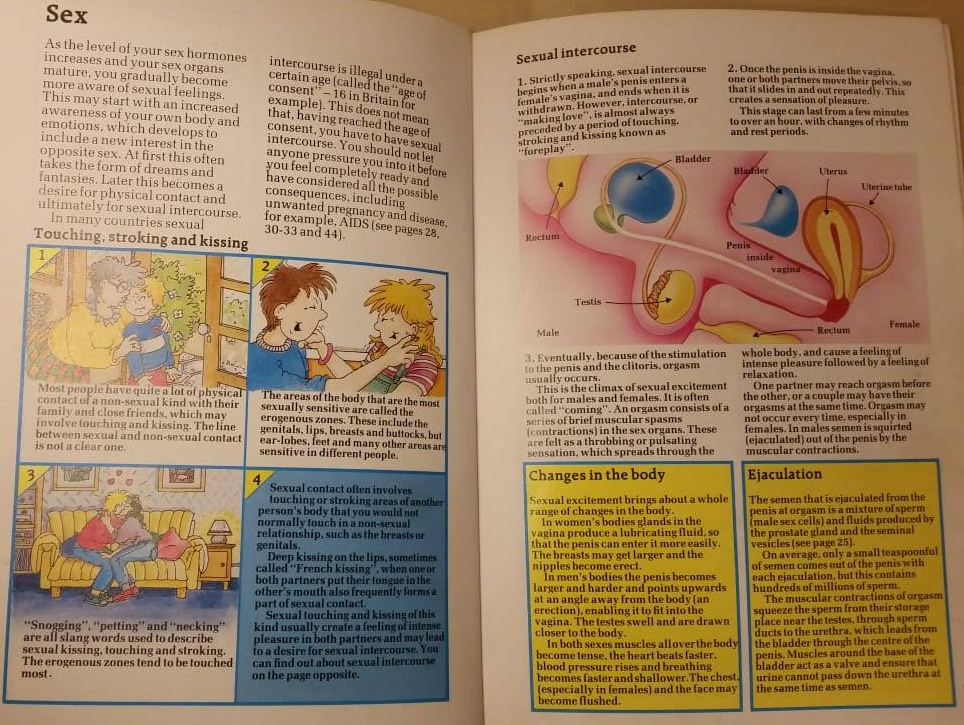
In some ways this book was impressive for its time. The pages before and after this one include boxes explaining that it’s perfectly fine to fantasise and to masturbate ‘during puberty’ (although by implication less okay afterwards?), and that around 1 in 10 people is ‘homosexual’ and even more are ‘bi-sexual’.
The ways this book covers sex is not dissimilar to any number of popular sex advice books today. It assumes that sex equals penis-in-vagina intercourse, and that we do it to achieve orgasm. It includes some mention that ‘foreplay’, masturbation, and same-gender sex as legitimate activities – although these are given nowhere near the amount of room as hetero ‘sexual intercourse’.
The messages in explicit/implicit sex education
The messages that I internalised from these books – and from the more implicit forms of sex education that circulated in pop songs, teen mags, peer conversations, and romance fiction – were the following:
- There are two kinds of people – boys and girls (there were also boy and girl specific Usborne books called What’s Happening to Me?)
- Boys have penises, girls have vaginas.
- Boys want sex with girls and vice versa (‘Homosexuality’ is this other strange thing that requires an explanation).
- Sex is penis in vagina intercourse.
- People generally orgasm from penis in vagina intercourse, which is the goal of sex.
- If you want to fall in love and have ‘a relationship’, you need to have sex.
These messages were unfortunate for me given that:
- I had a pretty strong sense that I wasn’t the gender everyone seemed to think I was.
- My genitals didn’t seem to work in the ways these books described.
- It didn’t make a lot of sense to me to be interested in girls and boys in different ways.
- The things I thought about when I was excited were not penis in vagina intercourse.
- When I eventually tried it, it was impossible for me to orgasm from penis in vagina intercourse.
- I desperately wanted to be loved and became convinced I wouldn’t be because I wasn’t physically able to either have penis in vagina sex, or to be attractive to the ‘opposite sex’ in the ways described.
Nowadays I’m thankfully aware that the things on the second list all apply to large numbers of people. In fact, if you put together all the people that at least one of those things apply to you would have the vast majority – rather than the minority – of people.
The impact of sex education
When I think about the legacy of any one of these disconnects – between the messages in implicit/explicit sex education and my own experiences – they are very painful. So many teenagers share the experiences of being convinced that they’re unattractive and/or abnormal because of their physical appearance, the ways their genitals work, their experience of gender, or their erotic desires and attractions – or lack of them.
It’s worth repeating that those who have at least one of these disconnects are actually in the majority rather than the minority. Also there are far too many – like me – for whom that sense of unattractiveness and abnormality was reinforced on a daily basis for several years in the form of bullying. From what I now understand of trauma, it’s hard to compute the damage done from being repeatedly told that you – and your body – are abnormal, unattractive, unacceptable and even disgusting, with nobody to counter these messages or to help you to bear the excruciating pain, fear, and shame that comes with them.
In my case I eventually learnt that I must conform – or pretend to conform – to that former list of messages, if I ever wanted the bullying to end, or to find love and belonging. This is the second layer of damage done by explicit and implicit sex education: all of the people forcing themselves to have unwanted sex, trying to conform to gender norms that don’t fit, allowing things to happen to their bodies which are not pleasurable or may even be painful or non-consensual, and entering relationships which aren’t good for them because that’s the kind of relationship they’ve been told is normal or romantic.
And, of course, it’s very painful indeed to realise – later in life – that none of this was necessary, that there were other ways you could have lived your life. It’s little wonder that many people double down and try to ensure that they – and others – conform to the sex, gender and relationship norms they grew up with. As Alex suggests, we could see that as a form of intergenerational trauma.
Real sex education
This all perhaps explains why I’m so committed and passionate about getting different messages about sex and sexuality out there: why I’ve co-created my own trilogy of books to provide a very different kind of sex education than the trilogy I received as a kid.
For me, the following list of alternative messages would be the absolute baseline required for decent sex education or advice.
- Gender is diverse and we all have a unique and complex relationship to gender.
- People have a diverse range of bodies – including sexual anatomy – which work in diverse ways. So it’s always about finding out how your body, and anyone else’s body, works at this particular time, without making assumptions.
- We can be attracted to all kinds of people, in many different ways, on the basis of all kinds of physical, psychological, and other features.
- Anything can ‘count’ as sex so long as it feels erotic to you, and it’s all fine to think about or act upon so long as that’s consensual for you and everyone else involved.
- There are all sorts of reasons to have sexual, sensual or erotic contact with yourself and/or others, and it tends to work best if you’re being present rather than trying to reach any kind of destination or goal, such as orgasm.
- All different kinds of relationships are equally valid – again so long as they’re consensual. None of them should require that those involved have any kind of sex – or do anything else – because that’s inherently non-consensual.
We really can’t get these messages across if we centre any one kind of body as the default kind of body, any one kind of gender or sexuality as the default kind of gender or sexuality, or any one kind of sex as the default kind of sex – even if we acknowledge that other kinds of bodies, genders, sexualities and kinds of sex exist.
Returning to the 1970s and 80s
Thinking about the book that Jules and I have just published, in the light of this trip down memory lane, I realised that we managed to return to the media of the 1970s and 1980s in another way in what we created. That is in addition to trying to come up with something that was better than the sex ed books that I received at that time.
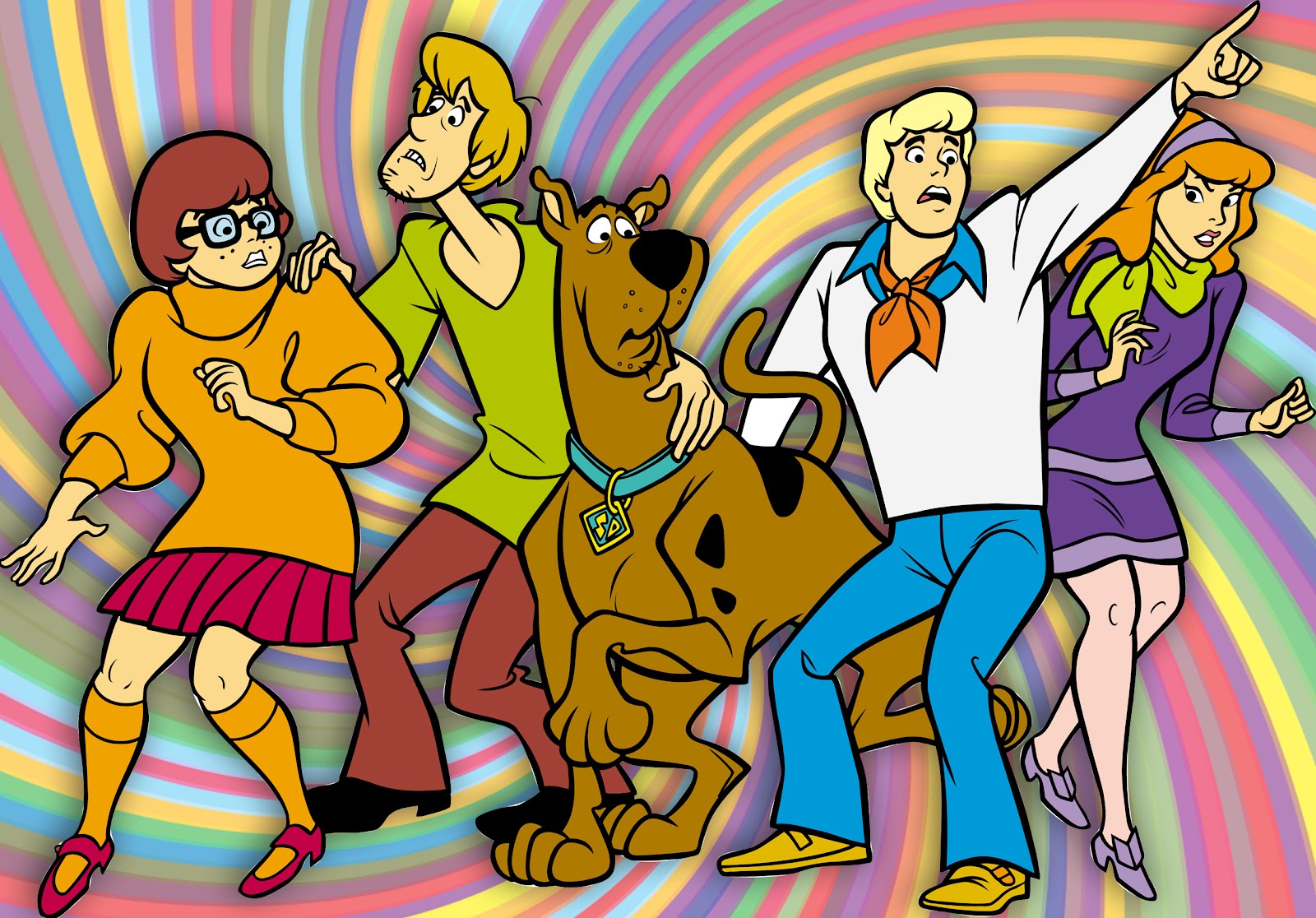
Our background theme for this book is a mashup between two 1970s creations which remain popular and are constantly reimagined: The Rocky Horror Show Picture Show and Scooby Doo.
As a kid I was obsessed with Scooby Doo and with anything relating to ghosts. In fact Usborne – who published the Facts of Life books – also published some of the best true ghost story books which I devoured.
I also vividly remember the first time I saw The Rocky Horror Show Picture Show at a friend’s house and all the confusing feelings it left me with: this depiction of another world in which all the rules of sex, gender, and relationships which I thought were set in stone were completely different. I remember the massive sense of loss that came – for me – at the end of the movie, when the human characters are left on earth with just the sense of how everything they thought they knew has been upturned. At the time I hard-related to the character of Janet, although nowadays that has certainly shifted!
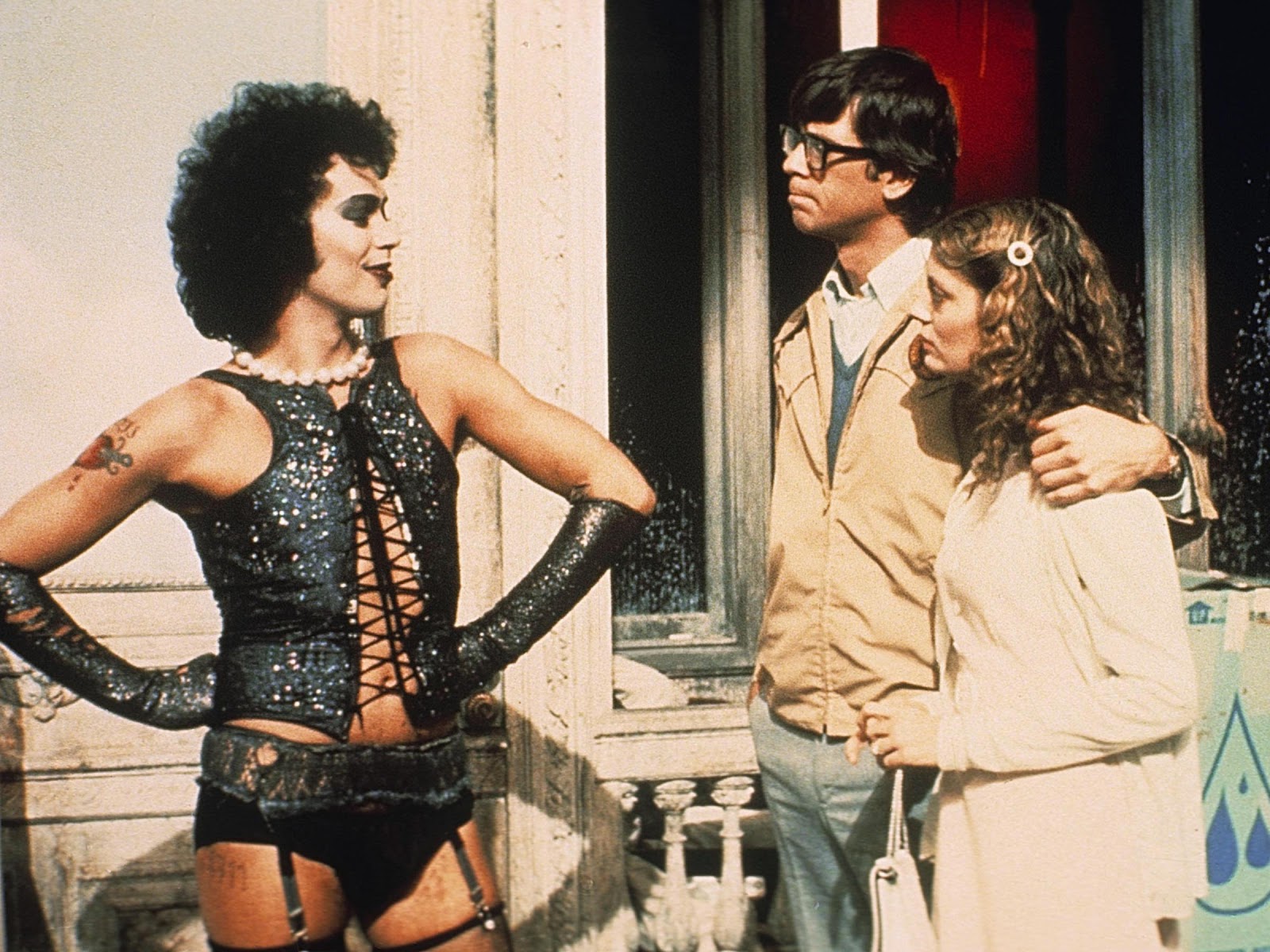
Jules and I mashed Scooby Doo and The Rocky Horror Show Picture Show together because we wanted a sense – like in The Rocky Horror Show Picture Show of unknowing characters entering the potentially confusing, frightening, exciting, wonderful world of sex and sexuality and returning changed by the experience. But, of course, in Rocky Horror, the main characters who do this are the young, white, heternormative couple Brad and Janet. Scooby Doo gave us the potential to imagine a more diverse group of characters to navigate this fun house / house of horrors. In the process we took the opportunity to (re)imagine a Scooby gang who included more intersecting experiences and identities, and a more consensual version of Frank-n-Furter and his friends for them to engage with, which made us both very happy.
Of course no book is perfect, and there’s so much more that I wish we could have covered in Sexuality: A Graphic Guide, some of which Alex and I have been working to incorporate into How to Understand Your Sexuality. For example, Alex and I include much more on how trauma of all kinds – as well as pleasure – shapes our sexualities. We also touch on more indigenous scholarship, which is a vital perspective when considering the problems with western understandings of sex and sexuality, and how these have been imposed on people around the world in forms of historical trauma which link to claiming/owning of land. Despite having studied sex and sexuality for well over two decades now, I’m still learning about it – personally and politically – and still have much to learn.
I hope that Sexuality: A Graphic Guide is a helpful starting point to get folks questioning the messages that they’ve received in their own explicit and implicit sex education. I also hope that some people may receive it – and other resources like it – young enough that a more open understandings of sex and sexuality may become a foundation for their burgeoning erotic experiences, instead of them having to begin by undoing the damage of previous messages.
More information…
You can listen to me on The Real Sex Education podcast here.
There are details of the online launch events for Sexuality: A Graphic Guide here.
If you liked this post, please feel free to support my Patreon.
The post New sexuality book out! The real sex education! appeared first on Rewriting The Rules.
]]>